How to dry a car cover in winter
The unglamorous problem nobody mentions when they sell you one, and the reason a lot of covers end up in the garbage in February.
Heads up: the buy links on this page are affiliate links. If you buy through one, we earn a commission at no extra cost to you. It does not change what we recommend or the order we rank things in - here is how we keep those separate.
Why this matters more than it sounds
A cover comes off wet. It goes into a trunk or a garage corner folded. It stays there until tomorrow evening, when it goes back onto your car.
Within a week or two of that cycle you have mildew, and the inner face of a mildewed cover is textured with growth and holds grit far more readily than clean fabric. That surface then spends every night against your clear coat.
There is a second, quieter problem. A damp cover left folded in the cold freezes into a solid block, and unfolding a frozen cover cracks the coating on the outer layer — which is what was making it weather-resistant.
Four ways to dry one when it is cold
1. Hang it in the garage
The best answer if you have the space. A couple of hooks in the ceiling joists, or a rope run across the back of the garage, and the cover hangs open rather than folded.
The key is that it hangs open. Draped over a workbench it dries on one side and stays wet on the other. Air needs to reach both faces.
A garage that is sealed and slightly above freezing dries a cover overnight. One that is at outside temperature with a gap under the door does not — which is one more argument for sealing the door.
2. Fit it inside out for the last hour
If the car has been running, there is residual heat in the panels. Put the cover back on inside out for an hour after you get home and the inner face dries against a warm surface.
It is a partial measure and it works better than it sounds, and it costs nothing.
3. Shake it out hard, then hang it anywhere
Most of the water on a coated cover is sitting on the surface rather than absorbed. Shaking it out properly before it goes anywhere removes a surprising proportion of it, and it also removes the grit — which is the other reason to do it.
4. Two covers, alternating
If you are covering a car through a genuinely wet winter, two cheaper covers used on alternate days beats one expensive one used wet. Each gets a full day and night to dry.
It is not elegant. It is what people who actually sustain the routine end up doing.
Skip this
Do not do these
Do not put it in a household dryer. Heat damages the coating on the outer layer and the elastic in the hems, and a large wet cover is more than a domestic dryer should be asked to handle anyway. Check the manufacturer’s care instructions before any machine goes near it.
Do not fold it wet. Ever. This is the whole problem. If there is nowhere to hang it, leave it loosely bundled somewhere it can breathe rather than folded flat.
Do not leave it on frozen ground. It freezes to the ground, and pulling a frozen cover free tears the coating.
Do not store it in a sealed plastic bin over summer. Even a slightly damp cover in a sealed container will be unusable by September.
If it has already mildewed
- Check the manufacturer’s care instructions first. Some covers can be machine washed on a gentle cycle; some cannot, and washing one that cannot destroys the coating.
- Wash it outdoors on a mild day with a mild detergent and a soft brush, on a clean surface — not on gravel, which embeds grit in the inner face.
- Rinse thoroughly. Detergent residue on the inner face is its own problem against paint.
- Dry it completely before it goes near the car.
- If the inner face is visibly degraded, replace it. A rough inner face is an abrasive, and a $70 cover is much cheaper than paint correction.
Storing it for the summer
Wash it, dry it completely, and store it somewhere breathable — a cotton bag, a cardboard box, or the bag it came in if that bag is not sealed plastic.
Then check it in September before you need it, because discovering the problem in November means going without.
The same logic applies to a windshield cover, which is much smaller and much easier to dry — a hook by the garage door is genuinely all it needs, and that ease is part of why a windshield cover is the one people keep using.
What to buy, given all that

Budge
Budge Lite Car Cover
Roughly $30-$60
A single-layer, breathable, indoor-grade cover. It keeps dust and garage grit off a car that is parked up for the winter. It is not an outdoor snow cover and using it as one is how people conclude car covers scratch paint.
Skip it if: The car is parked outdoors. This is the wrong product for that job.
#ad We hold no verified live price for this product, so we show none. How this site is funded.
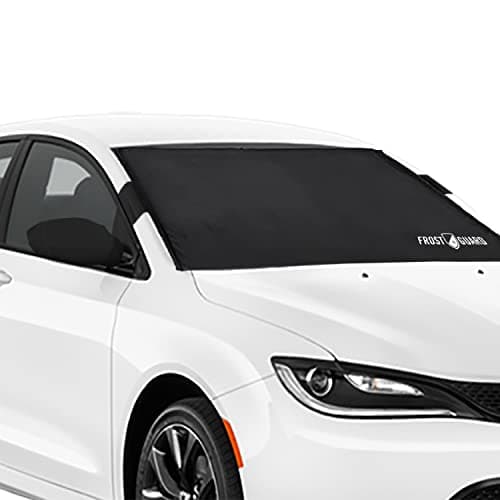
FrostGuard
FrostGuard Plus Windshield Cover, Standard Size
Roughly $25-$40
The version of this product that solves the actual problem: it wraps the wiper arms and hooks over the mirrors, so wind does not get under it and lift it off overnight. That single design decision is the whole reason a windshield cover is worth buying rather than a tarp.
Skip it if: You park in a garage. A cover on a car that never frosts is a thing to fold up wet and store somewhere.
#ad Price as of October 18, 2026, from Amazon. Prices change. How this site is funded.
How this was ranked
Every site in this category says it tested twenty of these. We have not tested any, and we say so. What we did instead: built the candidate set from what Amazon actually stocks, compiled the published specifications from each manufacturer’s own pages, did the arithmetic on running cost and on what the thing prevents, and read owner reviews for failure patterns rather than star averages. Every number on this page has a link to where it was published, so you can check the work.
- Units we claim to have tested
- 0
- Sponsored placements
- 0
- Free products accepted
- 0
Frequently asked
How do you dry a car cover in winter?
Hang it open in a garage, so air reaches both faces, rather than draping or folding it. Shake it out hard first to remove surface water and grit. Refitting it inside out for an hour on a still-warm car also helps. Never fold it wet.
Can you put a car cover in the dryer?
Check the manufacturer’s care instructions, and assume not. Heat damages the weather-resistant coating on the outer layer and the elastic in the hems, and a large wet cover is more than most domestic dryers should handle.
How do you get mildew off a car cover?
Check the care instructions, then wash outdoors on a mild day with a mild detergent and a soft brush, on a clean surface rather than on gravel. Rinse thoroughly and dry completely. If the inner face is visibly degraded, replace the cover — a rough inner face is an abrasive against paint.
Is it bad to leave a wet car cover on?
Yes. A wet cover against paint with no airflow keeps the surface damp and, on a salty car, keeps salt solution in contact with the finish. If the car is wet and it needs covering, dry it first or leave it uncovered for the night.