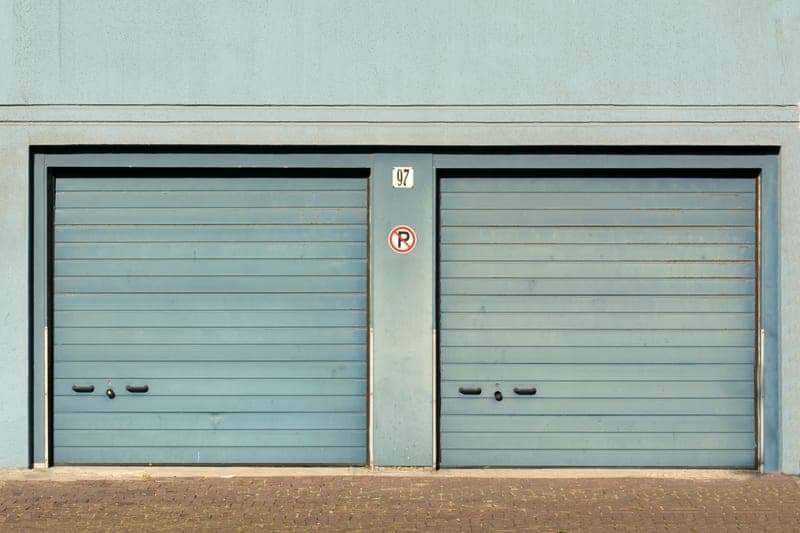
Why this is the first thing to buy, not the cheapest thing to buy
Those are different claims, and the second one is the interesting one. A garage door seal is not merely inexpensive. It is the prerequisite for every other purchase in the category, because a garage with an open gap under the door is not a room you can heat — it is an outdoor space with a roof.
The heater sizing formula makes it explicit. Required output is volume, times temperature rise, times a constant for air, times an air-change factor that describes how leaky the space is. Every published sizing table uses some version of it. And the air-change term dominates: the difference between a garage that closes properly and one you can see daylight under is roughly a factor of five in required heat output.
What the gap costs you
A 16-foot-wide door with a half-inch gap under it presents about 0.67 square feet of permanently open aperture — 16 ft × 0.5 in, converted, is 96 square inches. That is before the jamb and header gaps, which are usually larger in total.
Now put a heater against it. A 5.6 kW electric shop heater costs about $1.03 an hour to run at full output, at the U.S. average residential rate of 18.34 cents per kWh (EIA, June 2026). If the leak means it runs at full output instead of cycling at half duty, that is roughly 51 cents an hour of pure waste. Two hours a day for 120 days is $123 a winter, forever, to avoid spending $30 once.
The part that actually makes this hard
It is not choosing a brand. It is choosing a profile. Garage door bottom seals slide into a retainer track fixed to the bottom edge of the door, and that retainer determines the shape of the bead on the seal you can fit. The common ones:
Garage door bottom seal profiles and the retainer each one fits| Profile | What the retainer looks like | Where it is used |
|---|
| U-shape | A single channel with two lips, seal folds into a U | The most common domestic retainer on steel sectional doors |
|---|
| T-end (bulb) | Two parallel channels, seal has two T-shaped beads | Very common on newer sectional doors; sometimes called a double-T |
|---|
| Bead / P-bulb | Two channels taking round beads rather than T shapes | Older aluminum retainers, some commercial doors |
|---|
| Nail-on (no retainer) | No track at all - the seal nails to a wooden door edge | Wooden doors, older one-piece doors |
|---|
Take a photograph of the end of your retainer before you order anything. We walk through identifying each profile here, and the sizing question — length and bead width — is here. Those two pages between them prevent the single most common return in this category.
The specification nobody publishes, and why we keep saying so
The figure that matters for a winter seal is the temperature at which the material stops being flexible. A seal that goes rigid at 20 F is not sealing at 20 F, which is precisely when you need it to. EPDM rubber stays pliable far colder than vinyl does, which is why vinyl seals feel fine in October and let a draft through in January.
Almost no manufacturer publishes a low-temperature flexibility rating for this product. We mark it as unpublished on every entry below rather than supplying a number, because that absence is itself worth knowing when you are deciding between a vinyl seal and a rubber-compound one at twice the price. Where a listing does state a material, prefer EPDM or a rubber compound over plain vinyl.
Skip this
Skip the foam self-adhesive weatherstrip for the bottom of a garage door
It is sold nearby, it is cheap, and it is the wrong product. Foam tape is designed for a static door that closes against a frame, not for an edge that grinds against concrete every time the door moves. It compresses permanently within weeks, absorbs water, and then freezes into a solid strip that holds the door open. Use it on the service door if you like. Not here.
Do the jambs at the same time
This is the most useful sentence on the page. People replace the bottom seal, still feel the draft, and conclude the seal was bad. In almost every case the remaining gap is along the jambs and the header, where the original weatherstrip shrank and pulled away years ago.
The test costs nothing: close the door, turn off the garage light on a bright day, and look at the frame. Daylight is your answer, and it is usually a thin bright line down both sides. Buying the bottom seal and the jamb strip in the same order is what turns this from a disappointing afternoon into a genuinely warmer garage.
While the door is closed and you are looking at it, do the other ten-dollar job at the same time: a wipe of silicone along the rubber seal stops it freezing to the slab overnight, which is what tears a new seal out of its retainer in January. Which lubricant goes on which part of the door is a shorter answer than the category makes it look.
How this was ranked
Every site in this category says it tested twenty of these. We have not tested any, and we say so. What we did instead: built the candidate set from what Amazon actually stocks, compiled the published specifications from each manufacturer’s own pages, did the arithmetic on running cost and on what the thing prevents, and read owner reviews for failure patterns rather than star averages. Every number on this page has a link to where it was published, so you can check the work.
- Units we claim to have tested
- 0
- Sponsored placements
- 0
- Free products accepted
- 0
The full method, including what we refuse to claim