The four things that make a garage cold
In rough order of how much they cost you and how cheap they are to fix:
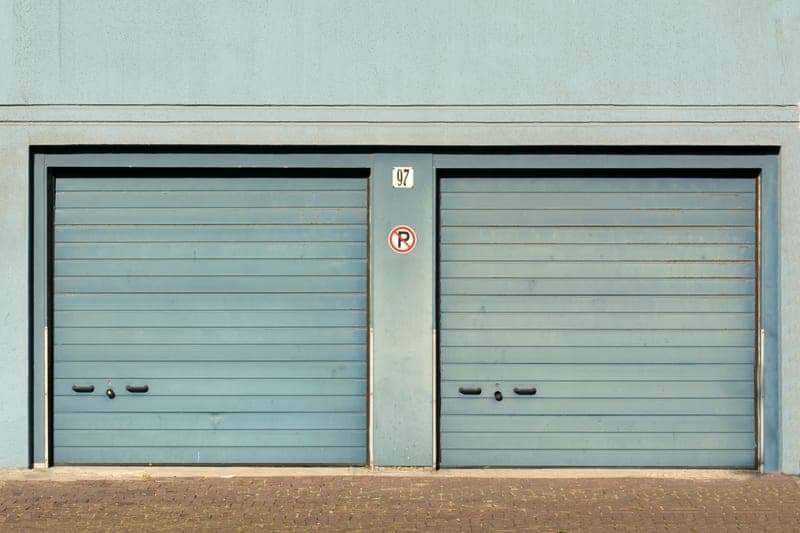
1. The gap under the door. A 16-foot door with a half-inch gap presents about two-thirds of a square foot of permanently open aperture, and cold air does not politely stay outside it. This is the single largest heat loss in most garages and it is also the cheapest to fix, usually for the price of a takeout meal. It is the reason this section leads with seals rather than heaters.
2. The gaps beside and above the door. The half of the job almost nobody does. People replace the bottom seal, still feel the draft, and conclude the seal was no good — when in fact the jamb weatherstrip shrank and pulled away years ago. If you can stand inside with the light off and see daylight around the door frame, that is your answer.
3. The door panel itself. An uninsulated steel door is a large, thin, cold plate. Insulating it is a genuine improvement, but it is a second-order one: sealing an unsealed door beats insulating a sealed one every time, and the kits cost several times what a seal does.
4. Everything else. Walls, ceiling, the service door, the window. All real, all expensive relative to the first two items, and none of them worth touching until the opening is closed.
What decides a heater purchase, and it is not the price tag
Three things decide whether a garage heater is a sensible purchase, and only one of them appears on the box.
The electrical supply. Every genuinely capable electric shop heater is 240 volts. The Dr. Infrared DR-988A, for example, publishes 4,800 W at 208 V or 5,600 W at 240 V, and ships with a NEMA 6-30P plug that requires a dedicated 30-amp 240-volt outlet. Most domestic garages do not have one. That is an electrician’s visit, and it is frequently more than the heater costs. A 120-volt plug-in heater is limited to about 1,500 W by the circuit, which is roughly 5,100 BTU/hr — enough to take the edge off a small, sealed, insulated garage and not enough to heat a cold two-car space.
The running cost. At the U.S. average residential electricity price of 18.34 cents per kWh (EIA Electric Power Monthly, June 2026), a 5.6 kW heater costs about $1.03 for every hour it runs at full output. Two hours a day across a 120-day winter is roughly $246 before you account for the thermostat cycling. Nobody in this category publishes that number, which is exactly why we do.
Combustion or not. Propane heaters sidestep the electrical problem entirely, which is why they are popular, and they introduce two things you may not want in a garage: water vapor, and a published fresh-air ventilation requirement. Burning propane produces water, in a room where the whole point is keeping metal dry, and the ventilation the manual requires works directly against the sealing you just paid for. It is a genuine trade-off rather than a disqualification, but it should be a decision rather than a surprise.
The floor, which nobody thinks about until it is too late
A car driven on salted roads carries a remarkable amount of salt solution home in its wheel arches and under its sills, and all of it ends up on the garage floor overnight. Bare concrete is porous. Salt solution soaks in, freezes, expands, and lifts the surface off in flakes — the spalling you see on the aprons of older garages. A containment mat under the parked car costs a fraction of resurfacing a slab and is the least glamorous purchase on this entire site.
What we would actually buy, in order
- Bottom seal for the garage door. Cheapest, biggest effect, and it is the prerequisite for everything after it.
- Jamb and header weatherstrip, to finish the job the bottom seal started.
- A containment mat if you park a salted car inside, because the damage it prevents is structural.
- Heat, sized honestly — and only after you have run the numbers on what it costs to run, not just to buy.