Skip to content
Frost & Fender
Roundup

The best garage door lubricant, by which part of the door it is for

A garage door has metal that carries load and rubber that has to stay flexible at 10 degrees. One aerosol cannot be right for both, and the cans that claim to be do not publish a cold rating.

By Scooter M.Published September 6, 2026

Heads up: the buy links on this page are affiliate links. If you buy through one, we earn a commission at no extra cost to you. It does not change what we recommend or the order we rank things in - here is how we keep those separate.

The shortlist

Ranked, with the prices

Ranked on published manufacturer specifications and, where the numbers exist, the arithmetic on what each option costs and what it saves. Tap any row for the full write-up, including who should skip it.

#ProductBest forScorePrice
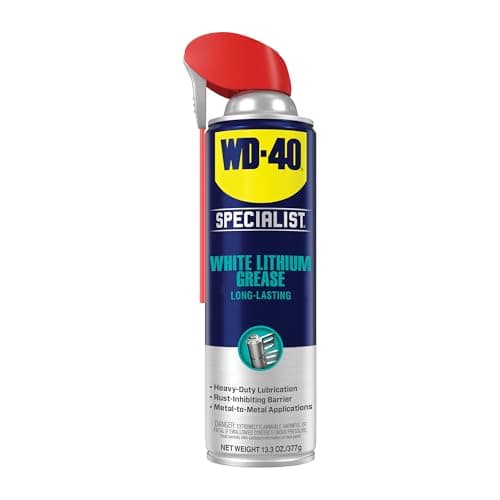
01WD-40 WD-40 Specialist White Lithium GreaseWD-40 Specialist White Lithium GreaseRollers, hinges, bearings and the spring - the parts that carry loadBest for load-bearing metal8.8$14.15 - View on Amazon
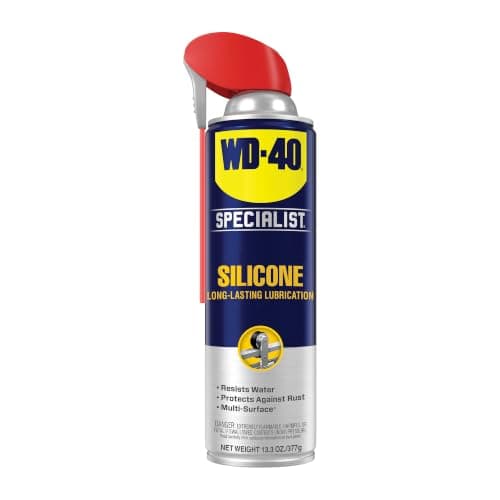
02WD-40 WD-40 Specialist Silicone LubricantWD-40 Specialist Silicone LubricantThe rubber bottom seal, the jamb weatherstrip and any plastic roller or bushingBest for the rubber seal8.5$13.53 - View on Amazon
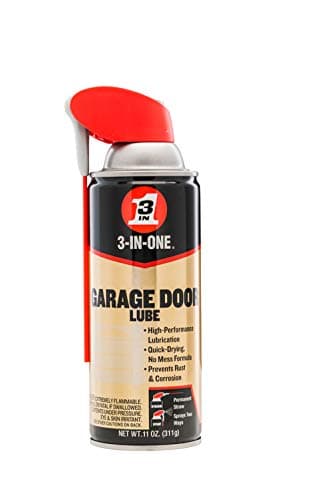
033-IN-ONE 3-IN-ONE Garage Door Lubricant3-IN-ONE Garage Door LubricantThe whole door in one pass, once a year, by somebody who does not want to think about itBest single can8.4$7.98 - View on Amazon

Scores are ours and editorial. They are never published as review or rating markup, because we have not tested these products - see how we pick.

A garage door is two lubrication problems, not one

This is the whole page, and almost nobody says it. The rollers, hinges, bearing plates and spring are metal under load. The bottom seal and the jamb weatherstrip are rubber under compression. Those two problems want opposite products: a grease that stays put on a bearing is exactly the wrong thing to smear on a rubber seal, and the thin silicone that keeps rubber pliable will not survive five minutes on a spring.

The winter part is the interesting half, because cold is what turns a door that was merely noisy in October into a door that stalls in January. Two things happen at once. The grease that is left on the bearings thickens, so the roller resists turning. And the rubber seal stiffens against a slab that is now wet, then freezes to it overnight, so the opener is asked to break an ice bond before it can even start lifting. Both are lubrication failures. Neither is fixed by the same can.

What ten dollars is actually buying

A door on a two-car household cycles roughly 1,500 times a year — out and back twice a day, most days. Every one of those cycles loads the same ten rollers and the same set of hinges.

A can of white lithium grease is $9.99 (Ace Hardware, read 2026-09-06) and treats the whole door for a season. A set of replacement rollers is several times that before anyone touches it, and a burned-out opener is an order of magnitude more. The arithmetic is not close, and it is one of the few places on this site where the cheap thing is also the complete answer.

The honest caveat: lubrication does not fix a door that is already damaged. If a roller has flat-spotted or a hinge has elongated, no aerosol recovers it. This is prevention, and prevention only works before.

What goes where, and the ratings that decide it

Only one specification matters for a winter door, and it is the one most cans do not print: the temperature range the product is rated for. Where a maker does publish it, the number is decisive.

Garage door lubricant types, where each belongs, and the published temperature range
Product typeWhere it goesPublished temperature rangeWhy
White lithium greaseRollers, hinges, bearing plates, spring0 F to 300 F (WD-40 Specialist)Thick enough to stay on a loaded bearing and sets dry so it does not sling
Silicone sprayRubber bottom seal, jamb weatherstrip, plastic bushings-100 F to 500 F (WD-40 Specialist)Rated safe on rubber and vinyl and stays flexible far below freezing
Purpose-made garage door lubeEvery point, in one passNot publishedA compromise, but a convenient one, and it is sold where people look
Multi-purpose penetrating sprayNowhere on this doorNot a lubricant ratingIt is a water displacer and solvent - see below

Skip this

Skip the multi-purpose penetrating spray - the door manufacturers say so themselves

The blue-and-yellow can is the default reach for a squeaky anything, and on a garage door it is the wrong tool twice over. It is a water displacer and a solvent: it strips the grease that was protecting the bearing, and then evaporates, leaving the bearing drier than it found it. Clopay, which manufactures garage doors, publishes a piece titled exactly what you would expect — Why You Should Never Use WD-40 on a Garage Door — and the reasons it gives are that the product removes lubrication, attracts dirt onto the track, and can degrade the rubber and nylon parts it lands on.

This is not a knock on the manufacturer, who also makes the two products ranked first and second below. It is a knock on using a penetrant as a lubricant. If a bolt is seized, the penetrant is correct. If a roller is dry, it is not.

The bottom seal is the winter job nobody does

Here is the sequence that catches people. Snow melts off the car, runs to the low point of the slab, and sits under the door line. The temperature drops overnight. In the morning the rubber seal is frozen to the concrete, the opener pulls, and one of three things gives: the seal tears out of its retainer, the door panel flexes, or the opener trips its overload and you are opening it by hand in the cold.

A wipe of silicone along the seal in the fall is the entire fix. The published range on the WD-40 Specialist silicone can is -100 F to 500 F and it is stated safe on rubber and vinyl, which is exactly what a bottom seal is made of. Spray it on a rag rather than straight onto the concrete — silicone on a garage floor is genuinely slippery, and you do not want a slick strip right where you walk in.

If the seal is already hard, cracked or shrunken, lubricant is not the answer and we would rather say so. Replacing it is a cheap job, and the profile chart that stops you ordering the wrong one is here.

The fifteen-minute pass, in order

Do this on a dry day in the fall, with the door closed, and unplug the opener first.

1. Wipe the tracks. Do not lubricate them. This is the most common mistake in the category. The track is a guide, not a bearing surface; the roller is supposed to roll along it, not slide. Grease in the track collects grit and turns into an abrasive. A rag and a little household cleaner is the correct treatment.

2. Rollers. Aim the straw at the small bearing at the center of each roller, not at the wheel face. If the rollers are solid nylon with no visible bearing, they do not take lubricant at all and you can move on.

3. Hinges. The pivot point where each hinge meets the next panel. One short burst each.

4. Bearing plates and the spring. The plates at each end of the torsion bar, and a light coat along the spring itself. Do not adjust anything. A torsion spring holds a great deal of energy and is not a homeowner-serviceable part; lubricating the outside of it is fine, touching the winding cones is not.

5. Lock and armbar. A quick shot in the lock cylinder and on the pivot of the arm that connects the opener to the door.

6. Seal, last, with silicone on a rag. Separate can, separate step, and the one that pays off on the first freezing night.

How often, and the test that tells you

Once a year is the honest answer for a domestic door, done in the fall rather than in the middle of winter — aerosols atomize poorly when the can is cold, and you want the film on before the first freeze rather than after it.

The test for whether you are overdue costs nothing: with the opener disconnected at the emergency release, lift the door by hand. It should move smoothly and stay put at waist height. A door that grinds, that needs a shove to start, or that squeals at one particular point in its travel is telling you which roller to look at. A door that will not stay put at waist height is a spring balance problem, not a lubrication problem, and that one is a call to a technician.
The write-ups

Every pick, in full

01 / Best for load-bearing metalWD-40 WD-40 Specialist White Lithium Grease

WD-40

8.8 / 10

Low teens for the current single can

WD-40 Specialist White Lithium Grease

The one product here with a published temperature range, and it is the reason to buy it: 0 F to 300 F, stated by the maker. A door that groans on the first properly cold morning is a metal-to-metal problem, and this is the metal-to-metal answer.

$14.15 - View on Amazon

#ad Price as of October 18, 2026, from Amazon. Prices change. How this site is funded.

Published specifications for the WD-40 Specialist White Lithium Grease, with the source of each
SpecificationPublished valueWhere it is published
Temperature rangePublished as 0 F to 300 FWD-40 Specialist White Lithium Grease product page
BehaviorSprays on as a liquid and sets dry to a thick protective coatingWD-40 Specialist White Lithium Grease product page
Published applicationsMetal-to-metal applications, overhead door tracks, pulleys, cables and guide railsWD-40 Specialist White Lithium Grease product page
Can size10 oz on the WD-40 product page; the single can currently on the buy link is the 13.3 oz sizeWD-40 Specialist White Lithium Grease product page
Street price$9.99 when read on 2026-09-06WD-40 Specialist White Lithium Grease 10 oz, Ace Hardware listing (price read 2026-09-06)

The arithmetic

Ten dollars a year against a roller and hinge set that costs several times that to replace.

A garage door cycles roughly 1,500 times a year on a two-car household - twice out, twice back, most days. Every one of those cycles loads the same ten rollers and the same set of hinges. Dry bearings do not fail on a warm day; they fail on the cold morning when the grease that was left has gone stiff and the opener pulls against a roller that will not turn. A can is $9.99 and treats the whole door for a season.

What it does well

  • A published cold rating, which almost nothing else in this category has
  • Sets dry, so it does not sling off a moving roller onto the car below
  • Handles the spring, which is the highest-load part of the door

What it does not

  • Wrong product for rubber and plastic - it needs a silicone can alongside it
  • Thicker film picks up dust over a season, so wipe the track before reapplying
  • 0 F is a real floor: below that, published performance stops being published

Skip this one if

You want to treat the rubber bottom seal with the same can. Do not - grease is the wrong product for rubber.

How it scores, by criterion

Covers the whole job7.0
Cold performance9.0
Published data9.5
Ease of use8.5
Price9.0
02 / Best for the rubber sealWD-40 WD-40 Specialist Silicone Lubricant

WD-40

8.5 / 10

Shelved and priced with the other WD-40 Specialist aerosols - single digits to low teens

WD-40 Specialist Silicone Lubricant

This is the winter-specific one, and almost nobody tells you why. Wipe it along the rubber bottom seal in the fall and the door stops freezing itself to the slab overnight. The published range is -100 F to 500 F, and it is stated safe on rubber, plastic and vinyl.

$13.53 - View on Amazon

#ad Price as of October 18, 2026, from Amazon. Prices change. How this site is funded.

Published specifications for the WD-40 Specialist Silicone Lubricant, with the source of each
SpecificationPublished valueWhere it is published
Temperature rangePublished as -100 F to 500 FWD-40 Specialist Silicone Lubricant product page
Material safetyPublished as safe on most metals, plastics, rubbers and vinyl when used as directedWD-40 Specialist Silicone Lubricant product page
Film left behindClear film with no sticky residueWD-40 Specialist Silicone Lubricant product page
Can size11 oz on the WD-40 product page; the single can currently on the buy link is the 13.3 oz sizeWD-40 Specialist Silicone Lubricant product page

What it does well

  • The only published range here that goes below zero, by a long way
  • Explicitly rated for rubber and vinyl, which is what the bottom seal is made of
  • Stops the seal-to-slab freeze that tears a seal when the door is forced open

What it does not

  • Not a grease - it will not stay put on a loaded bearing or a spring
  • Overspray on a garage floor is genuinely slippery
  • You are now buying two cans instead of one

Skip this one if

The load-bearing metal is what is complaining. Silicone is thin; it is not a grease and it will not stay on a spring.

How it scores, by criterion

Covers the whole job6.0
Cold performance10.0
Published data9.0
Ease of use9.0
Price8.5
03 / Best single can3-IN-ONE 3-IN-ONE Garage Door Lubricant

3-IN-ONE

8.4 / 10

Single-digit dollars a can

3-IN-ONE Garage Door Lubricant

The purpose-made can, and the one to buy if you are only buying one. It is formulated to leave a clear film rather than a sticky one, which matters more than it sounds: a tacky lubricant on a garage door track collects grit and turns into grinding paste by February.

$7.98 - View on Amazon

#ad Price as of October 18, 2026, from Amazon. Prices change. How this site is funded.

Published specifications for the 3-IN-ONE Garage Door Lubricant, with the source of each
SpecificationPublished valueWhere it is published
Application pointsGarage door tracks, hinges, chains, springs, pulleys and latches3-IN-ONE Garage Door Lube product page
Film left behindPublished as a clear film with no messy residue3-IN-ONE Garage Door Lube product page
ApplicatorPermanent two-way narrow and wide spray straw3-IN-ONE Garage Door Lube product page
Can size11 oz3-IN-ONE Garage Door Lube product page
Low-temperature ratingNot published by the manufacturer3-IN-ONE Garage Door Lube product page

What it does well

  • One can covers every point on the door, so nothing gets skipped
  • The two-way straw reaches into a roller bearing and still covers a hinge
  • Sold in the garage-door aisle of most hardware stores, which is where people actually look

What it does not

  • No published low-temperature figure, and that is the spec that matters here
  • A general-purpose can is a compromise on both the metal-to-metal points and the rubber ones
  • Aerosol overspray onto the floor is slippery, so mask the slab under the track

Skip this one if

You already own white lithium grease and a silicone can. Between them they do this job better, just in two steps instead of one.

How it scores, by criterion

Covers the whole job9.5
Cold performance6.5
Published data6.0
Ease of use9.0
Price9.0

How this was ranked

Every site in this category says it tested twenty of these. We have not tested any, and we say so. What we did instead: built the candidate set from what Amazon actually stocks, compiled the published specifications from each manufacturer’s own pages, did the arithmetic on running cost and on what the thing prevents, and read owner reviews for failure patterns rather than star averages. Every number on this page has a link to where it was published, so you can check the work.

Units we claim to have tested
0
Sponsored placements
0
Free products accepted
0

The full method, including what we refuse to claim

Questions people actually ask

Frequently asked

What is the best lubricant for a garage door in cold weather?

Two products, not one. White lithium grease on the load-bearing metal — rollers, hinges, bearing plates and the spring — because it is published to 0 F and sets dry rather than slinging off a moving part. Silicone spray on the rubber bottom seal and jamb weatherstrip, because it is published from -100 F and is rated safe on rubber and vinyl. A purpose-made garage door lube does both adequately if you only want one can.

Can I use WD-40 on my garage door?

Not the standard multi-purpose can. It is a water displacer and solvent rather than a lubricant, and Clopay — a garage door manufacturer — publishes guidance that recommends against it on the grounds that it removes existing lubrication, attracts dirt to the track, and can degrade rubber and nylon components. The same company’s Specialist white lithium grease and Specialist silicone products are a different matter and are the first two picks on this page.

Should I lubricate the garage door track?

No. The track is a running surface for the roller, not a bearing. Anything greasy in it collects grit and becomes an abrasive paste that wears both the track and the roller. Wipe the track clean with a rag and put the lubricant in the roller bearings instead.

How often should a garage door be lubricated?

Once a year for a normal domestic door, done in the fall. Twice if the door is on a detached garage in a salt-air or heavy-road-salt environment, or if it cycles far more than the roughly 1,500 times a year a two-car household manages. Doing it in October rather than January also means the can sprays properly.

Why does my garage door only make noise in winter?

Because cold thickens whatever grease is left in the roller bearings, so the roller resists turning and skids along the track instead. The same door is quiet in July because the same grease is thinner. It is a genuine warning: a roller that skids is wearing both itself and the track, and it is the cheapest thing on the door to fix.

My garage door is frozen to the ground. What now?

Do not hold the wall button down. Forcing it tears the seal off its retainer or trips the opener. Pull the emergency release, break the ice bond along the seal with warm (not boiling) water or a plastic scraper, then lift by hand. Then, once it is dry, wipe silicone along the seal so it does not happen again, and check whether meltwater is pooling at the door line — a containment mat catches the drip before it reaches the seal.

Sources

Read next