How to clean all-weather floor mats
Ten minutes, a hose and a brush. The part people get wrong is the white residue, and the fix is not a stronger cleaner.
Heads up: the buy links on this page are affiliate links. If you buy through one, we earn a commission at no extra cost to you. It does not change what we recommend or the order we rank things in - here is how we keep those separate.
What you are actually removing
Not dirt. Salt.
Road salt tracked into the car dries in the mat channels as a white crystalline residue. It is water-soluble, which is good news, and it is also hygroscopic — it pulls moisture out of the air, so a salty mat stays faintly damp even in a dry car. That is why a mat that looks clean can still smell, and why wiping rather than rinsing never quite works.
The implication for method: volume of water matters more than the cleaner. You are diluting and carrying salt away, not dissolving grease.
The method
- Take them out of the car. Cleaning a mat in situ pushes salt water into the carpet underneath, which is the thing you bought the mat to prevent.
- Knock the loose debris out. Bang them against a wall or a fence. Grit and gravel scratch the mat surface if you scrub them in.
- Rinse thoroughly first, before any cleaner. This is the step that removes most of the salt, and doing it first means the detergent works on what is left rather than on brine.
- Scrub the channels with a stiff brush and a mild detergent. Dish soap is fine. The channels are where salt collects and they need mechanical agitation to release it.
- Rinse again, more than you think is necessary. Any salt left behind dries back to white residue and you will conclude the cleaning did not work.
- Dry fully before refitting. Stand them on edge and leave them. A damp mat put back into a cold car is a damp mat all week.
The white residue that comes back
This is the most common complaint in this category and it is almost always the same cause: salt that was never fully rinsed out, redrying.
The fix is more rinsing, not a stronger cleaner. If it keeps returning, soak the mat in warm water for twenty minutes before you rinse — that dissolves salt sitting deep in the channel corners that a hose pushes past.
Occasionally the residue is genuinely something else: plasticizer migrating out of cheap PVC as it ages, which looks similar and does not rinse away. That is a mat at the end of its life rather than a cleaning problem.
Skip this
Do not use these on rubber mats
Silicone tire shine or protectant sprays. They make a mat glossy and slippery, and a slippery mat under a foot on a pedal is a genuine hazard. If you want them to look new, a water-based dressing on the visible surface only.
Degreaser or solvent cleaners. Aggressive solvents dry out rubber compounds over repeated use, and a dried-out mat is the one that curls in the cold.
A pressure washer at close range. Fine at a distance, but close up on a thin mat it can tear the material at the channel edges.
How often
Mid-season and end-of-season, at minimum. The mid-winter clean matters more than people expect, because a mat saturated with salt in January spends February and March holding it in the cabin.
Pick a day above freezing so the mats actually dry, and do it at the same time as the mid-winter underbody wash — the two jobs use the same weather window and the same hose. The full salt routine is here.
While the mats are out
Look at the carpet underneath. It takes ten seconds and it tells you whether the mats are actually working.
Dry carpet means the system is doing its job. Damp carpet, or white tide lines beyond the mat edges, means water is escaping — either the mat is overflowing at the edges, in which case you want walls, or the coverage is short and water is going in around it.
What to buy, given all that

WeatherTech
WeatherTech All-Weather Floor Mats
Roughly $60-$100 a row
The same maker's flat mat rather than its walled liner, at roughly half the money. It has a deep channel pattern that holds a useful amount of water, and for most people in most winters that is genuinely enough.
Skip it if: You track slush in by the bucket. A flat mat overflows at the edges where a walled liner does not.
#ad We hold no verified live price for this product, so we show none. How this site is funded.
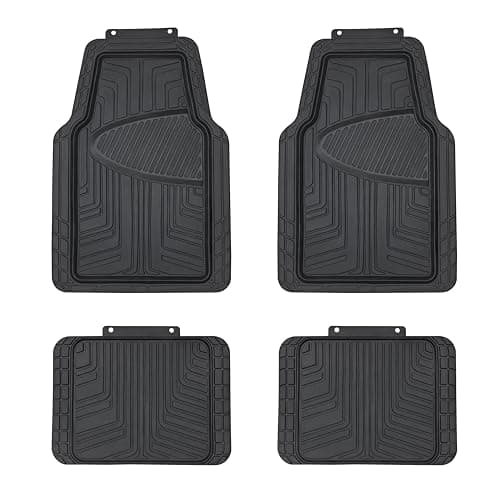
Amazon Basics
Amazon Basics 4-Piece All-Season Floor Mats
Roughly $20-$30 a set
The cheapest way to get something washable under all four sets of boots. It is a flat trim-to-fit mat, so it holds less water than a molded liner and it will never fit like one - but the salt ends up on the mat instead of the carpet, which is the entire job.
Skip it if: You want the driver's footwell done properly. A universal mat trimmed with scissors does not engage the factory retention posts, and that is the one footwell where it matters.
#ad Price as of October 18, 2026, from Amazon. Prices change. How this site is funded.
How this was ranked
Every site in this category says it tested twenty of these. We have not tested any, and we say so. What we did instead: built the candidate set from what Amazon actually stocks, compiled the published specifications from each manufacturer’s own pages, did the arithmetic on running cost and on what the thing prevents, and read owner reviews for failure patterns rather than star averages. Every number on this page has a link to where it was published, so you can check the work.
- Units we claim to have tested
- 0
- Sponsored placements
- 0
- Free products accepted
- 0
Frequently asked
How do you get salt stains out of rubber floor mats?
Rinse first with plenty of water, then scrub the channels with a stiff brush and mild detergent, then rinse again more than feels necessary. Salt is water-soluble, so volume of water is what removes it. If white residue keeps returning, soak the mat in warm water for twenty minutes before rinsing.
Can you pressure wash all-weather floor mats?
Yes, at a sensible distance. Close-range pressure on a thin mat can tear the material at the channel edges and lift the anti-skid backing. A garden hose plus a brush does the job with no risk, and the brush is doing most of the work either way.
What is the white residue on my car floor mats?
Almost always dried road salt that was not fully rinsed out. It is water-soluble and comes away with a proper rinse. If it will not rinse away at all, it may be plasticizer migrating out of aging PVC, which indicates the mat is at the end of its life.
How often should you clean winter floor mats?
Once mid-season and once at the end. The mid-winter clean matters more than people expect, because a mat saturated with salt in January holds it in the cabin for the rest of the season. Pick a day above freezing so they actually dry.