All-weather floor mats vs floor liners
One difference, worth about double the money. Whether it is worth it to you depends entirely on how much snow walks into your car.
Heads up: the buy links on this page are affiliate links. If you buy through one, we earn a commission at no extra cost to you. It does not change what we recommend or the order we rank things in - here is how we keep those separate.
The decision in one table
| All-weather mat | Floor liner | |
|---|---|---|
| Shape | Flat, with molded channels | A tray with raised side walls |
| Typical price per row | $60 to $100 | $110 to $200 |
| Water it holds | A wet day, a slushy commute | A bootful of snow, repeatedly |
| Under heavy load | Overflows at the edges, water goes underneath | Contains it until you empty it |
| Coverage up the firewall | Minimal | Substantial on most designs |
| Underfoot | Lower profile, less noticeable | You can feel the walls at the edges |
| Cleaning | Quick - flat, hoses off, dries fast | Slightly slower - deeper, holds water in the corners |
| Best for | Most people, most winters | Heavy snow, or a car you are keeping |
The failure mode that decides it
This is the part worth understanding, because it is the one case where a mat is actively worse than nothing.
On a flat mat, water accumulates in the channels. Beyond their capacity it reaches the outer edge, runs off, and goes under the mat. There it sits on the carpet with a rubber lid over it — no airflow, no evaporation. It takes days to dry, and you have no idea it is there because the visible surface looks fine.
That is a wetter, longer-lasting exposure than the same water on bare carpet, which at least sees cabin airflow. A liner cannot do this, because the water has nowhere to go until you lift the tray out.
Pick a mat if...
- Your winter is cold rain, slush and occasional snow rather than deep snow.
- People get into your car from cleared driveways and plowed lots rather than from snowbanks.
- You want the lower-profile option that you do not notice underfoot.
- You are covering multiple rows and the price difference doubles.
This is most people, which is why the flat mat is our overall pick in the main roundup.
Pick a liner if...
- Boots arrive in your car genuinely packed with snow, regularly.
- You have children, dogs, ski gear or work boots — anything that arrives wet and stays wet.
- You are keeping the car long enough for footwell corrosion to become your problem rather than the next owner’s.
- You want to be able to lift the tray out and pour it away, which is a genuinely different experience from mopping a mat.
The honest test
Look at your driver’s footwell right now, in whatever season it is. If there is a visible tide line on the carpet, or the edges beyond the mat are stained, water has been escaping the mat you already have. That is the evidence for walls, and it is better evidence than any product page.
Skip this
Do not buy a liner for the back if nobody sits there
The second-row liner is often the impulse addition, and on a car where the back seats are used twice a month it is money spent on a footwell that never gets wet.
Front row first, always. It takes essentially all of the water, because the driver gets in every single time. Add the rear row later if it turns out you need it.
What both of them need
Anchoring. Neither a mat nor a liner is safe unanchored, and pedal entrapment by a sliding mat is a recognized hazard NHTSA publishes guidance about. Vehicle-specific products use the factory floor hooks; if your car does not have them, you need an aftermarket retention system before you drive. The full method is here.
What to buy, given all that
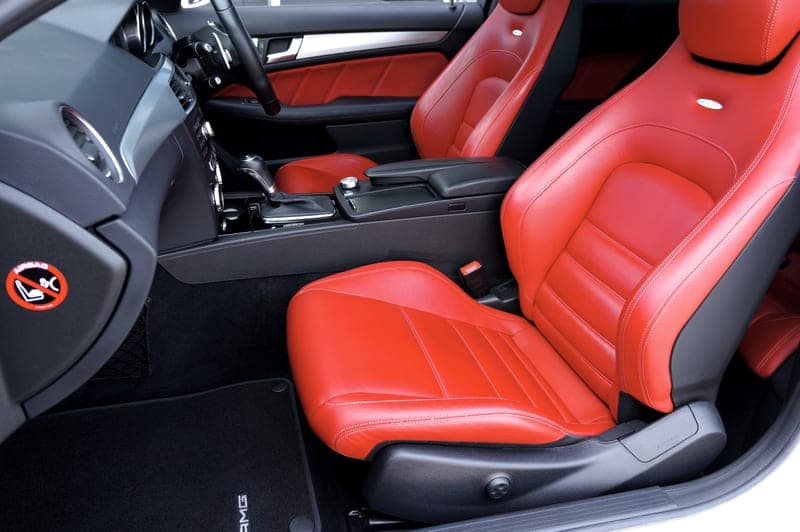
WeatherTech
WeatherTech All-Weather Floor Mats
Roughly $60-$100 a row
The same maker's flat mat rather than its walled liner, at roughly half the money. It has a deep channel pattern that holds a useful amount of water, and for most people in most winters that is genuinely enough.
Skip it if: You track slush in by the bucket. A flat mat overflows at the edges where a walled liner does not.
#ad We hold no verified live price for this product, so we show none. How this site is funded.
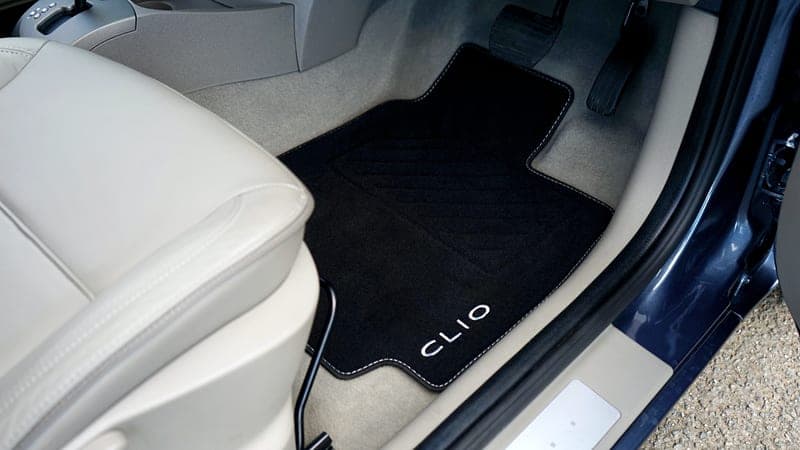
WeatherTech
WeatherTech FloorLiner
Roughly $120-$200 a row
A laser-measured, vehicle-specific liner with walls that run up the sides of the footwell. The walls are what you are paying for: they hold slush and salt solution where a flat mat lets it run off onto the carpet edges.
Skip it if: Your budget is the reason you are here. This is three to four times the price of a universal rubber mat that catches most of the same water.
#ad We hold no verified live price for this product, so we show none. How this site is funded.
How this was ranked
Every site in this category says it tested twenty of these. We have not tested any, and we say so. What we did instead: built the candidate set from what Amazon actually stocks, compiled the published specifications from each manufacturer’s own pages, did the arithmetic on running cost and on what the thing prevents, and read owner reviews for failure patterns rather than star averages. Every number on this page has a link to where it was published, so you can check the work.
- Units we claim to have tested
- 0
- Sponsored placements
- 0
- Free products accepted
- 0
Frequently asked
Are floor liners better than floor mats?
For containing large volumes of meltwater, yes — the raised walls are the entire difference and they prevent the overflow failure where water escapes under a flat mat. For a typical winter of slush and cold rain, a good flat mat is sufficient and costs about half as much.
Are WeatherTech liners worth the money?
If your use case is heavy snow or a car you intend to keep, the walls are a real difference rather than a marketing one. If your winters are mild and slushy, the same maker’s flat All-Weather mats do most of the job for roughly half the price, and that is the comparison worth making before you buy.
Can you use floor liners in summer?
Yes, and many people do — they contain spilled drinks, sand and mud just as well. The only argument for swapping back to carpet mats in warm weather is appearance, and liners are a little more noticeable underfoot.
Do floor liners cover the whole footwell?
Substantially more of it than a flat mat, including a good way up the firewall on most designs, but not every square inch — there are cutouts for seat rails and anchor points. Coverage varies by vehicle, so check the maker’s images for your specific model rather than assuming.
Sources
- WeatherTech FloorLiner or FloorLiner HP?
- The best all-weather floor mats for a Subaru Outback
- The best all-weather floor mats for an F-150
- The best cargo liners for a winter trunk
- The best all-weather floor mats for a Tesla Model Y
- The best all-weather floor mats for a RAV4, and the Hybrid trap
- The best all-weather floor mats for winter
- WeatherTech vs Husky Liners vs a $25 universal set
- How to stop floor mats sliding
- Floor mats and interior