How to protect your car from road salt
The single most effective thing on this page costs about two dollars and takes five minutes. It is also the one nobody does.
Heads up: the buy links on this page are affiliate links. If you buy through one, we earn a commission at no extra cost to you. It does not change what we recommend or the order we rank things in - here is how we keep those separate.
The answer, first
Wash the underbody, repeatedly, through the winter. Most automatic washes offer an underbody rinse for a couple of dollars. It removes more salt from the places that actually matter than every product on this site combined, and it is the step people skip because the car looks fine.
Everything else on this page either makes that wash more effective, or protects the parts of the car a wash cannot reach. A hose-fed undercarriage wand lets you do the same rinse at home, as often as the weather allows.
Why salt does what it does
Two properties, working together.
Salt in solution is an electrolyte, which accelerates the electrochemical reaction that is corrosion. Bare steel in salt water rusts far faster than bare steel in plain water.
Salt is also hygroscopic: it draws moisture from the air and salt solution stays liquid well below the freezing point of water. So salt residue on a car does not simply dry and become inert. It keeps finding water, and it keeps the surface wet for far longer than weather alone would.
That is why the damage concentrates in places that never dry: box sections, seam welds, the insides of rocker panels, subframe mounts, and behind trim where spray collects.
The October job, in order
- Wash the car properly, including the underbody. You are starting from clean, and everything after this depends on it.
- Apply a paint sealant. Twenty minutes with a spray product. It gives salt a slicker surface to fail to stick to and makes every subsequent wash more effective. The sealants are here.
- Treat the underbody. A non-drying creeping corrosion preventive, applied with the car in the air. This is the part that addresses the expensive half of the problem, and it is the part people skip because it needs ramps. DIY versus a shop is here, and the undercoating sprays themselves are ranked here.
- Check the drain holes. Doors, rockers and sills have drain holes along their bottom edges, and they block with debris. A blocked drain hole turns a cavity into a bath. Poke them clear with a cable tie — it takes five minutes and it is genuinely one of the highest-value things in this list.
The winter routine
What the mid-winter wash is worth
Cost: about $2 to $4 for an underbody rinse at an automatic wash, or free with a hose at home on a mild day.
Frequency: every couple of weeks in a heavily salted area, and any time salt has been down heavily.
Season total: roughly $20 to $40.
What it is preventing: the accumulation that leads to structural rust repair, which is a body-shop job measured in days and four figures. This is the best value in the whole category and it is not close.
Two practical notes. Wash on a day above freezing, or you will freeze the door locks and the seals shut. And after washing, drive for a few minutes to shift water out of the crevices rather than parking immediately.
The places people forget
- Inside the wheel arches. Where the most salt-laden spray goes, and where the liner traps it against the arch.
- The bottom of the doors and the sills. Both are hollow, both drain, and both block.
- Under the plastic sill covers. Salt gets behind them and stays there. Worth pulling them once a season if they clip off.
- The tailgate or trunk seal channel. Water and salt collect in the channel and sit there.
- The footwell carpet, from the inside. A different route to the same floor pan, and the reason for all-weather mats.
Skip this
Skip the 'rust prevention module'
Electronic rust-prevention devices, sometimes sold as cathodic or electronic protection modules, are marketed as protecting a whole vehicle from a small box wired to the battery.
Cathodic protection is real engineering and it works on immersed structures — ship hulls, buried pipelines — where there is a continuous electrolyte path between the anode and every protected surface. A car in air does not have that, which is why these devices do not have the published, independent evidence base that the underlying technique does in its actual application.
The money is better spent on several years of underbody washes.
The spring job
One thorough wash when the salt stops, including the underbody and the wheel arches. Salt left on the car in April keeps working all summer because it keeps pulling moisture out of humid air.
It is also the moment to look properly: get underneath with a light, check the seams and the rocker bottoms, and find problems while they are still small enough to be cheap.
What to buy, given all that
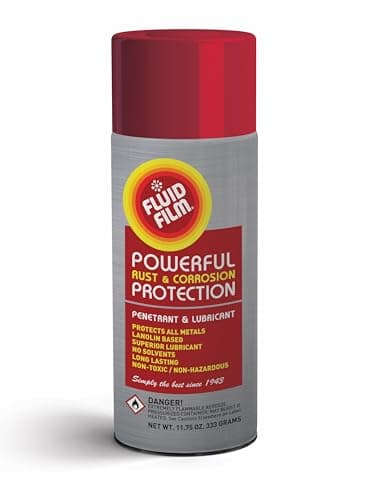
Fluid Film
Fluid Film Rust and Corrosion Protection
One of the cheapest items on this site - a single aerosol can
A lanolin-based, non-drying coating. Non-drying is the whole argument: it stays soft, so it creeps into seams and does not crack and trap moisture underneath the way a hard rubberized coating can once it chips.
Skip it if: You want a permanent, one-time coating. This is deliberately impermanent and must be redone each year.
#ad Price as of October 18, 2026, from Amazon. Prices change. How this site is funded.
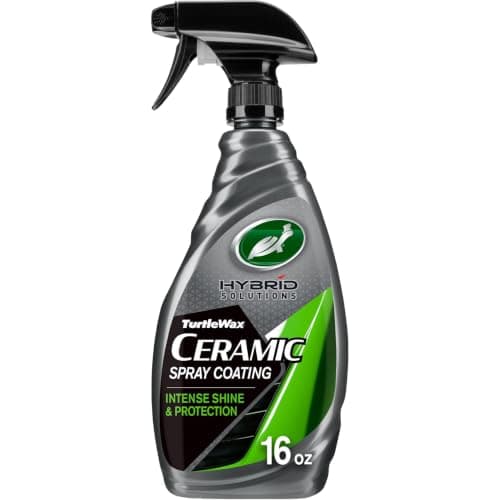
Turtle Wax
Turtle Wax Hybrid Solutions Ceramic Spray Coating
Roughly $15-$25
A spray-on sealant that goes on in twenty minutes and gives salt a slicker surface to fail to stick to. The honest claim is durability and ease, not miracle protection: this is a sacrificial layer, and reapplying it mid-winter matters more than which bottle you bought.
Skip it if: Your clear coat is already failing. A sealant over damaged paint is a coat of gloss on a problem.
#ad Price as of October 18, 2026, from Amazon. Prices change. How this site is funded.
How this was ranked
Every site in this category says it tested twenty of these. We have not tested any, and we say so. What we did instead: built the candidate set from what Amazon actually stocks, compiled the published specifications from each manufacturer’s own pages, did the arithmetic on running cost and on what the thing prevents, and read owner reviews for failure patterns rather than star averages. Every number on this page has a link to where it was published, so you can check the work.
- Units we claim to have tested
- 0
- Sponsored placements
- 0
- Free products accepted
- 0
Frequently asked
What is the best way to protect a car from road salt?
Wash the underbody regularly through the winter — a couple of dollars at an automatic wash with an underbody rinse, every two weeks or so. Support it with a paint sealant and a non-drying underbody coating applied in autumn, and keep the door and sill drain holes clear.
How often should you wash your car in winter?
Every couple of weeks in a heavily salted area, and after any heavy salting. Always choose a day above freezing so you do not freeze the locks and seals shut, and drive for a few minutes afterward to shift water out of the crevices.
Does washing your car in winter actually help?
Yes, and the underbody rinse is the part that matters. Salt is hygroscopic, so residue keeps pulling moisture out of the air and keeps metal wet long after the weather has dried. Removing it is the single highest-value action available, and it costs a few dollars.
Where does road salt damage cars the most?
In the places that never dry: box sections, seam welds, the insides of rocker panels and sills, subframe mounts, and inside wheel arches behind the liners. Those are also the places a normal wash does not reach, which is why the underbody rinse and clear drain holes matter so much.
Is it too late to protect my car if it already has rust?
It depends on how far it has gone. Light surface rust can be treated and then protected. Flaking scale means coating over it achieves little — that needs mechanical preparation first, or a decision to slow it down with regular washing rather than to stop it. Undercoating is preventive, not remedial.
Sources
- Fluid Film or Woolwax?
- The best undercarriage washers for getting salt off
- The best garage floor coating, ranked by the month you can still apply it
- The car winterization checklist, ordered by what it prevents
- Undercoating: DIY or pay a shop?
- The best undercoating spray for a DIY rust job
- The best winter wax, sealant and underbody protection
- The best all-weather floor mats for winter
- Containment mats: the least glamorous purchase here
- Car covers, paint and rust