Fogging is condensation, and that changes what to buy
The inside of your windshield fogs when the glass is colder than the dew point of the air in the cabin. Warm air holds more water than cold air; when that air touches cold glass it cools, it can no longer hold what it is carrying, and the difference lands on the glass as a film of water.
Two things follow. The first is that fogging is a moisture problem rather than a dirt problem, so scrubbing harder does not help. The second is that you can attack it in two different places: change how water behaves on the glass, or take the water out of the cabin. The products below do one or the other, and knowing which is which is most of the buying decision.
How much moisture it takes to fog your glass
Take a cabin at 70 F. At 50 percent humidity, the dew point of that air is about 50 F. At 70 percent humidity — a car with wet boots and snow melting off a coat — it rises to about 60 F.
On a 25 F morning your windshield is nowhere near either figure. It is well below the dew point within seconds of you getting in, which is why the fog appears as you close the door rather than later.
Those dew points are our arithmetic, using the standard Magnus approximation, and they assume the cabin air is at a steady temperature and humidity. The number that matters is the direction: every bit of extra moisture you bring into the car raises the temperature at which the glass starts to fog.
How we judged these
We have not run a fog chamber. We ranked these on what their makers publish and on how each one fits the way winter actually works.
1. Whether the maker publishes an application temperature. Coatings are chemistry and chemistry cares about temperature. It is also the specification that decides whether you can apply the thing in the week you finally remember to.
2. Whether it publishes how long the coating lasts. Neither treatment here does, and we say so rather than inventing a number.
3. Whether it treats the cause or the symptom. A coating makes condensation spread into a clear sheet instead of scattering light as droplets. A desiccant removes the water that condenses in the first place. Different jobs.
4. Which surfaces the maker allows. Interior glass is full of things that hate solvents — defroster grids, tint film, dash plastics — so published surface limits matter.
What each maker publishes
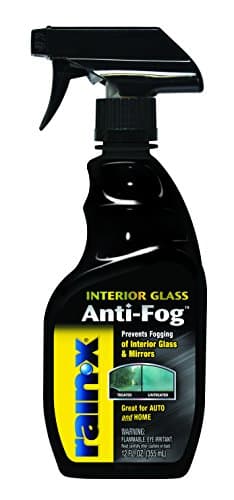
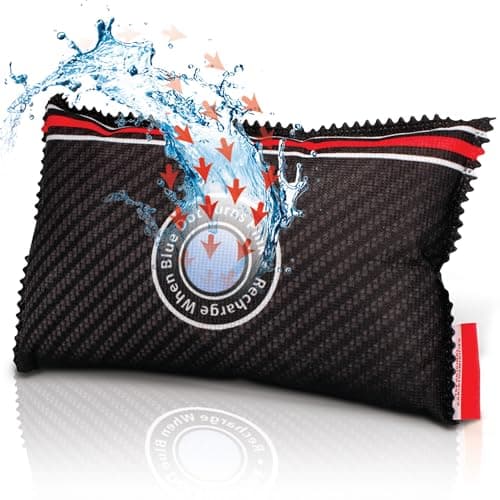
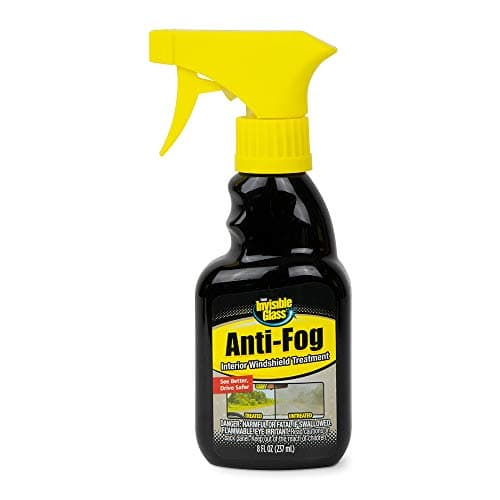
Published claims and conditions for the three products | Invisible Glass Anti-Fog | Rain-X Anti-Fog | Zarpax dehumidifier bag |
|---|
| How it works | Coating on the glass | Coating on the glass | Desiccant removes cabin moisture |
|---|
| Application temperature | Above 40 F, not on hot glass | Not published | Not applicable |
|---|
| Surfaces | Clean interior glass and mirrors only | Interior glass and mirrors | Sits on the floor or a seat |
|---|
| Published duration | Not published | Not published | Not published |
|---|
| Keep it off | Painted metal, plastic, clear coat | Not published | Not applicable |
|---|
| Maker specification page | Yes | Yes | None we could find |
|---|
The Invisible Glass figure is the one worth remembering: use above 40 F. If the car lives outside and it is already below freezing, the maker’s own directions put you outside the window until either the weather or your garage warms up. Rain-X publishes no equivalent number, which is not the same as saying the cold does not matter — it means we cannot tell you what it is rated for.
The free fix that beats both bottles
Before you spend anything: turn the air conditioning on and leave recirculate off. The air conditioning compressor runs in winter on most cars when you select defrost, and its job in that mode is drying rather than cooling. Air passing over a cold evaporator loses its moisture, and the dried air is then heated and thrown at the glass.
Recirculate does the opposite. It keeps re-breathing the damp air you have already filled with moisture from your coat, your boots and your breath, which pushes the cabin dew point up and makes fogging worse. Use fresh air in winter, and save recirculate for traffic fumes.
The products on this page make that system win faster and stay clear longer. They do not replace it.
Skip this
Skip wiping the glass with your sleeve
It clears the fog for about a minute and makes the next hour worse. A sleeve leaves a film of skin oil and fabric fibers across the glass, and both give condensation more edges to form on. The smear then scatters headlights at night, which is a genuine safety problem rather than an aesthetic one.
The same goes for the inside of the windshield generally: the film that builds up there from vinyl, cleaners and cigarette smoke is part of why an old car fogs faster than a new one. Clean the glass properly first, then treat it. Every anti-fog product here says to apply to clean glass, and they mean it.
Where the water is coming from
A coating is a good idea. Removing the water is a better one, and in most cars in winter there are three sources worth dealing with.
Snow on your boots and coat. This is the big one. A set of trays that hold meltwater rather than letting it soak into the carpet padding removes pints of water from the cabin over a winter — and that is what all-weather mats are actually for.
Wet carpet that never dries. Once the padding under the carpet is soaked it stays damp for weeks in a cold car, quietly humidifying the cabin every time you turn the heat on. A desiccant bag helps here; a wet-vac helps more.
A leak you have not noticed. Blocked sunroof drains, a perished door seal or a heater core weeping coolant all put water into a car continuously. If your windows fog badly and the carpet is wet in one particular footwell, no anti-fog spray is going to fix that — find the leak.
What we would buy
For most cars: the Invisible Glass, applied in the fall while it is still above 40 F. It publishes the conditions it needs and the surfaces to keep it off, which is more than the category usually manages.
If you want the cheapest thing that works: the Rain-X. Same basic job for less money, and the only real cost is that you are applying it without a published temperature window to aim at.
If the car is genuinely damp: add the desiccant bag and deal with the source. It is the only product here that lowers the dew point in the cabin rather than managing what happens when the glass falls below it.
And in the moment: air conditioning on, recirculate off, fan at the windshield. That combination clears a screen faster than anything you can buy in a bottle, and it is the same system you are relying on to clear ice.