Skip to content
Frost & Fender
Roundup

The best de-icer sprays, and the $6 thing that matters more

De-icer is a tool with a real job. The product that prevents the actually dangerous winter windshield problem costs six dollars and almost nobody buys it deliberately.

By Scooter M.Published September 1, 2026

Heads up: the buy links on this page are affiliate links. If you buy through one, we earn a commission at no extra cost to you. It does not change what we recommend or the order we rank things in - here is how we keep those separate.

The shortlist

Ranked, with the prices

Ranked on published manufacturer specifications and, where the numbers exist, the arithmetic on what each option costs and what it saves. Tap any row for the full write-up, including who should skip it.

#ProductBest forScorePrice
01Ice being cleared from a car windshield - a stand-in for the Rain-X De-Icer Windshield Washer Fluid, not a photograph of this modelRain-X De-Icer Windshield Washer FluidThe single cheapest winter-prep item on this siteBest winter fluid9.1Check price on Amazon
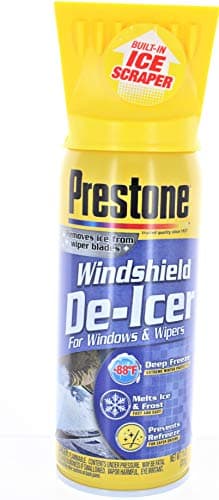
02Ice being cleared from a car windshield - a stand-in for the Prestone Windshield De-Icer, not a photograph of this modelPrestone Windshield De-IcerThin overnight glaze and frozen-shut wiper bladesBest aerosol de-icer8.2Check price on Amazon
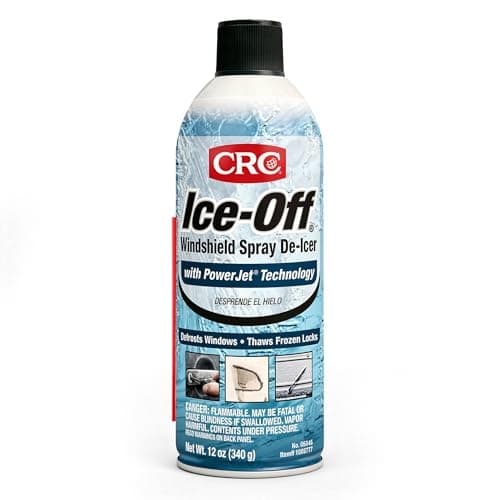
03Ice being cleared from a car windshield - a stand-in for the CRC Ice-Off Windshield Spray De-Icer, not a photograph of this modelCRC Ice-Off Windshield Spray De-IcerA spare can for the trunkBest spare can7.6Check price on Amazon

Scores are ours and editorial. They are never published as review or rating markup, because we have not tested these products - see how we pick.

The unglamorous winner

The top pick on this page is not a de-icer spray. It is winter-rated windshield washer fluid, and it is here because it prevents the one genuinely dangerous failure in this whole category.

Summer washer fluid is mostly water. It freezes in the reservoir, in the lines and in the jets. Once it has, you cannot clear the film of salt spray that builds on the glass within minutes of joining a treated road. Driving into low winter sun through a salt-filmed windshield with no way to wash it is genuinely hazardous, and the fix costs about six dollars and takes five minutes.

The cheapest safety upgrade on the car

A gallon of winter-rated washer fluid is $5 to $8. Nothing else on this site prevents a failure of that severity for that money.

The one thing to get right: you have to actually displace the summer fluid. Run the washers until the reservoir is genuinely low, then fill with winter fluid and run them again. Topping up a full reservoir dilutes the winter fluid and moves the freezing point somewhere you cannot predict.

What aerosol de-icer is genuinely good at

One thing, and it is a real thing: freeing wiper blades that have frozen to the glass. A scraper physically cannot do this without risking the rubber edge, and a frozen blade dragged across the windshield by the wiper motor is how blades tear.

It is also useful on frozen door locks, frozen door seals, and the thin overnight glaze that is not worth starting the engine for.

What it is not good at

Being your daily method. The cost per use is real — a can does a handful of heavy mornings — and on a genuine quarter-inch of glaze it is both slow and expensive. If you are reaching for de-icer every morning, you do not have a de-icer problem. You have a cover problem.

There is a second failure mode worth knowing about: overspray runs down onto the cowl and the wiper park area, where it refreezes as the diluted solution loses concentration. That can leave you with wipers frozen into a slot at the bottom of the glass. Spray the ice, not the whole car.

Skip this

Skip the homemade alcohol-and-water de-icer, mostly

The internet recipe — isopropyl alcohol and water in a spray bottle — does lower the freezing point and it does work on thin frost. It is a reasonable emergency measure.

Two reasons it is not a plan. Alcohol is aggressive toward some rubber and plastic trim with repeated exposure, and it strips wax from paint it runs onto. And a commercial de-icer is a few dollars a can with a formulation designed for the job. The saving is small enough that the risk is not obviously worth it.

The one homemade approach we would rule out entirely is salt water. It works, and it puts salt on the exact panels you are trying to protect from salt.

The comparison nobody publishes

These products are sold on claims like “melts ice on contact” with no published freezing point for the treated film and no stated coverage. We mark that as unpublished on every entry rather than inventing figures, and the honest consequence is that there is very little to choose between the aerosols on performance.

Buy whichever is cheapest on the shelf. Spend the attention you saved on the washer fluid and the cover, which are the two decisions that actually change your mornings.

The write-ups

Every pick, in full

01 / Best winter fluidIce being cleared from a car windshield - a stand-in for the Rain-X De-Icer Windshield Washer Fluid, not a photograph of this model

Rain-X

9.1 / 10

Roughly $5-$8 a gallon

Rain-X De-Icer Windshield Washer Fluid

The one winter product almost nobody buys deliberately and everybody should. Washer fluid rated for freezing temperatures stops the reservoir and the jets freezing solid, which is the failure that leaves you driving into low winter sun through a smeared windshield.

Check price on Amazon

#ad We hold no verified live price for this product, so we show none. How this site is funded.

Published specifications for the Rain-X De-Icer Windshield Washer Fluid, with the source of each
SpecificationPublished valueWhere it is published
FormWindshield washer fluid with de-icing additiveRain-X De-Icer washer fluid product page
Stated functionMelts ice and frost, resists refreeze on the glassRain-X De-Icer washer fluid product page
Freeze protection temperatureStated on the container; check the label for the rating you are buyingRain-X De-Icer washer fluid product page

The arithmetic

$6 against being unable to see through the windshield at 60 mph.

Summer washer fluid is mostly water and freezes in the lines. Once the jets are frozen you have no way to clear road spray and salt film, which is the single most common cause of a genuinely dangerous winter windshield. The replacement cost is a jug of fluid.

What it does well

  • Stops the washer reservoir and jets freezing, which summer fluid does not
  • Cheapest meaningful winter upgrade on the whole car
  • Works with the wipers you already have

What it does not

  • You must actually drain or dilute out the summer fluid first
  • Ratings vary between products, so read the temperature on the jug
  • Does nothing for ice already on the glass in any quantity

Skip this one if

Nothing. If you drive in a freezing climate, put winter fluid in.

How it scores, by criterion

Prevents the failure9.5
Cost10.0
Effort to fit9.5
Ice-melting power6.0
Availability9.5
02 / Best aerosol de-icerIce being cleared from a car windshield - a stand-in for the Prestone Windshield De-Icer, not a photograph of this model

Prestone

8.2 / 10

Roughly $5-$9 a can

Prestone Windshield De-Icer

A spray-on aerosol that melts a thin ice layer fast enough to get the wipers working. It is a de-icer, not a substitute for a scraper on a quarter-inch of glaze, and treating it as one is how a can gets emptied in a week.

Check price on Amazon

#ad We hold no verified live price for this product, so we show none. How this site is funded.

Published specifications for the Prestone Windshield De-Icer, with the source of each
SpecificationPublished valueWhere it is published
FormAerosol sprayPrestone Windshield De-Icer product page
Stated useMelts ice and frost on windshieldsPrestone Windshield De-Icer product page
Freeze point of treated filmNot published by the manufacturerPrestone Windshield De-Icer product page

What it does well

  • Frees frozen wiper blades in seconds, which a scraper cannot do
  • Small enough to keep in a door pocket
  • Useful on frozen door locks and rubber seals as well as glass

What it does not

  • Cost per use is real: a can does a handful of heavy mornings
  • Runs down onto the cowl and refreezes if you overspray
  • Does nothing about the snow on the roof

Skip this one if

You reliably get thick ice. Spray de-icer on heavy ice is expensive and slow; a cover the night before costs nothing per use.

How it scores, by criterion

Speed on thin ice9.0
Speed on thick ice5.0
Cost per use6.0
Portability9.5
Price9.0
03 / Best spare canIce being cleared from a car windshield - a stand-in for the CRC Ice-Off Windshield Spray De-Icer, not a photograph of this model

CRC

7.6 / 10

Roughly $5-$10 a can

CRC Ice-Off Windshield Spray De-Icer

An alternative aerosol from an industrial chemical maker. Functionally interchangeable with the other spray de-icers; buy whichever is cheapest on the shelf, because none of them beats a cover.

Check price on Amazon

#ad We hold no verified live price for this product, so we show none. How this site is funded.

Published specifications for the CRC Ice-Off Windshield Spray De-Icer, with the source of each
SpecificationPublished valueWhere it is published
FormAerosol spray de-icerCRC Industries published product information
ManufacturerCRC IndustriesCRC Industries published product information
Freeze point of treated filmNot published by the manufacturerCRC Industries published product information

What it does well

  • Widely stocked at auto parts counters
  • Works on locks and door seals as well as glass
  • Cheap enough to keep a spare

What it does not

  • No published performance figures to compare against rivals
  • Same cost-per-use problem as every aerosol de-icer
  • Aerosol pressure drops in genuinely deep cold

Skip this one if

You already own a can. Two cans of de-icer is not a strategy.

How it scores, by criterion

Speed on thin ice8.5
Speed on thick ice5.0
Cost per use6.0
Published data4.0
Price8.5

How this was ranked

Every site in this category says it tested twenty of these. We have not tested any, and we say so. What we did instead: built the candidate set from what Amazon actually stocks, compiled the published specifications from each manufacturer’s own pages, did the arithmetic on running cost and on what the thing prevents, and read owner reviews for failure patterns rather than star averages. Every number on this page has a link to where it was published, so you can check the work.

Units we claim to have tested
0
Sponsored placements
0
Free products accepted
0

The full method, including what we refuse to claim
Questions people actually ask

Frequently asked

Does de-icer spray damage car paint?

Commercial windshield de-icers are formulated to be used around paint and are not aggressive toward it in normal use. What they do strip is wax and sealant, so repeated overspray onto a panel removes the protection you applied in October. Aim at the glass, and rinse the car when you next get a mild day.

Can I use de-icer instead of scraping?

On thin frost, yes. On a real layer of glaze it is slow and the cost per use adds up fast, because a can does only a handful of heavy mornings. Use it for what it uniquely does — freeing frozen wiper blades, locks and seals — and prevent the ice with a cover instead.

What is the difference between de-icer spray and de-icer washer fluid?

Different products for different jobs. The aerosol is sprayed directly onto ice to melt it. The washer fluid goes in the reservoir, will not freeze there, and is what you use at speed to clear salt film. Most drivers need the fluid more than the spray. The direct comparison is here.

Will de-icer work in extreme cold?

Less well, in two ways. The melting action slows sharply as temperature drops, and aerosol can pressure itself falls in deep cold, so the spray gets weak. Below about 0 F, expect to run the defroster and use a scraper regardless of what is in the can.

How do I stop my windshield washer fluid freezing?

Use fluid rated for temperatures below the coldest you expect, and actually displace the summer fluid rather than topping it up. Run the washers until the reservoir is low, refill with winter fluid, then run them again to push it through the lines and jets. Check the temperature rating printed on the jug — the ratings vary between products.

Sources

Read next