Skip to content
Frost & Fender
Roundup

The best ice scrapers for a car windshield

Most ice scraper advice rests on one claim - that a soft blade cannot scratch hard glass. Published glass research says that is not how scratching works, which changes what you should actually look for.

By Scooter M.Published September 16, 2026

Heads up: the buy links on this page are affiliate links. If you buy through one, we earn a commission at no extra cost to you. It does not change what we recommend or the order we rank things in - here is how we keep those separate.

The shortlist

Ranked, with the prices

Ranked on published manufacturer specifications and, where the numbers exist, the arithmetic on what each option costs and what it saves. Tap any row for the full write-up, including who should skip it.

#ProductBest forScorePrice
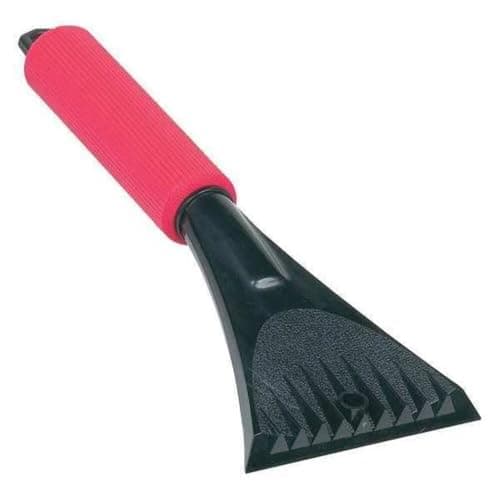
01SubZero SubZero 1124F Klondike Ice ScraperSubZero 1124F Klondike Ice ScraperAnyone who wants one cheap scraper that deals with frost and thick iceBest all-rounder8.5$8.24 - View on Amazon
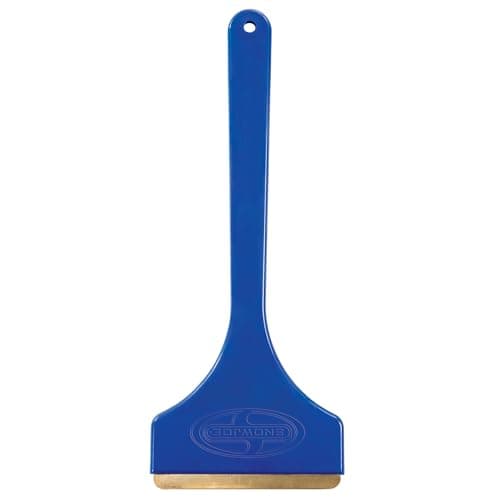
02Snow Joe Snow Joe SJEG01 Edge Ice Scraper with Brass BladeSnow Joe SJEG01 Edge Ice Scraper with Brass BladeSomeone who wants a metal edge for hard ice and is careful about keeping the glass cleanBest metal blade8.2$9.97 - View on Amazon
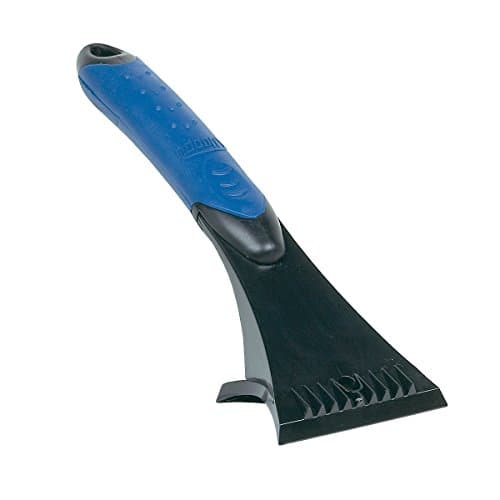
03SubZero SubZero 15511 Talon Dual Blade Ice ScraperSubZero 15511 Talon Dual Blade Ice ScraperGlazed windshields where the ice is bonded and you want to cut on the return stroke tooBest for bonded glaze7.8$14.99 - View on Amazon

Scores are ours and editorial. They are never published as review or rating markup, because we have not tested these products - see how we pick.

Scraping ice is not the same job as brushing snow

A snow brush moves loose snow off a car, and its whole risk is the paint. We rank those separately, on paint safety, in our snow brush roundup. An ice scraper does a different job on a different surface: it cuts frost and ice that has bonded to glass. The risk moves from the clear coat to the windshield, and the tool that is right for one is usually wrong for the other.

That distinction matters because most buying advice blends them. A combination brush-and-scraper is a perfectly good thing to own, but its scraper end is a compromise bolted onto a brush. This page is about the dedicated hand scraper — the small flat tool that lives in the door pocket and does the actual ice.

How we judged these

1. Does it handle the ice you actually get? Frost and glaze are different problems. Frost is a thin crystalline layer that a wide blade clears in a few passes. Glaze — freezing rain, or melt that refroze overnight — is a bonded sheet that a wide blade skates over. That needs a narrower cutting edge or chipper teeth that concentrate force. The best single tool does both.

2. What is the blade made of, and does the maker say? This is the part of the scraper that touches your glass, and two of the three makers here do not publish it. We record that as unpublished on each entry rather than guessing from a photograph.

3. Size and storage. A scraper you have to go back into the house for is a scraper you do not have. Everything here is compact; the difference is whether it fits a door pocket or a glove compartment.

4. Grip in gloves. You will be using this at the coldest point of the day with thick gloves on. A handle that is fine bare-handed can be useless in a ski glove.

“Brass is softer than glass” — right answer, wrong reason

Brass-bladed scrapers are sold on a tidy argument. Snow Joe’s own product page for its brass scraper says it will not scratch glass because brass is softer than glass. It sounds like physics, and it is the explanation nearly every ice scraper page repeats.

Published glass research says hardness is not what decides it. Senior scientists at AGR International tested six metals, and glass itself, in sliding contact with clean soda-lime-silica glass under a constant load, then measured how much each one weakened the glass. Their conclusion: the damage tracked the coefficient of static friction, not hardness, and “soft metals can cause damage to glass surfaces.” Every metal they tested — brass included — left the glass measurably weaker than the untouched control.

Selected results from the AGR International glass study (Glass Worldwide, March/April 2018)
MaterialMohs hardnessCoefficient of static frictionGlass strength afterwards (psi)
Untouched control glass--561,700
Brass 2603.0-4.00.25149,600
Copper2.5-3.00.2496,100
Stainless steel 3045.5-6.30.4525,500
Aluminum2.0-2.90.6417,700
Carbon steel5.0-5.50.779,400
Soda-lime-silica glass5.50.8510,600

Look at aluminum and brass side by side. Aluminum is softer than brass, yet it did far more damage — and its friction against glass was more than twice as high. If softness were the protection, that result would be the other way round.

And here is the part that rescues brass: in that same test it was the least damaging of every metal, with one of the two lowest friction coefficients. (Copper’s was a shade lower still and did more damage, so friction is a strong trend in these results rather than a perfect rule.) So the brass scraper’s reputation holds up — the reason offered on the box is simply not the one the data supports, and that matters, because it tells you what actually protects your glass.

What the study's numbers actually say

Untouched glass in the study held 561,700 psi. After brass slid across it, the average strength was 149,600 psi. That is 561,700 minus 149,600, divided by 561,700 — a 73% loss of surface strength from the gentlest metal tested.

Carbon steel took the same glass down to 9,400 psi: a 98% loss. That is the reason not to reach for a steel putty knife or a metal paint scraper when the proper tool is not to hand.

One honest caveat, and it is an important one. These were small, clean, lab-prepared glass plates under a fixed one-kilogram load with a rounded tip — not a windshield and a real scraper blade. The study tells you what drives damage; it does not tell you how many passes a particular scraper takes to mark your particular glass, and it tested metals only, so it says nothing about plastic blades either way.

Skip this

Skip scraping grit across dry glass - with any blade

This is our reasoning rather than the study’s, and we are flagging it as such: if friction under load is what damages glass, the worst thing you can put between a blade and a windshield is a hard particle. Road grit and dried salt sit on a winter windshield all the time, and a scraper drags whatever is trapped under its edge across the glass.

That is why blade material is the second question, not the first. Let the defroster run for a few minutes before you scrape, so the ice releases and you are not grinding a dry edge across dirty glass. And never improvise with a steel tool: in the study, carbon steel was the most damaging material tested.

Also skip scraping across a rear window’s defroster lines or any aftermarket tint film. Check your owner’s manual for what it says about the rear glass on your vehicle.

Frost or glaze: match the blade to the morning

Frost mornings — a white crystalline layer after a clear cold night — want width. The SubZero Klondike publishes a 4-inch frost blade, which covers a windshield in fewer passes than a narrow edge. Honestly, on most frost mornings a windshield cover removes the job entirely, and it is the cheaper long-term fix.

Glaze mornings — freezing rain, or melt that refroze into a clear hard sheet — want concentrated force. That means chipper teeth, a narrower metal edge, or a blade that cuts on both strokes. The Klondike publishes oversized chippers; the Talon publishes a push-pull blade; the Snow Joe gives you a metal edge.

If you only buy one, buy the one that does both, which is why the Klondike is ranked first: it publishes a wide frost blade and ice chippers on the same tool, at the lowest price here.

Let heat do the hard part

A scraper is the last step, not the first. Start the car, set the defroster to the windshield, and do something else for a few minutes — clear the lights, brush the roof. Ice that has started to release from warmed glass comes off in sheets; ice you attack cold comes off in flakes and takes three times the effort.

A de-icer spray does the same thing faster where you cannot wait. The de-icers worth buying are ranked here, and if you are caught with no scraper at all, these are the methods that actually work— and the ones that crack glass.

What we would buy

One scraper for everything: the SubZero Klondike. A published 4-inch frost blade and oversized chippers on the same flat tool, and the cheapest of the three. Its real weakness is that SubZero does not publish the blade material.

If you want a metal edge: the Snow Joe brass scraper. Brass was the least damaging metal in the published study, and Snow Joe publishes the dimensions. Just keep the glass clean and let the defroster work first, because low friction is doing the protecting, not softness.

If glaze is your usual problem: the SubZero Talon, for a blade that cuts on the return stroke too. It is the most expensive here and the least forthcoming about its blade.

What we would not buy: a heated 12-volt scraper. The socket it plugs into is published by vehicle makers at a maximum of 120 watts, which is about a twelfth of a hair dryer, and that number settles the question. The cordless motorized type is a different product with a real use case, and it is covered on the same page.

On a tall vehicle, any 11-inch hand scraper will leave the middle of the windshield out of reach. A long telescoping broom with a scraper end is the better tool there.
The write-ups

Every pick, in full

01 / Best all-rounderSubZero SubZero 1124F Klondike Ice Scraper

SubZero

8.5 / 10

The cheapest scraper on this page

SubZero 1124F Klondike Ice Scraper

The one tool that handles both halves of a frozen morning: a published 4-inch frost blade for the thin stuff and oversized chippers for the glaze underneath it. It is also the cheapest scraper on this page, which for a tool that lives in a door pocket and gets lost every other winter is not a small point.

$8.24 - View on Amazon

#ad Price as of October 18, 2026, from Amazon. Prices change. How this site is funded.

What it does well

  • A wide blade and ice chippers in one tool, so frost and glaze do not need two purchases
  • Flat enough to live in a door pocket, which is where a scraper is actually useful
  • The lowest price on this page for the most published features

What it does not

  • Blade material is not published, so you cannot know what is touching your glass
  • 11 in is a hand tool - it will not reach the middle of an SUV or truck windshield
  • Chippers break glaze but put force through a small point, so they need a lighter hand than the blade

Skip this one if

You specifically want a metal blade. SubZero does not publish what this blade is made of, and that is the one thing you cannot find out before buying.

How it scores, by criterion

Frost clearing9.0
Thick ice8.5
Published data6.5
Storage9.0
Price9.5
02 / Best metal bladeSnow Joe Snow Joe SJEG01 Edge Ice Scraper with Brass Blade

Snow Joe

8.2 / 10

Under ten dollars

Snow Joe SJEG01 Edge Ice Scraper with Brass Blade

The metal-blade option, and the one whose sales pitch is half right. Snow Joe says brass will not scratch glass because it is softer than glass. Published glass research says softness is not what decides damage - friction is the stronger trend - but it also found brass the least damaging of every metal it tested. Right answer, wrong reason.

$9.97 - View on Amazon

#ad Price as of October 18, 2026, from Amazon. Prices change. How this site is funded.

Published specifications for the Snow Joe SJEG01 Edge Ice Scraper with Brass Blade, with the source of each
SpecificationPublished valueWhere it is published
Blade4.8 in brass bladeSnow Joe Edge Ice Scraper with Brass Blade (SJEG01) - published product page
Dimensions4.8 in wide by 12.5 in longSnow Joe Edge Ice Scraper with Brass Blade (SJEG01) - published product page
StoragePublished as compact enough to fit inside a glove compartmentSnow Joe Edge Ice Scraper with Brass Blade (SJEG01) - published product page
Maker's glass claimStated as not scratching glass because brass is softer than glass - see the page for what published research says about that reasoningSnow Joe Edge Ice Scraper with Brass Blade (SJEG01) - published product page

What it does well

  • Brass was the least damaging of the six metals in a published glass-contact study
  • Snow Joe publishes both the blade width and the overall dimensions
  • Small enough for a glove compartment, with published dimensions to check that against

What it does not

  • The maker's reason it will not scratch - softness - is contradicted by the published research, even if the outcome for brass is good
  • A 4.8 in blade is narrower than the wide frost blades, so it is slower on a large frosted windshield
  • No ice chippers, so thick glaze is all blade work

Skip this one if

You are scraping a dry, gritty windshield. No blade material saves you from dragging grit across glass, and a metal edge gives you less warning than plastic.

How it scores, by criterion

Frost clearing7.5
Thick ice8.0
Published data8.0
Storage9.5
Price9.0
03 / Best for bonded glazeSubZero SubZero 15511 Talon Dual Blade Ice Scraper

SubZero

7.8 / 10

The most expensive scraper on this page, still a two-figure-or-less purchase

SubZero 15511 Talon Dual Blade Ice Scraper

Built around one idea, a push-pull blade that cuts on both strokes instead of one, which on a glazed windshield roughly halves the wasted motion. It is the most expensive scraper here and publishes the least about the part that touches your glass.

$14.99 - View on Amazon

#ad Price as of October 18, 2026, from Amazon. Prices change. How this site is funded.

What it does well

  • Cuts on the push and the pull, which matters most on bonded glaze
  • Rubber grip that stays usable in gloves
  • Compact enough to keep in any vehicle

What it does not

  • The highest price of the three for the least published detail about the blade
  • Blade material not published
  • No published chippers, so the thickest ice is still slow work

Skip this one if

Your mornings are mostly frost. A wide single blade clears frost faster and costs less.

How it scores, by criterion

Frost clearing7.5
Thick ice8.5
Published data5.5
Storage9.0
Price8.0

How this was ranked

Every site in this category says it tested twenty of these. We have not tested any, and we say so. What we did instead: built the candidate set from what Amazon actually stocks, compiled the published specifications from each manufacturer’s own pages, did the arithmetic on running cost and on what the thing prevents, and read owner reviews for failure patterns rather than star averages. Every number on this page has a link to where it was published, so you can check the work.

Units we claim to have tested
0
Sponsored placements
0
Free products accepted
0

The full method, including what we refuse to claim

Questions people actually ask

Frequently asked

What is the best ice scraper for a car windshield?

For one tool that handles both frost and glaze, the SubZero Klondike: it publishes a 4-inch frost blade and oversized chippers on the same scraper, and it is the cheapest of the three we rank. If you specifically want a metal blade, the Snow Joe brass scraper is the pick, and published research explains why brass is gentle on glass.

Will a brass ice scraper scratch my windshield?

It is the least likely of the metal options, but not for the reason usually given. The box says brass is softer than glass. Published research by AGR International found that damage to glass tracks friction rather than hardness, that soft metals can damage glass, and that brass was the least damaging of the six metals tested, and its friction was one of the two lowest. Keeping grit off the glass matters as much as the blade.

Is a brass or plastic ice scraper better?

We cannot give you a data-backed answer, and we would rather say so. The glass research we cite tested metals only, not plastics. Snow Joe claims brass is tougher than plastic scrapers, but we have no independent figures on that. What we can say is that two of the three scrapers here do not publish their blade material at all, so you cannot make that comparison before buying.

Can I use a credit card to scrape ice?

In a real emergency, on light frost, yes — and expect to ruin the card. It will do almost nothing on glaze. The better emergency option is heat: run the defroster and wait. The full no-scraper method is here, including why hot water is a bad idea.

How do I remove ice from a windshield without scratching it?

Let heat do most of the work first: start the car and run the defroster so the ice releases from the glass. Then scrape with a proper scraper rather than anything metal and improvised — in the AGR study, carbon steel was the most damaging material tested. And avoid dragging a blade across dry, gritty glass.

What ice scraper works on an SUV or truck?

A hand scraper will not reach the middle of a tall windshield, which is the real problem on an SUV or truck. Use a long telescoping broom with a scraper end for reach, and keep a small hand scraper for the side windows and mirrors. Reach is the whole specification on a tall vehicle.

Sources

Read next