The answer first
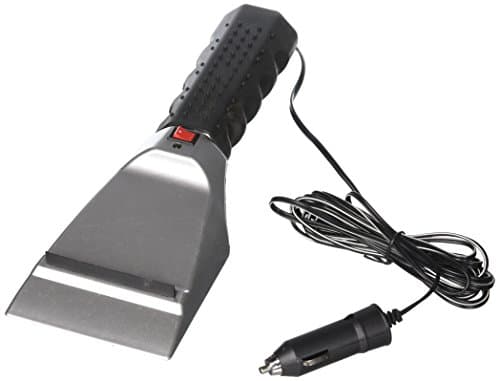
No. A 12-volt heated ice scraper cannot melt the ice on your windshield, and the number that proves it is in your own owner’s manual. Mazda publishes the limit for its accessory sockets as “no greater than 120 W (DC 12 V, 10 A)”. Renault publishes 180 watts as the combined ceiling across several sockets. That is the entire power budget available to anything you plug into a cigarette-lighter outlet.
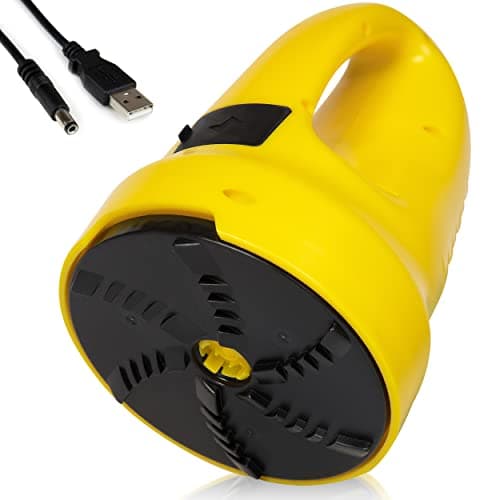
The cordless “electric ice scraper” is a completely different product, and it is worth considering. It is not a heater — it is a motor that spins a scraping head. It supplies the force instead of your shoulder, which is a real benefit if your hands or wrists hurt. It is not faster.
What actually beats both is a $10 scraper with the right blade, and a cover the night before. Neither needs power, neither needs charging, and neither has a cord trailing out of the driver’s door into the slush.
The 120-watt problem, in numbers
Here is the comparison that puts a 12-volt heated scraper in perspective, built entirely from published figures.
What 120 watts is, next to things that do melt ice
Your accessory socket: 120 W maximum, per Mazda’s published rating of 120 W at DC 12 V, 10 A. Renault publishes 180 W as the total across multiple sockets. So 120 W is the realistic ceiling for one device.
A domestic hair dryer: around 1,500 W. That is the same figure as the 1,500 W plug-in space heaters we have priced per hour on the garage heater side of this site.
So the socket supplies roughly one-twelfth of a hair dryer — and even that is being generous, because it is the ceiling rather than what the scraper draws, and the scraper publishes no wattage at all.
Now consider where that trickle of heat has to go. It warms a small plastic blade, which is in contact with glass, which is bonded to a sheet of ice at perhaps 20 F, in moving air, with a car body behind it acting as a heat sink. Melting ice also takes a large and fixed amount of energy per gram — far more than merely warming it does — which is why a pond takes all day to thaw on a mild afternoon.
One-twelfth of a hair dryer, through a blade, into that. The arithmetic is ours; the 120 W input is the vehicle maker’s published figure.
None of which means the warm blade does literally nothing. On thin overnight frost, a slightly warm edge helps release the frost film from the glass, and the scraper then does the work. That is a real but small effect, and it is not what the product is sold on.
What the listings publish, which is almost nothing
This category is unbranded, which the published data reflects. We checked the current listings and here is what is actually stated.
Published figures across the electric scraper category | 12V heated scraper | Cordless electric scraper | Manual scraper |
|---|
| How it works | Heating element in the blade, powered from the accessory socket | Motor spins a scraping head; no heating element | You push it |
|---|
| Wattage drawn | Not published | Not published | Not applicable |
|---|
| Power available | Capped at 120 W by the socket, per the vehicle maker | Whatever the internal cell delivers - capacity not published | Unlimited, and free |
|---|
| Run time | As long as the car tolerates it | Not published | Not applicable |
|---|
| Time to clear a windshield | Not published by any listing we checked | Not published | Published blade widths let you work it out |
|---|
| Blade material | Not published | Not published | Published - brass, polycarbonate and so on |
|---|
| Cold-weather behavior of its own power source | Fine - the car supplies it | Not published, and a lithium cell in a freezing car is the obvious question | Not applicable |
|---|
| Typical price | Under $10 to about $30 | About $25 to $50 | $8 to $15 |
|---|
That table is the real argument. Every scraper we rank in the manual scraper roundup publishes a blade length, a blade design and in most cases a blade material, because the makers are confident enough in the thing to describe it. The heated and electric category publishes the price and a photograph.
The cordless electric type: a genuinely different question
It is worth separating these two products, because the internet conflates them and they deserve different verdicts.
A cordless electric ice scraper has no heating element. It is a battery-powered motor turning a scraping disc, and it is doing the pushing that your arm would otherwise do. Judged as a labor-saving device rather than as a de-icer, it has a legitimate case.
Who it is for: anyone with arthritis, a shoulder injury, a wrist problem, or any condition that makes gripping and shoving a plastic blade across a frozen windshield painful. For that person, a device that supplies the force is worth thirty dollars whether or not it is faster.
Who it is not for: anyone who just wants the job done sooner. A wide manual blade plus bodyweight clears more square inches per second than a small powered head. It is also the one product here whose own power source is affected by the weather — a lithium cell left in a car at 10 F will not deliver what it delivers indoors, and lithium also should not be charged below freezing, so it needs bringing inside.
The socket has other claims on it
The 120-watt figure is per socket, and it is not the only limit in play. Renault publishes the other one: “when several accessory sockets are used at the same time, the total power of the connected accessories must not exceed 180 watts.”
On a winter morning the socket is a contested resource. A phone on a fast charger, a dash cam, a heated seat cushion, a 12-volt tire inflator and now a heated scraper are all drawing from the same circuit, and the car does not warn you about the total — it just blows a fuse. A blown accessory fuse on a January morning is a worse outcome than slow scraping, because it also takes out the phone charger you were relying on.
It is worth noting what the socket is genuinely good for in winter, because the comparison is instructive. A 12-volt tire inflator works well off the same 120 watts, because compressing air into a tire is a small amount of work done slowly, and nothing is fighting a heat sink. Melting ice is the opposite: a large, fixed energy cost per gram, against glass that is bonded to a car body sitting at ambient. Same socket, completely different job.
The heat source you already paid for
There is a device in your car that genuinely does melt windshield ice, and it came with the car. It is the defroster, and it is powered by the engine rather than by a cigarette-lighter socket, which is the whole point.
The sequence that actually works is the one on our scraper roundup: start the car, set the defroster to the windshield on full, and spend the next few minutes clearing the roof, the lights and the side windows while it works. Ice that has started to release from warmed glass comes off in sheets. Ice attacked cold comes off in flakes.
That sequence is free, it needs no cord, and it is the reason a heated scraper has almost no room to add value: by the time you have plugged anything in, the thing that was always going to do the melting is already doing it.
The honest exception is a car you cannot start — a flat battery, or a vehicle you are clearing before jump starting it. In that specific case there is no defroster, and there is also no 12-volt socket worth drawing on, which rules out the heated scraper too. That morning you want a can of aerosol de-icer and a manual blade.
Skip this
The cord is a worse problem than it sounds
The 12-volt type comes with a cord — fourteen feet on the cheapest one we found, which is long enough to reach the rear window. Think about what using it involves on a wet February morning.
You unlock a frozen door, reach into the car, plug into the socket, then work around the outside of the vehicle with the cord running out through the door opening. The door cannot close. Snow blows into the cabin and onto the seat. The cord drags through whatever is on the ground and then gets coiled, wet and salty, back into the footwell.
Mazda also publishes the other half of the problem: “To prevent discharging of the battery, do not use the socket for long periods with the engine off or idling.” So you either run the engine while you scrape, or you draw on a battery that is already down on capacity because it is cold.
What to buy instead, in order of how much it helps
1. A windshield cover, for about the price of the electric scraper. This is the honest top recommendation and it is not on this page because it is not a scraper. A cover means there is no ice on the glass to remove, which beats every possible scraper by a margin no amount of wattage closes. We did the per-use arithmetic on whether covers are worth it and the answer was comfortably yes.
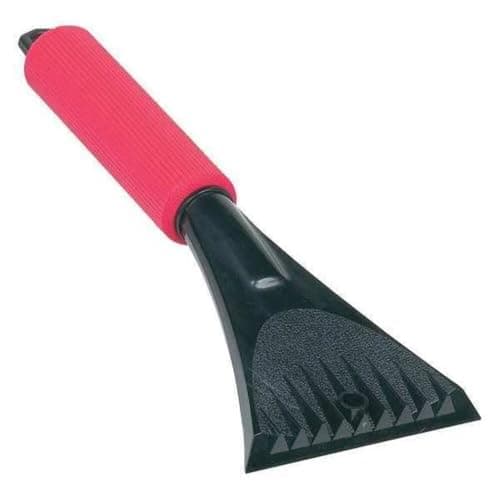
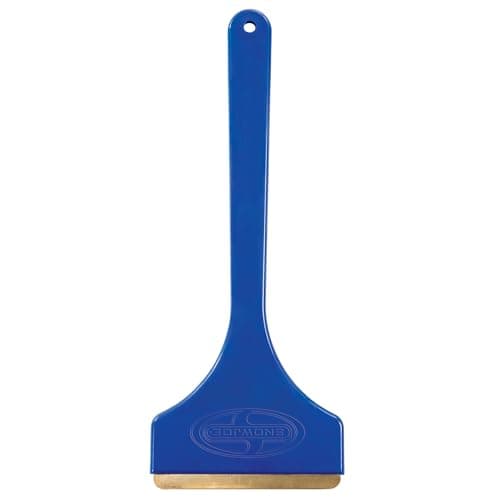
2. A scraper with a blade chosen for your ice. Frost and bonded glaze want different tools, and the published blade specifications let you choose. A wide blade clears frost fastest; a brass blade is the gentler option on glass for reasons we go into on the scraper roundup. Both cost under fifteen dollars.
3. Winter washer fluid in the reservoir. The cheapest genuinely useful purchase in this hub, and the one that stops the failure that actually ends badly: frozen jets and no way to clear road film. Ranked by published freeze rating here.
4. A can of aerosol de-icer in the door pocket. For frozen wiper blades and a frozen lock, which no scraper of any kind addresses. The sprays, honestly assessed.
5. The cordless electric scraper, if the problem is your hands. Genuinely useful for that, and not for speed.
6. The 12-volt heated scraper, at under ten dollars, if you are curious. We have ranked it last and told you the physics. At that price it is a cheap experiment rather than a bad decision, and it does help with thin frost. Just do not buy it expecting it to melt anything.