Skip to content
Frost & Fender
Roundup

Frozen car door lock: what actually fixes it, and what stops it

There is a product for this and it costs a few dollars. The catch is that the most common place to keep it is the glovebox of the car you are standing outside of.

By Scooter M.Published September 13, 2026

Heads up: the buy links on this page are affiliate links. If you buy through one, we earn a commission at no extra cost to you. It does not change what we recommend or the order we rank things in - here is how we keep those separate.

The shortlist

Ranked, with the prices

Ranked on published manufacturer specifications and, where the numbers exist, the arithmetic on what each option costs and what it saves. Tap any row for the full write-up, including who should skip it.

#ProductBest forScorePrice
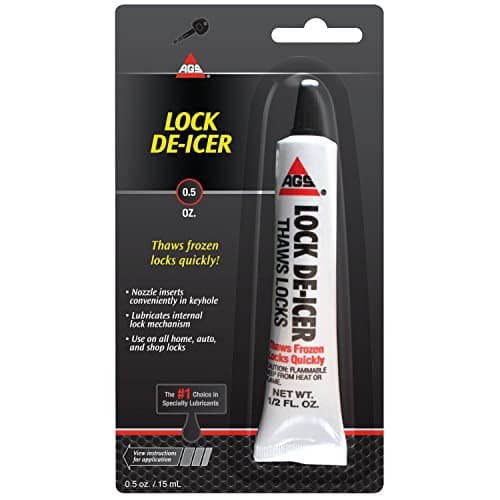
01AGS AGS MZ-1 Lock De-Icer LubricantAGS MZ-1 Lock De-Icer LubricantKeeping on your person, so it is with you when the lock is frozenBest to actually carry8.4$5.22 - View on Amazon
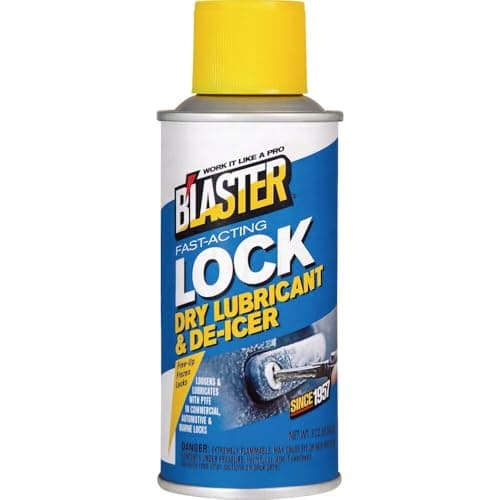
02Blaster Blaster Lock De-IcerBlaster Lock De-IcerA household with more than one vehicle, or a lock that freezes repeatedlyBest for a household7.9$12.10 - View on Amazon
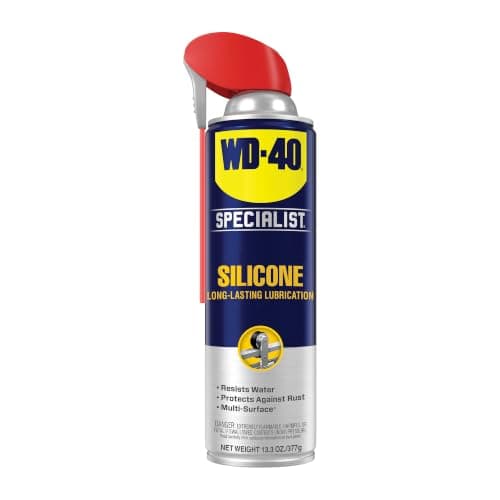
03WD-40 WD-40 Specialist Silicone LubricantWD-40 Specialist Silicone LubricantThe rubber bottom seal, the jamb weatherstrip and any plastic roller or bushingBest at preventing it8.5$13.53 - View on Amazon

Scores are ours and editorial. They are never published as review or rating markup, because we have not tested these products - see how we pick.

Why the lock freezes, and why it is usually not the lock

Two different things get called a frozen door, and they want different products.

A frozen cylinder is water that got into the key barrel and froze around the wafers. The key goes in part way, or goes in and will not turn. This is the one a lock de-icer is for.

A frozen door seal is the rubber weatherstrip around the door frozen to the body. The key turns, the handle works, the door does not move. No amount of de-icer in the keyhole helps, because the keyhole was never the problem. This is by far the more common of the two on a modern car, and it is the one prevention actually solves.

Work out which you have before you spend anything. If the key turns and the door will not open, put the de-icer away.

How we judged these

Can you carry it? This is the first criterion and it outranks the chemistry, because a lock de-icer in the glovebox of a locked car is a product that has failed at the only moment it was needed. The ranking below is heavily shaped by size: the half-ounce tube that fits a keyring beats the bigger bottle that does not.

Does it lubricate as well as de-ice? The good ones do both. Melting the ice and leaving the cylinder wet sets you up to repeat the exercise tomorrow; leaving a lubricant film behind displaces water and is why a treated lock tends to stop misbehaving.

Does the maker publish a low-temperature figure? Almost none do, including both de-icers here, and we record that as unpublished on each entry. The exception is the silicone spray ranked third, which publishes a range of -100 F to 500 F and is stated safe on rubber and vinyl — which is exactly what a door seal is made of.

The cheapest preventable problem on this site

A lock de-icer is a few dollars. A locksmith call-out, or a tow to one, is not — and neither is the morning you lose. This is one of very few items on this site where the preventative product costs less than a cup of coffee.

But the honest version of the arithmetic is this: the cheapest fix is not a product at all. It is one minute in October with a can you probably already own, wiping silicone along the door seals so they cannot bond to the body. That costs nothing extra if you are already treating the garage door seal with the same can, which is the job it was bought for.

We would rather tell you that than sell you three products. Buy the keyring tube because it is trivially cheap insurance, then do the prevention so you never reach for it.

Skip this

Skip the hot water, and definitely skip the lighter

Hot water is the internet’s favorite answer and it is a bad one twice over. Poured on glass it risks thermal cracking. Poured on a lock or a seal it runs into the mechanism, the door skin and the weatherstrip, and then refreezes into considerably more ice than you started with — usually somewhere you cannot reach.

Heating the key with a lighter and pushing it in is the other classic. It can work on an old all-metal key. On a modern key it is a genuinely expensive idea: the plastic head contains a transponder chip and a battery, and replacing a coded key is a dealer-priced part plus programming.

Also skip forcing the door when the seal is frozen. Pulling hard enough to break the ice bond can tear the weatherstrip off the door, and a torn seal leaks water and wind for the rest of the car’s life.

The method, in order

1. Try another door. Obvious, free, and it works surprisingly often — the passenger door is on the side that took less weather, and the rear doors are used less and are often drier.

2. If the cylinder is frozen, apply de-icer into the keyhole and give it a minute. Do not force the key while the ice is still solid: keys shear, and a snapped key in a frozen cylinder is a much worse day.

3. If the seal is frozen, break the bond along the edge. Press the door firmly inward around its perimeter with the flat of your hand to crack the ice, then pull. Steady pressure rather than a yank.

4. Warm the key, not with a flame. In your hand, in a pocket, in a cup of warm water and dried. A warm key introduced slowly does what heat is supposed to do without the transponder problem.

5. Once you are in, dry it and treat it. The lock froze because water was in it. De-icer displaces water; a shot of silicone or a proper lock lubricant afterwards is what stops it recurring next week.

Prevention, which takes about a minute

Do this on a dry day in autumn and you can forget the rest of this page.

Silicone on the door seals. Spray onto a cloth, not directly, and wipe the rubber weatherstrip around every door. It stops the rubber bonding to the paint when wet, which is the single biggest cause of a door that will not open. The WD-40 Specialist silicone ranked third here publishes a range from -100 F and is stated safe on rubber and vinyl.

Something in the cylinder. A shot of a lock lubricant or de-icer displaces whatever water is sitting in there before it has a chance to freeze.

Cover the keyholes if the car is stored. A strip of tape over the barrel on a car that is not being driven keeps the water out entirely — worth doing if you are putting a car away for the season.

One last honest note: many drivers now unlock by fob and have not put a key in the barrel for years, which is exactly how a cylinder gets seized and full of water without anyone noticing. If your car has a physical key you never use, that is the lock most likely to fail you on the morning the fob battery dies.
The write-ups

Every pick, in full

01 / Best to actually carryAGS AGS MZ-1 Lock De-Icer Lubricant

AGS

8.4 / 10

The cheapest thing on this site - a few dollars a tube

AGS MZ-1 Lock De-Icer Lubricant

The classic half-ounce tube, and the reason it works is that it is tiny: it lives on your keyring or in a coat pocket, which is the only place a lock de-icer is any use. A can in the glovebox of a car you cannot open is a joke you only find funny once.

$5.22 - View on Amazon

#ad Price as of October 18, 2026, from Amazon. Prices change. How this site is funded.

Published specifications for the AGS MZ-1 Lock De-Icer Lubricant, with the source of each
SpecificationPublished valueWhere it is published
TypeLock de-icer and lubricantAGS published product information
Size1/2 ozAGS published product information
Low-temperature ratingNot published by the manufacturerAGS published product information

What it does well

  • Small enough to actually carry, which decides whether you have it when it matters
  • Lubricates as well as de-ices, so the cylinder is better off afterwards than before
  • Costs less than a coffee

What it does not

  • Half an ounce is a handful of applications, not a season
  • No published low-temperature figure, which is the spec you would most want
  • Useless in the glovebox of the car you are locked out of - the whole point is carrying it

Skip this one if

You want one product for the whole car. This does locks, and the volume is measured in fractions of an ounce.

How it scores, by criterion

Works on a frozen cylinder8.5
Carryability10.0
Published data5.0
Volume3.5
Price10.0
02 / Best for a householdBlaster Blaster Lock De-Icer

Blaster

7.9 / 10

Low double digits a can

Blaster Lock De-Icer

A three-ounce spray rather than a half-ounce tube, which trades pocketability for actually having enough product to treat several locks over several mornings. The sensible second bottle, kept where you can reach it without opening the car.

$12.10 - View on Amazon

#ad Price as of October 18, 2026, from Amazon. Prices change. How this site is funded.

Published specifications for the Blaster Lock De-Icer, with the source of each
SpecificationPublished valueWhere it is published
TypeLock de-icer sprayBlaster published product catalog
Size3 ozBlaster published product catalog
Low-temperature ratingNot published by the manufacturerBlaster published product catalog

What it does well

  • Six times the volume of the keyring tube, so it lasts a season rather than a week
  • Spray applicator reaches into a cylinder more easily than a tube nozzle
  • Cheap enough to keep one at home and one at work

What it does not

  • Too big to carry, which is the failure mode this product category exists to solve
  • No published low-temperature rating
  • Aerosol propellant performs worse the colder the can itself gets

Skip this one if

You need it on your keyring. Three ounces does not go in a pocket.

How it scores, by criterion

Works on a frozen cylinder8.5
Carryability4.0
Published data5.0
Volume8.0
Price8.5
03 / Best at preventing itWD-40 WD-40 Specialist Silicone Lubricant

WD-40

8.5 / 10

Shelved and priced with the other WD-40 Specialist aerosols - single digits to low teens

WD-40 Specialist Silicone Lubricant

This is the winter-specific one, and almost nobody tells you why. Wipe it along the rubber bottom seal in the fall and the door stops freezing itself to the slab overnight. The published range is -100 F to 500 F, and it is stated safe on rubber, plastic and vinyl.

$13.53 - View on Amazon

#ad Price as of October 18, 2026, from Amazon. Prices change. How this site is funded.

Published specifications for the WD-40 Specialist Silicone Lubricant, with the source of each
SpecificationPublished valueWhere it is published
Temperature rangePublished as -100 F to 500 FWD-40 Specialist Silicone Lubricant product page
Material safetyPublished as safe on most metals, plastics, rubbers and vinyl when used as directedWD-40 Specialist Silicone Lubricant product page
Film left behindClear film with no sticky residueWD-40 Specialist Silicone Lubricant product page
Can size11 oz on the WD-40 product page; the single can currently on the buy link is the 13.3 oz sizeWD-40 Specialist Silicone Lubricant product page

What it does well

  • The only published range here that goes below zero, by a long way
  • Explicitly rated for rubber and vinyl, which is what the bottom seal is made of
  • Stops the seal-to-slab freeze that tears a seal when the door is forced open

What it does not

  • Not a grease - it will not stay put on a loaded bearing or a spring
  • Overspray on a garage floor is genuinely slippery
  • You are now buying two cans instead of one

Skip this one if

The load-bearing metal is what is complaining. Silicone is thin; it is not a grease and it will not stay on a spring.

How it scores, by criterion

Covers the whole job6.0
Cold performance10.0
Published data9.0
Ease of use9.0
Price8.5

How this was ranked

Every site in this category says it tested twenty of these. We have not tested any, and we say so. What we did instead: built the candidate set from what Amazon actually stocks, compiled the published specifications from each manufacturer’s own pages, did the arithmetic on running cost and on what the thing prevents, and read owner reviews for failure patterns rather than star averages. Every number on this page has a link to where it was published, so you can check the work.

Units we claim to have tested
0
Sponsored placements
0
Free products accepted
0

The full method, including what we refuse to claim

Questions people actually ask

Frequently asked

How do you unfreeze a car door lock?

Work out which thing is frozen first. If the key will not go in or turn, apply a lock de-icer into the cylinder and wait a minute — do not force the key, because keys shear. If the key turns and the door still will not open, the rubber seal is frozen to the body: press the door inward around its edge to crack the bond, then pull steadily.

Can I use WD-40 to unfreeze a car door lock?

The standard multi-use product will displace water, which helps in the moment, but it is a water displacer rather than a lubricant and it strips what was in the cylinder. For prevention, a silicone spray is the better choice on the rubber seals — it publishes a range from -100 F and is stated safe on rubber and vinyl, which is what a door seal is made of.

Will hot water unfreeze a car door?

Do not. On glass it risks thermal cracking, and on a door it runs into the mechanism and the seal and refreezes into more ice than you started with, usually somewhere you cannot reach. It is the most commonly repeated bad advice in winter car care.

How do I stop my car door locks freezing?

One minute in autumn. Wipe silicone along the rubber door seals so they cannot bond to the body when wet, and put a shot of lock lubricant or de-icer in each cylinder to displace the water already sitting there. If the car is being stored, tape over the barrels.

Is lock de-icer the same as windshield de-icer?

No, and the sizes tell you why. Windshield de-icer comes in 11 or 12 ounce cans meant to be swept across a large area of glass; lock de-icer comes in fractions of an ounce with a nozzle meant to go into a keyhole, and usually leaves a lubricant film behind. Using windshield de-icer on a lock is better than nothing, but it does not lubricate. The windshield products are ranked here.

Where should I keep lock de-icer?

Anywhere except the car. That is the whole point and it is why the half-ounce keyring tube ranks first on this page: a bottle in the glovebox is inside the vehicle you cannot open. On your keyring, in a coat pocket, or by the front door.

Sources

Read next