Skip to content
Frost & Fender
Roundup

The best battery maintainer for a motorcycle

A motorcycle battery is small enough that charge current actually matters, old enough in some cases to be six volts, and modern enough in others to be lithium. One of those three facts decides your purchase.

By Scooter M.Published September 13, 2026

Heads up: the buy links on this page are affiliate links. If you buy through one, we earn a commission at no extra cost to you. It does not change what we recommend or the order we rank things in - here is how we keep those separate.

The shortlist

Ranked, with the prices

Ranked on published manufacturer specifications and, where the numbers exist, the arithmetic on what each option costs and what it saves. Tap any row for the full write-up, including who should skip it.

#ProductBest forScorePrice
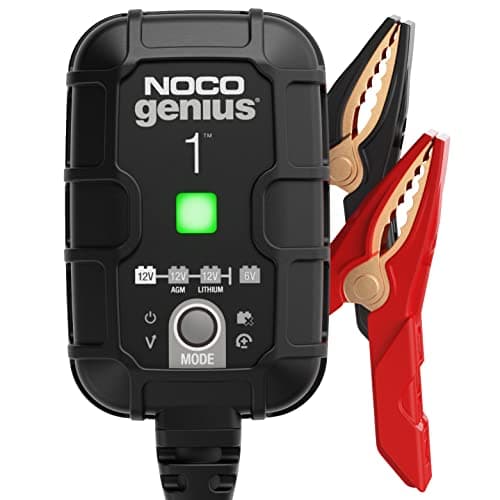
01NOCO NOCO GENIUS1 1A Smart Charger and MaintainerNOCO GENIUS1 1A Smart Charger and MaintainerA car, motorcycle or mower left parked through a cold winterBest for a bike left standing9.3$29.87 - View on Amazon
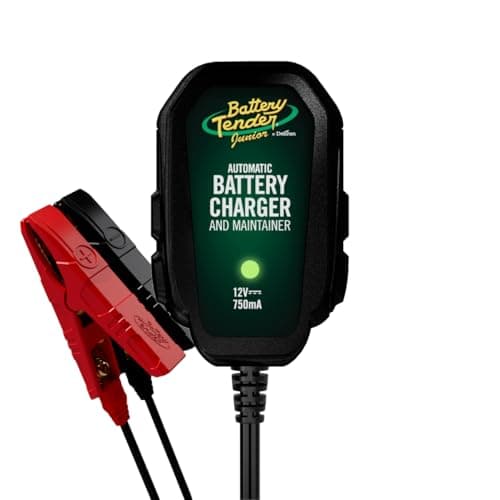
02Battery Tender Battery Tender Junior 750mA ChargerBattery Tender Junior 750mA ChargerA no-decisions 12-volt maintainer for a stored vehicleThe powersports default8.4$39.98 - View on Amazon
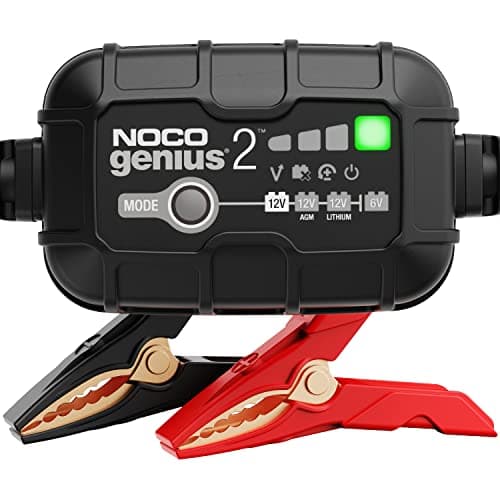
03NOCO NOCO GENIUS2 2A Smart ChargerNOCO GENIUS2 2A Smart ChargerA car that gets driven rarely and sometimes ends up flatBest if it also has to recover8.8$49.95 - View on Amazon

Scores are ours and editorial. They are never published as review or rating markup, because we have not tested these products - see how we pick.

How we judged this, before any product appears

A motorcycle maintainer is not a small car maintainer. Four things decide it, and only the first is about the charger:

1. Charge current against a small battery. A car battery is typically somewhere in the 45 to 70 amp-hour range. A motorcycle battery is often in single digits to the low teens. That ratio is the whole reason this page exists: a charger sized for a car can push a bike battery harder than it wants to be pushed. The common workshop rule of thumb is to keep charge current at or below roughly a tenth of the battery’s amp-hour rating — we quote that as a rule of thumb, because it is one, not as a published standard. On a 10 Ah bike battery it points at about one amp, which is exactly the size of the top pick here.

2. Voltage. Most bikes are 12 volt. Plenty of classics, and some small machines, are 6 volt, and a 12-volt-only charger connected to a 6-volt battery is not a mistake you make twice. Only one of the three picks below publishes 6-volt support.

3. Chemistry. Lithium powersports batteries (LiFePO4) are now common on modern bikes and they charge to a different profile than lead-acid. A charger that does not publish lithium support should not be connected to one.

4. Where the charger lives. This is the criterion this site weights most heavily and the one the category publishes least. A maintainer on a bike in an unheated garage spends the winter at the ambient temperature, and only one maker here tells you what that device is rated for.

What each maintainer publishes, against the four criteria
NOCO GENIUS1Battery Tender JuniorNOCO GENIUS2
Charge current1 A750 mA2 A
Voltages6 V and 12 V12 V only6 V and 12 V
Lithium publishedYesNo - lead-acidYes
Operating temperature range-4 F to 104 F, publishedNot publishedNot published in the same form
Recovers a flat batterySlowlySlowlyManual repair mode published

What the maintainer is actually protecting

A motorcycle battery is the cheapest expensive thing on the bike. It is a two-figure part, but the failure is not the part — it is the first warm Saturday in March when the bike does not start and the riding day is gone.

The running cost is close to nothing. NOCO publishes a maximum consumption of 15 W for the GENIUS1. Left connected flat out for a 120-day winter that is 43.2 kWh, or $7.92 at the U.S. average residential rate of 18.34 cents per kWh (EIA, June 2026) — and a maintainer spends nearly all its life holding rather than charging, so real use is a fraction of that.

The honest limit: a maintainer preserves a healthy battery. It does not resurrect a battery that was already at the end of its life in October. If yours cranked slowly at the end of last season, the purchase is a battery, and the maintainer is what protects the new one.

The two mistakes that kill bike batteries over winter

Leaving a plain trickle charger connected. This is the big one and it is a different device from a maintainer. A trickle charger pushes current continuously whether the battery wants it or not; a maintainer charges, then drops to a float voltage and holds. Four months of unmanaged trickle into a small battery is how a battery comes out of winter swollen. The difference between the two device types matters more than the brand on the box.

Leaving it on the floor of a cold garage with no charger at all. A battery self-discharges whatever you do, and cold reduces the power available from whatever charge remains — CTEK publishes roughly 35 percent lost at 32 F and about 60 percent at 0 F. A bike battery that started winter at 80 percent and drifted down for four months has very little left to give on a cold morning. The mechanism is here.

Skip this

Skip the charger that does not name your chemistry

If your bike has a lithium battery — increasingly likely on anything recent, and near-universal on lightweight sport machines — connect only a charger that publishes lithium support. Lithium packs want a different charge profile and many include a battery management system that a lead-acid desulfation pulse can confuse.

The same caution runs the other way. A charger with a lithium mode selected by mistake, connected to a lead-acid battery, is also wrong. Read the mode before you walk away for four months, because this is a device you deliberately stop looking at.

Connecting it, and the ring terminal nobody mentions

Almost every maintainer ships with two leads: crocodile clips and a permanent ring-terminal harness with a weatherproof plug. On a car people use the clips. On a bike, fit the harness.

The reason is access. A motorcycle battery is usually under a seat or a side panel, and if plugging the charger in means removing bodywork every time, it will not get plugged in. Bolt the ring terminals to the battery once, route the pigtail somewhere you can reach with the seat on, and the winter routine becomes a two-second job.

Two practical notes. Fit the fuse the harness comes with; it is there because a permanently connected lead on a vibrating vehicle is a real short-circuit path. And if you store the bike somewhere without a socket, a maintainer is the wrong answer entirely — take the battery indoors instead, where it is warmer and where you can see it.

What we would buy

For a 12-volt bike in an unheated garage: the 1-amp NOCO, on the published -4 F operating range and the published 6 V, 12 V and lithium support. One amp is the right size for a battery this small, and the chemistry list means the same unit still works when you change bikes.

For a lead-acid 12-volt bike stored somewhere temperate, where you want the device that has been doing this longest: the Battery Tender Junior. It is 12 volt and lead-acid only, and if that describes your bike forever, none of what it lacks costs you anything.

For a bike that already ends up flat: the 2-amp unit, which publishes a manual repair mode the 1-amp does not. Do not size up beyond that for a motorcycle; the sizing question has a short answer and it is not “more amps”.
The write-ups

Every pick, in full

01 / Best for a bike left standingNOCO NOCO GENIUS1 1A Smart Charger and Maintainer

NOCO

9.3 / 10

Roughly $25-$35

NOCO GENIUS1 1A Smart Charger and Maintainer

The published operating range is the reason this is the pick: NOCO rates it from -4 F to 104 F, which is the only spec on this page that speaks to whether the thing works in an unheated garage in January. Most rivals simply do not publish one.

$29.87 - View on Amazon

#ad Price as of October 18, 2026, from Amazon. Prices change. How this site is funded.

Published specifications for the NOCO GENIUS1 1A Smart Charger and Maintainer, with the source of each
SpecificationPublished valueWhere it is published
Charging current1 A DCNOCO GENIUS1 specification sheet
Voltages6 V and 12 VNOCO GENIUS1 specification sheet
Operating temperature-4 F to 104 F (-20 C to 40 C)NOCO GENIUS1 specification sheet
Battery capacity rangeUp to 30 Ah, maintains all battery sizesNOCO GENIUS1 specification sheet
Power consumption15 W maximumNOCO GENIUS1 specification sheet
ChemistriesWet, gel, MF, CA, EFB, AGM and lithiumNOCO GENIUS1 specification sheet

The arithmetic

About 4 cents a night to run, against a battery that costs $200 to replace.

NOCO publishes 15 W maximum consumption, and a maintainer draws far less than that once a battery is topped up. Even at the full 15 W for 8 hours that is 0.12 kWh, and at the U.S. average residential rate of 18.34 cents per kWh (EIA Electric Power Monthly, June 2026) it costs about 2.2 cents. Over a 120-night winter the worst case is roughly $2.64.

What it does well

  • Publishes a cold operating limit, which is the spec that decides winter suitability
  • Handles AGM and lithium as well as flooded lead-acid
  • Small enough to leave permanently zip-tied in an engine bay

What it does not

  • 1 amp is slow if you are trying to recover rather than maintain
  • The clamps are small; the ring-terminal lead is the better way to leave it connected
  • Status lights need a manual to interpret confidently

Skip this one if

You need to recover a flat battery quickly. At 1 amp this is a maintainer, and a genuinely dead battery takes it more than a day.

How it scores, by criterion

Cold-weather rating10.0
Published data10.0
Recovery speed5.0
Chemistry support9.5
Price8.5
02 / The powersports defaultBattery Tender Battery Tender Junior 750mA Charger

Battery Tender

8.4 / 10

Roughly $25-$35

Battery Tender Junior 750mA Charger

The maintainer that gave the whole category its nickname. It does one thing, has done it for decades, and the quibble is that the published specification sheet is thinner than the rival's - notably on cold operating limits.

$39.98 - View on Amazon

#ad Price as of October 18, 2026, from Amazon. Prices change. How this site is funded.

Published specifications for the Battery Tender Junior 750mA Charger, with the source of each
SpecificationPublished valueWhere it is published
Charging current750 mABattery Tender charger range
Voltage12 VBattery Tender charger range
ModeFour-stage charge then float maintenanceBattery Tender charger range
Operating temperature rangeNot published by the manufacturerBattery Tender charger range

What it does well

  • Genuinely long track record in this exact application
  • Ring-terminal harness included, which is how a maintainer should be connected
  • Simple two-light status that is hard to misread

What it does not

  • No published cold operating limit, which is the figure that matters here
  • 12 volt only
  • Slower than the 1-amp rivals

Skip this one if

You have 6-volt or lithium batteries to look after as well.

How it scores, by criterion

Cold-weather rating5.5
Published data5.5
Recovery speed4.5
Track record9.5
Price8.5
03 / Best if it also has to recoverNOCO NOCO GENIUS2 2A Smart Charger

NOCO

8.8 / 10

Roughly $40-$55

NOCO GENIUS2 2A Smart Charger

Twice the current of the GENIUS1 for a modest step in price. Buy this one if the battery you are looking after is ever actually flat rather than merely idle, because 2 amps recovers in a day what 1 amp takes two to do.

$49.95 - View on Amazon

#ad Price as of October 18, 2026, from Amazon. Prices change. How this site is funded.

Published specifications for the NOCO GENIUS2 2A Smart Charger, with the source of each
SpecificationPublished valueWhere it is published
Charging current2 A DCNOCO published specifications
Voltages6 V and 12 VNOCO published specifications
ChemistriesLead-acid and lithiumNOCO published specifications
Repair modePublished as a manual desulfation modeNOCO published specifications

What it does well

  • Twice the recovery speed of the 1-amp unit
  • Same chemistry coverage and same interface
  • Force mode allows charging a battery too flat to be detected automatically

What it does not

  • Costs meaningfully more than the 1-amp unit for a job many people never need
  • Still slow next to a workshop charger
  • Larger than the GENIUS1 for permanent installation

Skip this one if

You only ever need to hold a healthy battery at float. The 1-amp unit is cheaper.

How it scores, by criterion

Cold-weather rating9.0
Published data9.0
Recovery speed7.0
Chemistry support9.5
Price6.5

How this was ranked

Every site in this category says it tested twenty of these. We have not tested any, and we say so. What we did instead: built the candidate set from what Amazon actually stocks, compiled the published specifications from each manufacturer’s own pages, did the arithmetic on running cost and on what the thing prevents, and read owner reviews for failure patterns rather than star averages. Every number on this page has a link to where it was published, so you can check the work.

Units we claim to have tested
0
Sponsored placements
0
Free products accepted
0

The full method, including what we refuse to claim

Questions people actually ask

Frequently asked

What size battery maintainer do I need for a motorcycle?

Small. A common workshop rule of thumb is to keep charge current at or below about a tenth of the battery’s amp-hour rating, and a motorcycle battery is often in single digits to the low teens of amp-hours — which points at roughly one amp. The 1-amp and 750 mA units on this page are both sized for the job; a 5-amp car charger is not.

Can I use a car battery maintainer on a motorcycle?

Sometimes, and the thing to check is the charge current rather than the label. A 1-amp car maintainer is fine on a bike; a multi-amp car charger is oversized for a small battery. Also check voltage and chemistry: plenty of classics are 6 volt and plenty of modern bikes are lithium, and not every charger publishes support for either.

Should I leave a motorcycle battery maintainer connected all winter?

Yes, if it is a genuine maintainer — a device that charges and then holds at a float voltage indefinitely. That is what they are for. What you must not leave connected for months is a plain trickle charger, which keeps pushing current regardless. The distinction is here.

Will a maintainer work on a lithium motorcycle battery?

Only if the maker publishes lithium support and you select the lithium mode. The NOCO units on this page publish it; the Battery Tender Junior is a lead-acid device. Lithium powersports packs charge to a different profile and often contain a management board, so this is not a case for assuming compatibility.

Is it better to take the battery out for winter?

If the bike is stored somewhere with no power, yes — a battery indoors at room temperature on a maintainer is in far better shape than one sitting in a freezing shed with nothing connected. If you have a socket by the bike, leaving it in place on a maintainer is less work and works just as well.

Do I need a maintainer if I ride through winter?

Less so, but short winter rides are the awkward case: a cold start draws heavily and a fifteen-minute ride may not replace what it took. If your winter riding is brief and occasional, a maintainer between rides is still worth it. If you commute properly on it, the bike’s own charging system is doing the job.

Sources

Read next