Why car batteries die in the cold
Two things happen simultaneously, and neither of them is that the battery was bad. That is why it worked fine in October.
Heads up: the buy links on this page are affiliate links. If you buy through one, we earn a commission at no extra cost to you. It does not change what we recommend or the order we rank things in - here is how we keep those separate.
The two mechanisms
1. The battery delivers less
A lead-acid battery produces current through a chemical reaction between the plates and the electrolyte, and chemical reactions slow down as temperature falls. Less reaction per second means less current available.
CTEK publishes the figures most often quoted: roughly a 35 percent loss of strength at 32 F and about 60 percent at 0 F. Other sources put it at 20 percent and 40 percent respectively. We are not going to pretend the published figures agree, because they do not — but every one of them describes the same effect at the same rough scale, and the direction is not in dispute.
2. The engine demands more
This is the half that gets left out, and it is why the problem is worse than the battery figures alone suggest.
Engine oil thickens as it cools. Thicker oil means more drag on every moving part the starter has to turn, so cranking a cold engine takes substantially more current than cranking a warm one.
So on a 0 F morning the battery can deliver perhaps half of what it could in summer, and the engine is asking for more than it did in summer. That gap is where a healthy-seeming battery fails.
The third thing, which is really the cause
Everything above happens to a full battery. Most winter failures happen to a battery that was not full.
Winter driving is the worst possible charging pattern. Journeys are short, so the alternator has little time to replace what starting took out. The heater blower, headlights, wipers, heated seats and the rear defroster all run at once, and the defroster in particular is a substantial load. A cold battery also accepts charge less readily than a warm one.
The result is that a car doing short winter trips can run at a persistent charge deficit all season. It starts every morning — weaker each time — until the coldest morning, when it does not.
What prevents it, and what it costs
A maintainer holds the battery at a full state of charge, so it meets the cold morning with everything it has. NOCO publishes 15 W maximum consumption for the GENIUS1; at the U.S. average residential rate of 18.34 cents per kWh (EIA, June 2026), that is about 2.2 cents a night, or roughly $2.64 across a 120-night winter at maximum draw.
A replacement battery is $150 to $250 fitted, and being stranded costs whatever the morning was worth.
The warning signs, in order
A battery almost never fails without notice. The notices are just easy to dismiss.
- Slower cranking on cold mornings. The engine turns over more slowly than it did in September. This is the first sign and it is the one people explain away.
- Headlights dimming noticeably during cranking, then brightening once it starts.
- Needing a second attempt on a cold morning when one used to do.
- Electrical oddities at idle — the radio resetting, warning lights flickering, the clock losing time.
- Age. Three to five years is a normal lifespan, and past five you are on borrowed time regardless of symptoms.
Most auto parts stores will test a battery free in a few minutes. Doing that in October rather than discovering the answer in January is the entire trick.
Skip this
Skip the myths
“Put the battery on concrete and it will drain.” This was true of batteries with hard rubber cases decades ago. Modern polypropylene cases do not conduct anywhere, and the concrete makes no difference.
“Rev the engine to charge it faster.” Alternator output rises with engine speed only up to a point, and most of the way there at idle. Driving for twenty minutes is far more effective than sitting in the driveway revving.
“A new battery fixes it permanently.” A new battery in a car with the same short-trip pattern will run at the same deficit, arriving at the same place in two or three winters.
What to actually do, in order
- Get the battery tested in autumn. Free, five minutes, and it turns a January surprise into an October decision.
- Clean the terminals. Corrosion is resistance, and resistance in the starting circuit is exactly what you cannot afford on the coldest morning of the year. What to coat them with afterward costs a few dollars.
- Fit a maintainer if you have power where you park. Ring-terminal harness, not clamps. The setup is here.
- Keep a jump pack in the car if you have no power where you park, and charge it before the season.
- Add heat only if the battery is known good. In deep cold, warming the battery or the engine is the next lever, and which one depends on how the car fails.
- Replace a battery over five years old before winter rather than during it.
What to buy, given all that
NOCO
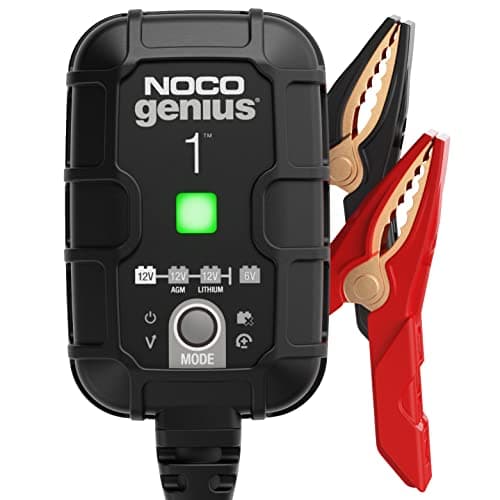
NOCO GENIUS1 1A Smart Charger and Maintainer
Roughly $25-$35
The published operating range is the reason this is the pick: NOCO rates it from -4 F to 104 F, which is the only spec on this page that speaks to whether the thing works in an unheated garage in January. Most rivals simply do not publish one.
Skip it if: You need to recover a flat battery quickly. At 1 amp this is a maintainer, and a genuinely dead battery takes it more than a day.
#ad Price as of October 18, 2026, from Amazon. Prices change. How this site is funded.
Schumacher
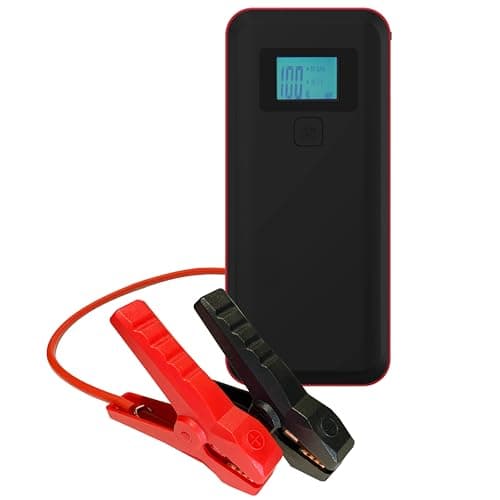
Schumacher SL1639 Lithium Jump Starter and Power Pack
The cheapest jump starter on this page
A lithium jump pack that starts a dead car without a second vehicle, and the one here that publishes the most capability for the least money: 1000 peak amps, 29.6 watt-hours, and engine ratings of 8.0 liters gas and 6.0 diesel. It solves the emergency; it does not solve the cause, which is why it belongs beside a maintainer rather than instead of one.
Skip it if: The battery is simply old. A jump pack is a way to keep restarting a battery you should be replacing.
#ad Price as of October 18, 2026, from Amazon. Prices change. How this site is funded.
How this was ranked
Every site in this category says it tested twenty of these. We have not tested any, and we say so. What we did instead: built the candidate set from what Amazon actually stocks, compiled the published specifications from each manufacturer’s own pages, did the arithmetic on running cost and on what the thing prevents, and read owner reviews for failure patterns rather than star averages. Every number on this page has a link to where it was published, so you can check the work.
- Units we claim to have tested
- 0
- Sponsored placements
- 0
- Free products accepted
- 0
Frequently asked
Why does my car battery die in cold weather?
Two things at once. Cold slows the chemical reaction that produces current, so the battery delivers less — CTEK publishes roughly 35 percent less at 32 F and 60 percent less at 0 F. At the same time cold oil makes the engine harder to turn, so the starter demands more. Underneath both, short winter trips often leave the battery at a partial charge all season.
At what temperature do car batteries fail?
There is no single threshold, because it depends on the battery’s condition, its state of charge and how much current your engine needs. A healthy, fully charged battery can start most cars well below 0 F. A three-year-old battery at 70 percent charge may struggle at 20 F.
Does idling the car charge the battery?
Slowly, and less than people assume. The alternator does charge at idle, but the winter loads — blower, lights, wipers, rear defroster — consume much of the output. Twenty minutes of driving does far more than twenty minutes of idling, and neither fully recovers a substantially discharged battery.
How long do car batteries last in cold climates?
Typically three to five years, and cold climates tend toward the lower end — not because cold destroys batteries directly, but because the short-trip charging pattern that goes with winter leaves them chronically undercharged, and an undercharged lead-acid battery sulfates and loses capacity permanently.
Should I remove my car battery in winter?
Only if the vehicle is stored somewhere with no power and will not be started for months, in which case bringing the battery indoors and maintaining it there is reasonable. For a car in normal use, no — you would lose stored settings for no benefit. A maintainer connected in place does the same job.
Sources
- CTEK - 'How the cold affects your car battery' (publishes approximately 35% loss of strength at 32F and 60% at 0F)
- NOCO GENIUS1 - published specification sheet (operating range -4F to 104F, 15W max consumption)
- EIA, Electric Power Monthly, Table 5.3 - average retail price of electricity (June 2026: 18.34 cents per kWh residential)
- Do you need a block heater?
- Charging a car battery in freezing weather
- What actually stops battery terminal corrosion
- The best block heater timers, and what one saves you
- Block heater or battery blanket?
- The best portable jump starters, bought by engine size rather than peak amps
- The best battery maintainers for winter
- Battery charger vs jump starter
- How to use a battery maintainer
- The winter car emergency kit checklist
- Battery and cold starts