Skip to content
Frost & Fender
Guide

Do you need a block heater?

If your car already has one, the purchase you need is a timer, not a heater. If it does not, the honest answer for most of the lower 48 is no - and the device that would actually fix your cold mornings costs about thirty dollars.

By Scooter M.Published October 18, 2026

Heads up: the buy links on this page are affiliate links. If you buy through one, we earn a commission at no extra cost to you. It does not change what we recommend or the order we rank things in - here is how we keep those separate.

The shortlist

Ranked, with the prices

Ranked on published manufacturer specifications and, where the numbers exist, the arithmetic on what each option costs and what it saves. Tap any row for the full write-up, including who should skip it.

#ProductBest forScorePrice
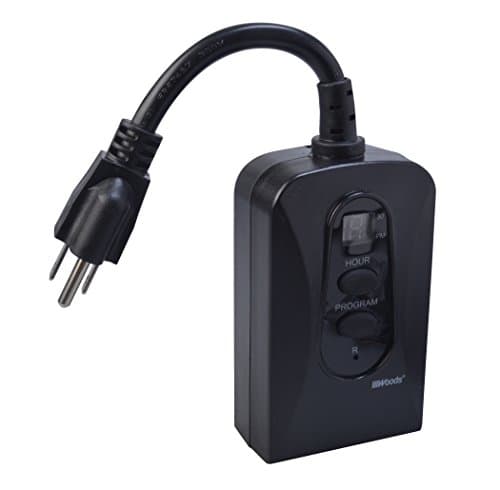
01Woods Woods 50016WD Outdoor Digital Block Heater TimerWoods 50016WD Outdoor Digital Block Heater TimerPlug it in, set one on and one off time, forget it until springBest if your car already has one8.7$21.99 - View on Amazon
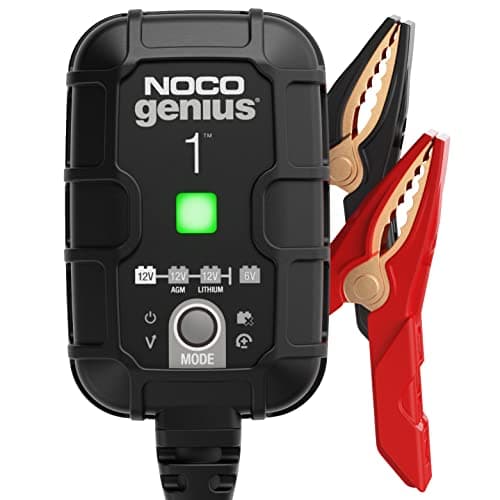
02NOCO NOCO GENIUS1 1A Smart Charger and MaintainerNOCO GENIUS1 1A Smart Charger and MaintainerA car, motorcycle or mower left parked through a cold winterBest if the battery is the real problem9.3$29.95 - View on Amazon
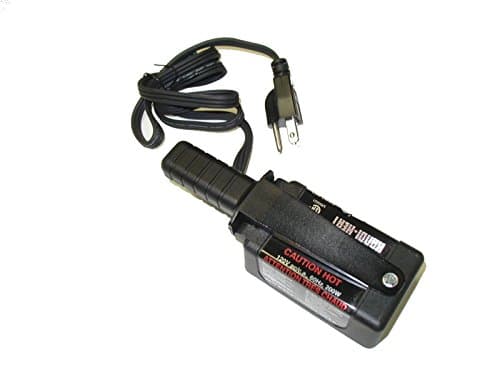
03Kat's Kat's 1155X 200 Watt Magnetic HeaterKat's 1155X 200 Watt Magnetic HeaterA car with no factory block heater, where drilling or plumbing anything is out of the questionBest if there is no factory heater7.3$58.99 - View on Amazon
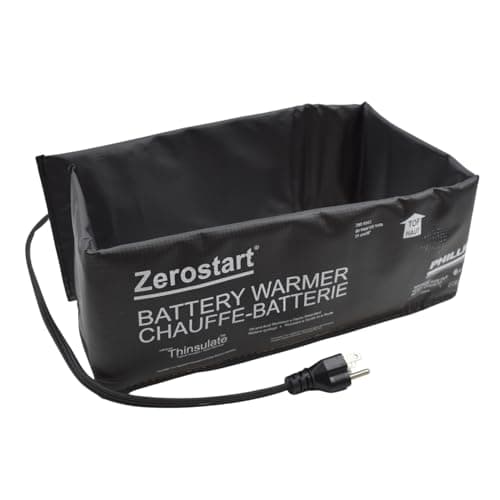
04Zerostart Zerostart 2800063 Battery BlanketZerostart 2800063 Battery BlanketA car that cranks slowly rather than one that is hard to warmBest for a truck in deep cold8.4$57.61 - View on Amazon

Scores are ours and editorial. They are never published as review or rating markup, because we have not tested these products - see how we pick.

The answer first

For most drivers in the lower 48, no — and if your car came with one, the thing you need to buy is a $20 outdoor timer, not a heater. The only published figures for what a block heater buys you are Natural Resources Canada’s, and they are quoted at −20 C (−4 F) and −25 C (−13 F). If your coldest mornings are 10 F, you are below the temperature range anybody publishes a benefit for.

Three answers, in order of how often they are right:

1. Your car already has a block heater and you did not know. Pickups, diesels and a great many cars sold into cold states ship with one, and the cord is usually tucked behind the grille or near the bumper. Look before you buy anything. If it is there, the purchase is a timer, because the cost of a block heater is entirely in the hours you leave it running.

2. Your real problem is the battery, not the engine. A slow, laboring crank in the cold is usually a battery that has lost cranking current, not oil that is too thick. A block heater does nothing for that. A maintainer does, for about thirty dollars.

3. You genuinely need engine heat. Diesel below about 0 F, a vehicle that has to start reliably at −20 F and colder, or a short-trip cold-climate commute where the published fuel-economy figures actually apply. Then yes, and a retrofit heater or a magnetic pad is the way in.

What a block heater actually does, in published terms

Natural Resources Canada publishes the mechanism plainly: a block heater “warms the coolant, which in turn warms the engine block and lubricants. The engine will start more easily and reach its proper operating temperature faster.”

Two things follow from that sentence, and they are the two things most discussions of block heaters get wrong.

It is a lubrication and warm-up device, not a battery device. Nothing in it touches the battery. If your crank is slow and your lights dim when you turn the key, you have a different problem, and the mechanism is laid out on the battery page.

Its benefit is largest where the cold is worst. NRCan publishes: “At −20 °C, block heaters can improve overall fuel economy by as much as 10 percent. For a single short trip at −25 °C your fuel savings could be in the order of 25 percent.” Those are the only published numbers in this space, and they are quoted at −4 F and −13 F. Nobody publishes a figure for 20 F, which should tell you something.

The published inputs, and what they decide
Published figureSourceWhat it decides
"Two hours is more than enough"Natural Resources CanadaA timer, not an overnight extension cord
Up to 10% better fuel economy at -20 CNatural Resources CanadaThe temperature below which the benefit is measurable
Around 25% saving on a single short trip at -25 CNatural Resources CanadaShort cold-climate trips are where it pays most
"No more than two to three minutes of idling is usually enough warm-up"Natural Resources CanadaIdling is not the alternative to a block heater
A battery blanket warms the battery core 60-70 F above ambientPhillips & Temro (Zerostart)Which device to buy if the symptom is a slow crank
Maintainer rated -4 F to 104 F, 15 W maximumNOCO GENIUS1 specificationThe cheap device that fixes the common complaint

Check whether you already have one before you buy anything

This is the step that saves most people the whole purchase. Factory block heaters are far more common than people assume, particularly on trucks and on any diesel, and they are nearly invisible when not in use.

Look for a short cord with a three-prong plug on the end, usually cable tied behind the grille, tucked up beside a headlight, or hanging near the front bumper or the inner wheel arch. On many vehicles it is coiled and clipped so neatly that it reads as part of the harness. If you find it, you have a block heater and the only thing missing is something to switch it on at the right time.

If there is no cord, the second place to check is the window sticker or the build sheet rather than the owner’s manual — manuals describe the option whether or not your particular car has it, which is where a lot of confusion starts.

If you have one, the timer is the whole purchase

A block heater is a resistive load, so the arithmetic is honest. At the U.S. average residential rate of 18.34 cents per kWh, a 1,000 W heater costs 0.1834 cents per watt-hour × 1,000 = about 18 cents an hour.

Plugged in from 8pm to 7am (11 hours): about $2.02 a night.

On a timer for the two hours NRCan publishes as sufficient: about 37 cents a night.

That is a saving of roughly $1.65 a night, so a $20 timer pays for itself in under two weeks of genuinely cold mornings, and then keeps paying. NRCan publishes it as plainly as we could: “You don’t need to leave a block heater plugged in overnight to warm the engine — two hours is more than enough.”

The arithmetic is ours, from the published electricity rate and the published two-hour figure. The timers themselves, and their published load ratings, are ranked separately.

Diesel, gas, and why the answer differs

Diesel is the case where a block heater stops being a convenience. Diesel engines rely on compression heat to ignite fuel, so a very cold block has to be cranked longer before it will fire, and diesel fuel itself gels as the temperature drops. Manufacturers that fit block heaters to diesels publish plug-in guidance in the diesel supplement rather than the main manual, and that guidance is the number to use — it is specific to your engine in a way nothing on the internet can be.

A modern gasoline engine is a different animal. It has spark ignition, it starts on a fraction of a second of cranking, and its cold-start problems are overwhelmingly electrical rather than thermal. That is why the published benefit for a gas car is framed as fuel economy and warm-up time rather than as whether it starts at all.

Synthetic oil changes this, and in the direction people hope. A synthetic with a 0W or 5W winter rating stays far more pumpable at low temperature than a conventional 10W-30, and oil pumpability is a large part of what a block heater is buying. It does not make a block heater pointless at −30 F, but it narrows the band where one is worth installing. If you are weighing a retrofit heater against an oil change, the oil change is cheaper, helps every morning rather than only the plugged-in ones, and is something you owed the engine anyway.

Skip this

Do not substitute idling for a block heater

The usual alternative people reach for is running the engine for fifteen minutes in the driveway, and the published guidance is against it. NRCan: “Contrary to popular belief, excessive idling is not an effective way to warm up your vehicle, even in cold weather. The best way to warm it up is to drive it. In fact, with today’s computer-controlled engines, even on cold winter days, no more than two to three minutes of idling is usually enough warm-up time before starting to drive.”

It also notes that the tires, transmission and wheel bearings “don’t begin to warm up until you drive the vehicle” — so the long idle is warming the one component that would have warmed up fastest anyway.

A long idle in a closed or partly closed garage is a carbon monoxide question as well as a fuel one. If the car lives in an attached garage, back it out first, every time.

If you do not have one: the three ways in, ranked by what they fix

A maintainer, if the symptom is a slow crank. This is the honest first recommendation for most people asking this question. The NOCO GENIUS1 publishes an operating range of −4 F to 104 F and a maximum draw of 15 W, which is the only specification in this category that says anything about working in an unheated garage. It costs a fraction of a heater install and it addresses the thing that actually strands people.

A magnetic or pad heater, if you want engine heat without a plumbing job. A proper frost-plug block heater is an installation — coolant drained, freeze plug out, heater in. A magnetic pad sticks to the oil pan or the block and warms it from outside. It is less effective than the real thing, and it is the only route that does not involve opening the cooling system. We compare the warm-the-engine and warm-the-battery approaches directly if you are torn between them.

A battery blanket, if it is a truck in genuinely deep cold. Phillips & Temro publishes that its battery heater warms the battery core 60 to 70 F above ambient, which is a large number and the reason this is a real option rather than a gimmick at −20 F and below.

Who should buy what

Your car has a factory block heater: buy an outdoor timer and set a two-hour window that ends when you leave. That is the entire optimization, and it is worth about $1.65 a night.

Slow crank, no block heater, mornings above about 0 F: a 1-amp maintainer. Cheapest fix, right target, published cold rating.

No block heater, mornings regularly below −10 F: a magnetic pad heater and a maintainer together, on separate cords. Warm the oil and keep the battery full.

Diesel truck: use the plug-in guidance in your diesel supplement, put it on a timer, and treat the battery as a separate problem with its own solution.
The write-ups

Every pick, in full

01 / Best if your car already has oneWoods Woods 50016WD Outdoor Digital Block Heater Timer

Woods

8.7 / 10

The middle of the three here, and still under a tank of gas

Woods 50016WD Outdoor Digital Block Heater Timer

The only timer here that Woods actually sells as a block heater timer, and the ratings on the box match the job: 15 A and 1875 W resistive, which covers any block heater a passenger car carries. One on/off cycle a day is exactly what this job needs.

$21.99 - View on Amazon

#ad Price as of October 18, 2026, from Amazon. Prices change. How this site is funded.

Published specifications for the Woods 50016WD Outdoor Digital Block Heater Timer, with the source of each
SpecificationPublished valueWhere it is published
Electrical rating125 V, 60 Hz; 15 A / 1875 W resistive; 10 A / 1250 W tungsten; 8 A ballast; 1/2 HPWoods - model 50016 outdoor 24-hour digital timer instruction manual (ratings, raintight mounting, 90-day-per-year limit)
SettingsOne on/off cycle per day, set in 30-minute intervalsWoods - model 50016 outdoor 24-hour digital timer instruction manual (ratings, raintight mounting, 90-day-per-year limit)
Weather rating"Raintight when mounted vertically with the receptacle facing downward"Woods - model 50016 outdoor 24-hour digital timer instruction manual (ratings, raintight mounting, 90-day-per-year limit)
Required outletThree-conductor GFCI protected outletWoods - model 50016 outdoor 24-hour digital timer instruction manual (ratings, raintight mounting, 90-day-per-year limit)
Seasonal limit"Do not install or use this product for more than a 90 day period per year"Woods - model 50016 outdoor 24-hour digital timer instruction manual (ratings, raintight mounting, 90-day-per-year limit)
Operating temperatureNot published by the manufacturerWoods - model 50016 outdoor 24-hour digital timer instruction manual (ratings, raintight mounting, 90-day-per-year limit)
Outlets and cordTwo grounded outlets, 6 in cordRetail listing for the Woods 50016WD outdoor digital block heater timer

What it does well

  • Sold and rated for this exact job, at a rating that covers any car block heater
  • One on/off a day is the whole requirement - nothing to over-program
  • The manual publishes the mounting orientation that makes it raintight

What it does not

  • The manual's own 90-day-per-year limit is shorter than a salt-belt winter
  • No published operating temperature, on a device that hangs outdoors in January
  • A digital timer loses its program in a power cut unless you reset it

Skip this one if

You want several heating windows a day, or a timer you can leave outdoors year-round - the manual sets a 90-day-per-year limit.

How it scores, by criterion

Fit for a block heater9.5
Published detail8.5
Cold-weather disclosure3.0
Ease of setting9.0
Price8.0
02 / Best if the battery is the real problemNOCO NOCO GENIUS1 1A Smart Charger and Maintainer

NOCO

9.3 / 10

Roughly $25-$35

NOCO GENIUS1 1A Smart Charger and Maintainer

The published operating range is the reason this is the pick: NOCO rates it from -4 F to 104 F, which is the only spec on this page that speaks to whether the thing works in an unheated garage in January. Most rivals simply do not publish one.

$29.95 - View on Amazon

#ad Price as of October 18, 2026, from Amazon. Prices change. How this site is funded.

Published specifications for the NOCO GENIUS1 1A Smart Charger and Maintainer, with the source of each
SpecificationPublished valueWhere it is published
Charging current1 A DCNOCO GENIUS1 specification sheet
Voltages6 V and 12 VNOCO GENIUS1 specification sheet
Operating temperature-4 F to 104 F (-20 C to 40 C)NOCO GENIUS1 specification sheet
Battery capacity rangeUp to 30 Ah, maintains all battery sizesNOCO GENIUS1 specification sheet
Power consumption15 W maximumNOCO GENIUS1 specification sheet
ChemistriesWet, gel, MF, CA, EFB, AGM and lithiumNOCO GENIUS1 specification sheet

The arithmetic

About 4 cents a night to run, against a battery that costs $200 to replace.

NOCO publishes 15 W maximum consumption, and a maintainer draws far less than that once a battery is topped up. Even at the full 15 W for 8 hours that is 0.12 kWh, and at the U.S. average residential rate of 18.34 cents per kWh (EIA Electric Power Monthly, June 2026) it costs about 2.2 cents. Over a 120-night winter the worst case is roughly $2.64.

What it does well

  • Publishes a cold operating limit, which is the spec that decides winter suitability
  • Handles AGM and lithium as well as flooded lead-acid
  • Small enough to leave permanently zip-tied in an engine bay

What it does not

  • 1 amp is slow if you are trying to recover rather than maintain
  • The clamps are small; the ring-terminal lead is the better way to leave it connected
  • Status lights need a manual to interpret confidently

Skip this one if

You need to recover a flat battery quickly. At 1 amp this is a maintainer, and a genuinely dead battery takes it more than a day.

How it scores, by criterion

Cold-weather rating10.0
Published data10.0
Recovery speed5.0
Chemistry support9.5
Price8.5
03 / Best if there is no factory heaterKat's Kat's 1155X 200 Watt Magnetic Heater

Kat's

7.3 / 10

Mid-priced for a cold-start accessory

Kat's 1155X 200 Watt Magnetic Heater

The no-installation way to put heat into an engine: a 200 W magnetic pad that sticks to the oil pan and warms the oil it is touching. It is the cheapest entry to block-heater territory, and the least effective of the real options - it heats what it touches, not the coolant.

$58.99 - View on Amazon

#ad Price as of October 18, 2026, from Amazon. Prices change. How this site is funded.

Published specifications for the Kat's 1155X 200 Watt Magnetic Heater, with the source of each
SpecificationPublished valueWhere it is published
Power200 W, 120 VRetail listing for Kat's 1155X magnetic heater (Kat's does not publish a reachable product page for this model)
MountingMagnetic base, no mechanical installationRetail listing for Kat's 1155X magnetic heater (Kat's does not publish a reachable product page for this model)
Heating areaAbout 8 square inchesRetail listing for Kat's 1155X magnetic heater (Kat's does not publish a reachable product page for this model)
Manufacturer specification pageNone we could reach for this modelRetail listing for Kat's 1155X magnetic heater (Kat's does not publish a reachable product page for this model)

What it does well

  • No installation at all - it sticks to the pan and plugs into an extension cord
  • Moves to another vehicle, or to a snowblower, whenever you want
  • Cheapest route to pre-warming anything under the hood

What it does not

  • Heats the metal it touches rather than circulating warmth through the coolant
  • Kat's does not publish a reachable specification sheet for this model
  • Magnet-mounted under a car means road grime, and a pad that can be knocked off

Skip this one if

Your car already has a block heater port. A proper immersion heater warms coolant, which moves heat around the engine.

How it scores, by criterion

Cold-start help6.5
Ease of fitting10.0
Published detail4.0
Running cost7.0
Price6.5
04 / Best for a truck in deep coldZerostart Zerostart 2800063 Battery Blanket

Zerostart

8.4 / 10

Mid-priced for a cold-start accessory

Zerostart 2800063 Battery Blanket

This one warms the battery rather than the engine, which is the other half of a cold no-start. Phillips & Temro publish what it is meant to achieve - a battery core 60 to 70 F above ambient - and that is a far more useful claim than any of the generic wraps make.

$57.61 - View on Amazon

#ad Price as of October 18, 2026, from Amazon. Prices change. How this site is funded.

Published specifications for the Zerostart 2800063 Battery Blanket, with the source of each
SpecificationPublished valueWhere it is published
What it doesWarms the battery core 60-70F above ambientPhillips & Temro (Zerostart) - battery heater solutions page (blanket warms the battery core 60-70F above ambient)
Power80 W, 120 VRetail listing for Zerostart 2800063 (80 W, 36 in, CSA, battery groups 24/24F/27/27F/74)
Size36 in wrap, fits battery groups 24, 24F, 27, 27F and 74Retail listing for Zerostart 2800063 (80 W, 36 in, CSA, battery groups 24/24F/27/27F/74)
ApprovalsCSA approvedRetail listing for Zerostart 2800063 (80 W, 36 in, CSA, battery groups 24/24F/27/27F/74)
InsulationThinsulate thermal insulationPhillips & Temro (Zerostart) - battery heater solutions page (blanket warms the battery core 60-70F above ambient)

What it does well

  • The maker publishes the temperature rise it is designed to deliver
  • Addresses cranking power directly, which is what fails first in deep cold
  • CSA approval and a stated battery group list, so you can check it fits

What it does not

  • Only useful if there is a socket where you park
  • Wrapping a battery means removing hold-downs and working in a cold engine bay
  • Sized by battery group - the wrong length is a wasted purchase

Skip this one if

Your battery is simply old. A blanket makes a healthy battery behave in the cold; it does not resurrect a failing one.

How it scores, by criterion

Cold-start help8.5
Ease of fitting6.0
Published detail8.5
Running cost8.5
Price6.5

How this was ranked

Every site in this category says it tested twenty of these. We have not tested any, and we say so. What we did instead: built the candidate set from what Amazon actually stocks, compiled the published specifications from each manufacturer’s own pages, did the arithmetic on running cost and on what the thing prevents, and read owner reviews for failure patterns rather than star averages. Every number on this page has a link to where it was published, so you can check the work.

Units we claim to have tested
0
Sponsored placements
0
Free products accepted
0

The full method, including what we refuse to claim

Questions people actually ask

Frequently asked

Do I need a block heater?

Probably not, unless your mornings go well below 0 F or you drive a diesel. The only published benefit figures for a block heater are Natural Resources Canada’s, and they are quoted at −20 C (−4 F) and −25 C (−13 F). Above that nobody publishes a measurable gain. Check whether your car already has one first — many trucks and diesels do — and if your symptom is a slow crank rather than a slow warm-up, a maintainer is the device that fixes it.

At what temperature do you need a block heater?

The published figures start at −20 C, which is −4 F. NRCan publishes up to 10 percent better fuel economy at that temperature and around 25 percent on a single short trip at −25 C (−13 F). For a specific vehicle, especially a diesel, the plug-in temperature in your owner’s manual or diesel supplement beats any general figure.

How long should you plug in a block heater?

Natural Resources Canada publishes: “You don’t need to leave a block heater plugged in overnight to warm the engine — two hours is more than enough,” and suggests a timer set to switch on two hours before you leave. At the U.S. average electricity rate that turns an eleven-hour overnight run on a 1,000 W heater from about $2.02 into about 37 cents.

Does synthetic oil mean I do not need a block heater?

It narrows the case rather than removing it. Oil pumpability at low temperature is a large part of what a block heater buys, and a 0W or 5W synthetic stays pumpable far lower than a conventional grade. It does not replace a heater at −30 F, but if you are choosing between an oil change and a retrofit heater install, the oil change is cheaper and helps on every morning rather than only the plugged-in ones.

How do I know if my car has a block heater?

Look for a short three-prong cord cable tied behind the grille, beside a headlight, or near the front bumper or inner wheel arch. It is often coiled so tidily that it reads as part of the wiring. If there is no cord, check the window sticker or build sheet rather than the manual, since manuals describe options your particular car may not have.

Can I just idle the car instead?

The published guidance says no. NRCan states that excessive idling “is not an effective way to warm up your vehicle, even in cold weather,” that driving it is the best way, and that with modern engines “no more than two to three minutes of idling is usually enough warm-up time.” It also notes that the tires, transmission and bearings do not start warming up until the car moves.

Do I need a block heater for a diesel truck?

Far more likely than for a gas car. Diesels need compression heat to fire, so a very cold block cranks longer before it starts, and the fuel itself gels as it gets colder. Manufacturers that fit block heaters to diesels publish plug-in guidance in the diesel supplement rather than the main manual; that is the number to use, because it is specific to your engine.

Sources

Read next