Block heater or battery blanket?
A car that will not start on a cold morning is failing in one of two places. Warming the wrong one is money and electricity spent on a problem you do not have.
Heads up: the buy links on this page are affiliate links. If you buy through one, we earn a commission at no extra cost to you. It does not change what we recommend or the order we rank things in - here is how we keep those separate.
Two different failures, two different fixes
Cold attacks a start from both ends at once, and the two problems are unrelated except in their timing.
The engine gets harder to turn. Oil thickens as it cools, so the starter has more drag to overcome, and the fuel and air in a frozen cylinder are less willing to burn. Warming the engine attacks this.
The battery has less to give. The chemistry that delivers current slows down in the cold. CTEK publishes roughly 35 percent of a battery's strength lost at 32 F and about 60 percent at 0 F. Warming the battery attacks that.
On the worst mornings both are true at the same time, which is the classic no-start: a battery with less to give, asked for more than usual. The full version of that mechanism is here. The question this page answers is which end to spend money on.
What each device actually does
| Magnetic engine heater | Battery blanket | Battery maintainer | |
|---|---|---|---|
| What it warms | The oil pan it is stuck to | The battery case and core | Nothing - it charges |
| Published output | 200 W (Kat's 1155X) | 80 W (Zerostart 2800063) | 15 W maximum (NOCO GENIUS1) |
| Published effect | Not published | Battery core 60-70 F above ambient | Maintains state of charge |
| Fitting | Magnet, no installation | Wrapped around the battery | Two clips or a ring terminal |
| Fixes | Thick oil, slow cranking, slow warm-up | Weak cranking current in deep cold | A battery going flat while parked |
| Needs an outlet? | Yes | Yes | Yes |
The third column is there because it is the one people actually need most often. A large share of winter no-starts are not a cold-performance problem at all — they are a battery that was already half-flat from short trips, and the cold simply exposed it.
What each one costs to run overnight
At the U.S. average residential rate of 18.34 cents per kWh (EIA, Electric Power Monthly, June 2026):
Magnetic engine heater, 200 W for 4 hours: 0.8 kWh = about 15 cents.
Battery blanket, 80 W for 12 hours: 0.96 kWh = about 18 cents.
Maintainer, 15 W flat out for 12 hours: 0.18 kWh = about 3 cents.
None of these is expensive to run. The engine heater is the one where a timer earns its keep, because four hours before you leave does the same job as twelve and costs a third as much. The wattages are the makers' published figures; the arithmetic is ours.
Which symptom points to which
It cranks slowly, then slower, then clicks. That is the battery. Either it is weak, or it is cold, or both. A blanket helps a healthy battery in deep cold; it will not save a failing one.
It cranks at normal speed but will not catch, or catches and stumbles. That is the engine end — fuel, air and compression in cold metal. Warming the engine is the useful move.
It starts fine but takes forever to make heat. An engine warmer is the comfort answer here, and on a short commute it also reduces the time the engine spends running cold, which is when wear and fuel dilution are worst.
It is fine when driven daily and dead after a weekend. Neither heater fixes that. That is a state-of-charge problem, and a maintainer is the right purchase.
The honest limits of each
The magnetic heater is the easiest thing here to fit - it sticks to the oil pan and plugs in. But it heats what it touches. A factory block heater sits in the coolant and warms the whole engine; a magnet on the sump warms the oil above it and rather less of anything else. If your car has a factory block heater port, that is the better tool and this is the fallback.
The battery blanket publishes the most useful claim on this page - a core 60 to 70 F above ambient - but fitting it means working in a cold engine bay, removing hold-downs, and choosing the right length for your battery group. Buy the wrong size and it does not wrap.
Both need a socket where you park. That single fact rules them out for a large number of people, and it is worth checking before you shop rather than after. If there is no outlet, the answer is a healthy battery, the right oil, and something in the trunk for the morning it does not go.
Skip this
Skip both if the battery is simply old
Warming a tired battery is a way of postponing a conversation. A battery that is four or five years old in a cold climate, that cranks lazily even in October, is telling you what it needs, and no blanket changes that.
Test it before you spend. Most auto parts stores will do a load test free, and it is the one measurement that tells you whether you have a cold-weather problem or a replacement-battery problem.
The same goes for oil. If the car has never had its oil changed to the viscosity the manual specifies for winter, that is a cheaper and more effective fix than any heater on this page.
What we would do
Most people, most winters: a maintainer, not a heater. It costs the least to run, it addresses the most common cause of a winter no-start, and it extends the life of the battery you already own.
If you have not yet established that you need engine heat at all, start with whether a block heater is the right purchase in the first place — the only published benefit figures for one sit at −4 F and below, and a great many cars already have one fitted.
If you park outside somewhere genuinely cold — the kind of place where 0 F is a normal January morning — and you have an outlet: a battery blanket is the one with a published performance claim behind it, and cranking power is what fails first.
If your problem is a slow warm-up or an engine that labors when it catches: an engine warmer, on a timer, four hours before you leave. If the car has a factory block heater port, use that instead of a magnetic pad.
What to buy, given all that
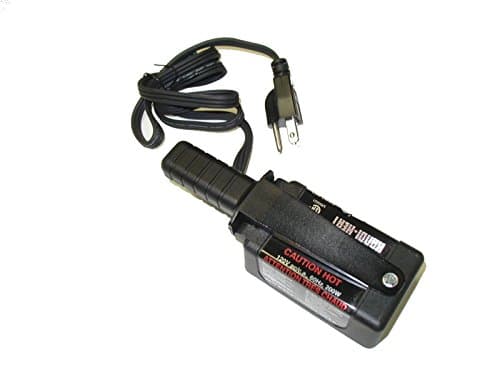
Kat's
Kat's 1155X 200 Watt Magnetic Heater
Mid-priced for a cold-start accessory
The no-installation way to put heat into an engine: a 200 W magnetic pad that sticks to the oil pan and warms the oil it is touching. It is the cheapest entry to block-heater territory, and the least effective of the real options - it heats what it touches, not the coolant.
Skip it if: Your car already has a block heater port. A proper immersion heater warms coolant, which moves heat around the engine.
#ad Price as of October 18, 2026, from Amazon. Prices change. How this site is funded.
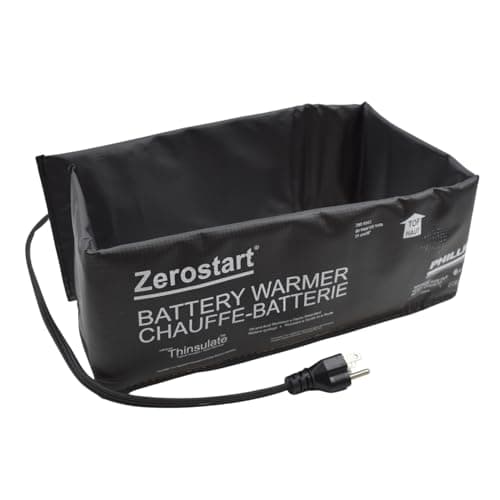
Zerostart
Zerostart 2800063 Battery Blanket
Mid-priced for a cold-start accessory
This one warms the battery rather than the engine, which is the other half of a cold no-start. Phillips & Temro publish what it is meant to achieve - a battery core 60 to 70 F above ambient - and that is a far more useful claim than any of the generic wraps make.
Skip it if: Your battery is simply old. A blanket makes a healthy battery behave in the cold; it does not resurrect a failing one.
#ad Price as of October 18, 2026, from Amazon. Prices change. How this site is funded.
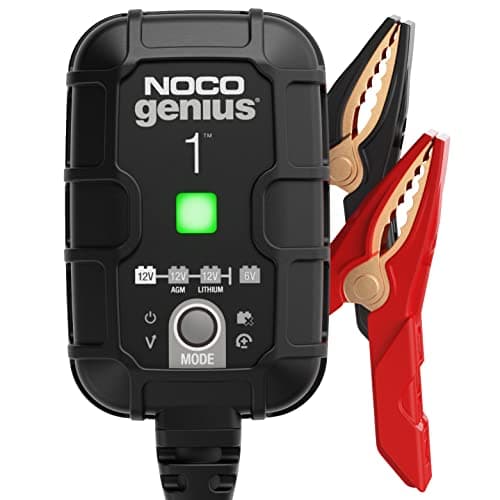
NOCO
NOCO GENIUS1 1A Smart Charger and Maintainer
Roughly $25-$35
The published operating range is the reason this is the pick: NOCO rates it from -4 F to 104 F, which is the only spec on this page that speaks to whether the thing works in an unheated garage in January. Most rivals simply do not publish one.
Skip it if: You need to recover a flat battery quickly. At 1 amp this is a maintainer, and a genuinely dead battery takes it more than a day.
#ad Price as of October 18, 2026, from Amazon. Prices change. How this site is funded.
How this was ranked
Every site in this category says it tested twenty of these. We have not tested any, and we say so. What we did instead: built the candidate set from what Amazon actually stocks, compiled the published specifications from each manufacturer’s own pages, did the arithmetic on running cost and on what the thing prevents, and read owner reviews for failure patterns rather than star averages. Every number on this page has a link to where it was published, so you can check the work.
- Units we claim to have tested
- 0
- Sponsored placements
- 0
- Free products accepted
- 0
Frequently asked
Is a block heater or a battery blanket better?
They fix different failures. A block or engine heater attacks thick oil and cold combustion; a battery blanket attacks the loss of cranking current - CTEK publishes roughly 35 percent of a battery's strength gone at 32 F and about 60 percent at 0 F. Slow cranking points to the battery; normal cranking that will not catch points to the engine.
How much does it cost to run a block heater overnight?
Not much. A 200 W magnetic heater for four hours is 0.8 kWh, which is about 15 cents at the U.S. average residential rate of 18.34 cents per kWh (EIA, June 2026). Twelve hours costs three times that for no extra benefit, which is why a timer is worth having.
Do battery blankets actually work?
Phillips & Temro publishes that its blanket-style heaters warm the battery core 60 to 70 F above ambient, which is a specific claim about what the product is designed to achieve. It makes a healthy battery behave in deep cold; it does not rescue a failing one.
Do I need a block heater if I have a battery maintainer?
Usually not. A maintainer addresses the most common winter no-start - a battery that went flat from short trips - for about 3 cents a night at 15 W. Add heat only if the car still struggles when the battery is known good and fully charged.
Can you use a magnetic heater instead of a real block heater?
It is the fallback when there is no factory block heater port. A magnetic pad heats the oil pan it is stuck to; an immersion block heater warms the coolant and therefore the whole engine. If your car has the port, use it.
How long before driving should you plug in an engine heater?
Check your vehicle's manual for its own guidance. The practical point is that leaving one plugged in all night costs several times more electricity than a few hours before you leave, for no additional benefit - which is what timers are for, and we priced the difference here.
Sources
- Retail listing for the Kat's 1155X 200 W magnetic heater (no reachable manufacturer page for this model)
- Phillips & Temro (Zerostart) - battery heater solutions (blanket warms the battery core 60-70F above ambient)
- Retail listing for Zerostart 2800063 (80 W, 36 in, CSA, battery groups 24/24F/27/27F/74)
- CTEK - 'How the cold affects your car battery' (publishes approximately 35% loss of strength at 32F and 60% at 0F)
- EIA, Electric Power Monthly, Table 5.3 - average retail price of electricity (June 2026: 18.34 cents per kWh residential)
- Do you need a block heater?
- The best block heater timers, and what one saves you
- Why car batteries die in the cold
- The best battery maintainers for winter
- The best portable jump starters, bought by engine size rather than peak amps
- What size battery maintainer do you need?
- Battery and cold starts
- How we pick, and what we refuse to claim