Skip to content
Frost & Fender
Head to head

Fluid Film or Woolwax?

Two lanolin coatings, one argument: Woolwax is thicker and claims longer, Fluid Film is thinner and proves more. One of them publishes salt-spray test data and a viscosity figure, and the other publishes a marketing claim about its rival that its rival's own spec sheet contradicts.

By Scooter M.Published October 18, 2026

Heads up: the buy links on this page are affiliate links. If you buy through one, we earn a commission at no extra cost to you. It does not change what we recommend or the order we rank things in - here is how we keep those separate.

The shortlist

Ranked, with the prices

Ranked on published manufacturer specifications and, where the numbers exist, the arithmetic on what each option costs and what it saves. Tap any row for the full write-up, including who should skip it.

#ProductBest forScorePrice
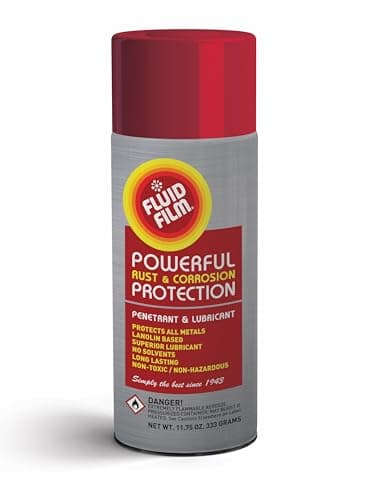
01Fluid Film Fluid Film Rust and Corrosion ProtectionFluid Film Rust and Corrosion ProtectionAnnual DIY underbody protection you reapply rather than seal inBest first can8.7$10.19 - View on Amazon
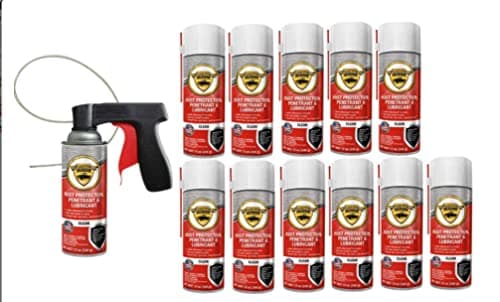
02Woolwax Woolwax 12 oz Lanolin Undercoating Aerosol, StrawWoolwax 12 oz Lanolin Undercoating Aerosol, StrawA truck frame or a vehicle you intend to keep, where you want the thickest film and the fewest reapplicationsBest for the longest claim8.4$139.50 - View on Amazon
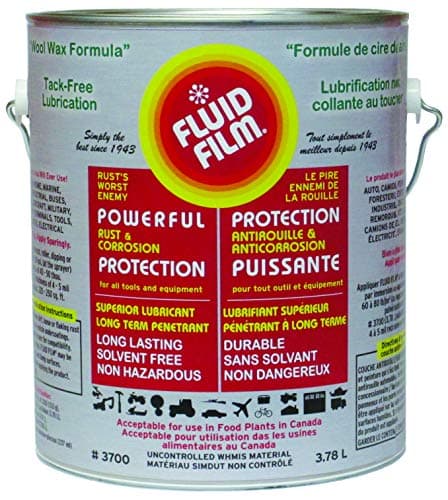
03Fluid Film Fluid Film 1 Gallon Non-AerosolFluid Film 1 Gallon Non-AerosolA whole underbody in one session, where the maker's gallon-per-vehicle figure actually appliesBest for a whole underbody8.8$48.13 - View on Amazon

Scores are ours and editorial. They are never published as review or rating markup, because we have not tested these products - see how we pick.

The answer first

Buy Fluid Film for your first go, and Woolwax only once you are sure you are committing to this as a yearly habit. Fluid Film publishes a full test sheet and sells one $10 can; Woolwax publishes a longer protection claim, no test data at all, and on Amazon the straw aerosol comes only as a case of twelve.

Who each is for, in one line each.

Fluid Film is for anyone treating seams, arches and rocker panels on a car they drive through salt — the thinner, creeping film, with ASTM and military-specification numbers behind it, bought one can at a time.

Woolwax is for a truck frame on a vehicle you intend to keep, where you want the thickest film and the fewest repeat visits, and where buying a case is not a problem.

The Fluid Film gallon is for whoever owns a compressor and an undercoating gun and wants to do a whole underbody in one afternoon — it is the size the maker’s own coverage figure is written against.

What each one actually publishes

Both are lanolin products. Both are sold on not drying out. From there the documentation diverges sharply, and that divergence is most of the decision.

Published figures, as each maker states them
Fluid FilmWoolwax
Base"Specially processed wool-wax, highly refined petroleum oils and selected agents"Raw wool-grease; the maker states that "woolgrease and lanolin are NOT the same"
Cure"Will not dry out""Does not dry. It remains soft and pliable and continues to be active"
Solvent content"Contains no solvents""Solvent free and very thick and viscous"
Viscosity10-20 Brookfield HBF at 70 F, stated as 16,000-32,000 cpsNot published - only "applies like a heavy latex paint"
Protection claim"Up to a full year of solid protection""Long term protection (2-3 years)"; enclosed areas "for an indefinite period of time (years)"
Salt-spray / corrosion testingASTM D-1735 passes 50 days; ASTM D-1748 passes 30 days; MIL-C-16173 Grade 2 "meets & exceeds salt spray requirements"None published
VOC contentAerosol less than 25%; non-aerosol less than 1% (CARB 310)Not published
Non-volatile content89% minimum (3 hours at 220 F)Not published
Flash point405 F minimum (ASTM D-92)Not published
Effect on rubberASTM D-471, 70 hours: no effect on neoprene or buna-nNot published
Coverage"A gallon of material should cover approximately one vehicle"; no per-can figure publishedNot published
ColorsClear, straw-colored liquidStraw (clear) or Black
Smallest packA single 11 3/4 oz aerosol canA single 12 oz can direct from the maker; a case of 12 on Amazon
Application temperatureNot publishedNot published

The claim that does not survive the comparison

Woolwax’s central marketing argument is a statement about its rivals, and it is published on the front page of its own site: “Most other undercoating products contain up to 70% solvents, which make these products very thin and watery. Without a very thick viscosity, these products break down and wash off quickly.”

Fluid Film’s published specification sheet says, in its own words, “contains no solvents.” It also publishes a non-volatile content of 89 percent minimum, and a VOC content of under 25 percent for the aerosol and under 1 percent for the non-aerosol. Those are not the numbers of a product that is 70 percent solvent.

So the 70-percent line is true of something, but it is not true of the one competitor most buyers are weighing Woolwax against. That is worth knowing, because it is the sentence doing most of the persuading.

The real difference between the two is viscosity, and here the asymmetry runs the other way. Woolwax says it is thicker and does not publish a number. Fluid Film says it is 16,000 to 32,000 centipoise on a stated instrument at a stated temperature. Only one of those claims can be checked.

Thicker is not free: what you give up for the longer claim

A thick coating resists wash-off and a thin one creeps. Those are the same property viewed from opposite ends, and you cannot buy both.

Where rust actually starts on a unibody car is inside things: box sections, rocker panels, pinch welds, the backs of wheel arches, the inside of doors. Those are the surfaces a thin, creeping film reaches and a heavy one bridges. Fluid Film’s military specification — MIL-C-16173 Grade 2, explicitly “soft films” — is a specification for exactly that class of coating.

Where a thick coating wins is a frame rail or a leaf spring: big exposed steel that gets hit directly by wheel spray every mile. There, the thing that fails first is the film getting blasted off, and Woolwax’s whole pitch is about that failure.

Woolwax itself concedes the shape of this trade in its own product range: it sells a “LV” low-viscosity version described as a thinner version of Woolwax. If thicker were simply better, the thinner variant would not need to exist.

That reading is ours, from both makers’ published descriptions and product ranges.

How long each one really lasts, as published

This is the most-searched question about Fluid Film and the makers answer it differently, so take both at their word and note that neither is a tested number.

Fluid Film publishes “up to a full year of solid protection” as a vehicle undercoating. That is a yearly job, in the fall, before the trucks start salting.

Woolwax publishes two different intervals for two different places on the same vehicle, which is the most useful thing on either website. For enclosed areas — doors, frame rails — “a single treatment will provide protection for an indefinite period of time (years).” For the exposed underside, it “should be re-treated every other year, or as needed depending on the use, and geographic region,” and “in most cases a Woolwax treatment will last 2 years.”

That distinction applies to both products and to any lanolin coating: the film inside a box section is not being washed by anything, so it lasts far longer than the film on a frame rail. If you only have time to do one thing every fall, do the exposed underside and leave the cavities on their multi-year schedule.

One practical note from Woolwax that saves real work: “There is no need to remove or power wash the existing Woolwax. Simply give it a rinse with a garden hose to clean it up a bit, and apply a fresh coat right over the existing Woolwax.” Recoating over a non-drying film is the point of a non-drying film.

The rest of Fluid Film’s published sheet, since it exists

The asymmetry in documentation is the story of this comparison, so it is worth laying out how much there actually is on one side. Beyond the corrosion tests already quoted, Fluid Film publishes:

Rubber compatibility. ASTM D-471, 70 hours at about 158 F: no effect on neoprene or buna-n. That is the test that answers “will this attack my bushings, boots and grommets”, which is a real question when you are spraying oil across a whole suspension.

Flash point. 405 F minimum, by ASTM D-92. Worth knowing before you spray anything near an exhaust or a turbo housing, and a figure the other product does not give you.

Water displacement. Published against MIL-C-23411 as displacing water from all metal surfaces, which is the property that makes a creeping oil useful on a wet seam rather than merely a dry one.

Repainting. It publishes that the product contains no silicones, and that a hot water or steam wash at 120 F is needed before repainting. If a panel is ever going to see paint, that is the removal procedure and it is better to know it up front.

Toxicity. Published as non-toxic with an LD-50 greater than 3 grams per kilogram, non-irritating on skin, very slight eye irritation.

None of that makes Fluid Film the right choice for every job. What it does mean is that for every question you can think to ask about Fluid Film, there is a published answer, and for most of the same questions about Woolwax there is not. On a site that ranks on published specifications, that is not a tie-breaker — it is the ranking.

The product ranges, which are wider than the shortlist suggests

Both makers sell more than the one product people compare, and two of those variants change the answer above.

Woolwax “LV” is published as a thinner, low-viscosity version of the standard formula, in the same Straw and Black colors. If you have chosen Woolwax for the longer protection claim but you want it to creep into cavities, this is the variant to ask about rather than the standard one.

Woolwax also sells separate lines — a permanent hard coating for truck frames and equipment, and a cavity-and-undercarriage wax — which are different products with different behavior, not thicker versions of the lanolin coating. If you are comparing prices across listings, check which line you are looking at, because the hard-coating products are water-based and permanent, which is the opposite of everything this page is about.

Bulk sizes run further than most people need. Woolwax publishes quarts, gallons, a 2.5-gallon jug, five-gallon pails and 55-gallon drums; Fluid Film publishes the aerosol, a gallon and a five-gallon pail. For one car, a gallon is the ceiling of sense — Fluid Film’s own coverage figure is a gallon per vehicle, and a five-gallon pail of a non-drying oil is a storage problem rather than a saving.

Skip this

Neither one goes over a hard coating, and both will soften one

Fluid Film publishes a warning that matters if your car already has something on it: it “may soften some vehicle undercoatings. This includes undercoating type paints.” A lanolin oil creeping under a cracked rubberized coat is the one combination to avoid, because it lifts the hard film without replacing its protection.

That is the same rule as on our undercoating spray roundup, which carries a whole section on not layering these on top of each other. Pick a chemistry and stay with it.

Also: Fluid Film publishes that if you intend to repaint, a hot water or steam wash at 120 F is needed first. Neither product belongs anywhere you plan to put paint.

The buying problem, which is where most people actually land

On price per ounce the two are closer than the shelf suggests. Onpurchasable units they are not close at all.

Fluid Film sells a single aerosol can for about the price of two coffees. You can buy one, do both rear wheel arches, decide whether you want to live with a greasy underbody, and be out ten dollars if the answer is no.

Woolwax’s straw aerosol is listed on Amazon only as a case of twelve cans with a wand and a trigger. The maker sells single cans and quarts direct, and if you have decided on Woolwax that is the better route; but through the channel most people shop in, the entry price is a commitment rather than an experiment.

For a whole underbody in one session, both makers point at bulk. Fluid Film’s gallon is the size its own “approximately one vehicle” coverage figure refers to, and its non-aerosol VOC content is published at under 1 percent against under 25 percent for the spray. You need a gun and a compressor, which is the real reason most people buy cans instead — and the reason the DIY-versus-shop arithmetic comes out the way it does.

What we would buy

First time, car rather than truck: one Fluid Film aerosol. It publishes the test data, it creeps into the places that rust, and you can stop after one can.

A truck frame on a keeper, and you are committed: Woolwax, bought from the maker in the size you want rather than as a twelve-can case. The two-year exposed-underside interval is the real benefit, and the enclosed-area claim is better still.

Whole underbody, compressor in the garage: the Fluid Film gallon. It is the documented product at the documented coverage rate, and under 1 percent VOC is a real difference when you are spraying a gallon of it in an enclosed space.

Either way: get the car in the air, do the cavities and the seams rather than only the flat surfaces, and rinse the salt off before you coat over it. A coating applied over trapped brine is sealing the problem in.
The write-ups

Every pick, in full

01 / Best first canFluid Film Fluid Film Rust and Corrosion Protection

Fluid Film

8.7 / 10

One of the cheapest items on this site - a single aerosol can

Fluid Film Rust and Corrosion Protection

A lanolin-based, non-drying coating. Non-drying is the whole argument: it stays soft, so it creeps into seams and does not crack and trap moisture underneath the way a hard rubberized coating can once it chips.

$10.19 - View on Amazon

#ad Price as of October 18, 2026, from Amazon. Prices change. How this site is funded.

Published specifications for the Fluid Film Rust and Corrosion Protection, with the source of each
SpecificationPublished valueWhere it is published
BaseLanolin-based corrosion preventiveFluid Film product range
CureNon-drying, stays softFluid Film product range
FormsAerosol, gallon and bulkFluid Film product range
Protection claim"Up to a full year of solid protection" as a vehicle undercoatingFluid Film - automotive applications page
Aerosol size11 3/4 ozFluid Film - Aerosol and Non-Aerosol product page (properties and test data)
Coverage"A gallon of material should cover approximately one vehicle" - no per-can figure publishedFluid Film - automotive applications page
Corrosion testingASTM D-1735 humidity cabinet: passes 50 days. ASTM D-1748: passes 30 daysFluid Film - Aerosol and Non-Aerosol product page (properties and test data)
Effect on existing undercoating"May soften some vehicle undercoatings. This includes undercoating type paints"Fluid Film - automotive applications page
Application temperatureNot published by the manufacturerFluid Film - Aerosol and Non-Aerosol product page (properties and test data)

The arithmetic

Budget for about a gallon's worth a year - that is the maker's own figure.

Fluid Film publishes that a gallon should cover approximately one vehicle and gives up to a full year of protection. It publishes no coverage figure for the aerosol, and part of every can is propellant, so we will not turn that into a can count. For a whole underbody, compare the gallon price against the aerosol price before you buy; cans make sense for seams, arches and touch-ups.

What it does well

  • Creeps into seams and box sections where rust actually starts
  • Never cracks, so it cannot trap water under a broken film
  • Cheap enough per year to actually keep doing

What it does not

  • It stays greasy, collects road dirt and transfers to anything that touches it
  • The maker's own claim is up to a full year, so it is a job you repeat every fall
  • Doing it properly needs the car in the air, which is the real cost

Skip this one if

You want a permanent, one-time coating. This is deliberately impermanent and must be redone each year.

How it scores, by criterion

Corrosion protection9.0
Seam penetration9.5
Cleanliness4.5
DIY practicality7.0
Price9.0
02 / Best for the longest claimWoolwax Woolwax 12 oz Lanolin Undercoating Aerosol, Straw

Woolwax

8.4 / 10

A twelve-can case, so a low-three-figure purchase on Amazon rather than a single-can price

Woolwax 12 oz Lanolin Undercoating Aerosol, Straw

The thickest of the lanolin coatings, and the one that publishes the longest protection claim - two to three years against Fluid Film's up to one. The catch on Amazon is the pack size: the straw aerosol is listed as a case of twelve cans, which is a lot of commitment for a first try.

$139.50 - View on Amazon

#ad Price as of October 18, 2026, from Amazon. Prices change. How this site is funded.

Published specifications for the Woolwax 12 oz Lanolin Undercoating Aerosol, Straw, with the source of each
SpecificationPublished valueWhere it is published
BaseRaw wool-grease (the maker publishes that woolgrease and liquid lanolin are not the same thing)Woolwax (Kellsport Products) - published product information (wool-grease formula, 2-3 year protection claim, solvent free, does not dry, Straw or Black)
Cure"Does not dry. It remains soft and pliable and continues to be active"Woolwax (Kellsport Products) - published product information (wool-grease formula, 2-3 year protection claim, solvent free, does not dry, Straw or Black)
Solvent content"Solvent free and very thick and viscous. It applies like a heavy latex paint"Woolwax (Kellsport Products) - published product information (wool-grease formula, 2-3 year protection claim, solvent free, does not dry, Straw or Black)
Published protection"Long term protection (2-3 years) against salt, liquid calcium chloride, brine"; enclosed areas "for an indefinite period of time (years)"Woolwax (Kellsport Products) - published product information (wool-grease formula, 2-3 year protection claim, solvent free, does not dry, Straw or Black)
ReapplicationExposed undercarriage "should be re-treated every other year"; no need to wash the old coat off firstWoolwax (Kellsport Products) - published product information (wool-grease formula, 2-3 year protection claim, solvent free, does not dry, Straw or Black)
ColorsStraw (clear) or BlackWoolwax (Kellsport Products) - published product information (wool-grease formula, 2-3 year protection claim, solvent free, does not dry, Straw or Black)
Pack size on this listing12 cans of 12 oz, with an extension wand and spray triggerRetail listing for the Woolwax 12 oz lanolin aerosol, Straw (clear), sold as a case of 12 cans with wand and trigger
Viscosity figureNot published by the manufacturerWoolwax (Kellsport Products) - published product information (wool-grease formula, 2-3 year protection claim, solvent free, does not dry, Straw or Black)
Salt-spray or ASTM test dataNot published by the manufacturerWoolwax (Kellsport Products) - published product information (wool-grease formula, 2-3 year protection claim, solvent free, does not dry, Straw or Black)
Application temperatureNot published by the manufacturer - the maker says only that undercoaters suggest treating in warmer weather so it creepsWoolwax (Kellsport Products) - published product information (wool-grease formula, 2-3 year protection claim, solvent free, does not dry, Straw or Black)

What it does well

  • The longest published protection claim of any lanolin coating here, at two to three years
  • Published as solvent free and thick enough to resist wash-off
  • You can recoat straight over the old film after a hose rinse

What it does not

  • Publishes no viscosity figure and no test data at all, so the thickness claim cannot be checked
  • The straw aerosol is sold on Amazon as a twelve-can case - no single-can option
  • Thicker means less creep into seams, which is the thing a thin coating does best

Skip this one if

You want to try one can on a wheel arch. Buy it direct from the maker in a single can or a quart instead of a twelve-can case.

How it scores, by criterion

Published protection claim9.5
Wash-off resistance9.0
Published test data2.0
Seam penetration7.5
Ease of buying one can4.0
03 / Best for a whole underbodyFluid Film Fluid Film 1 Gallon Non-Aerosol

Fluid Film

8.8 / 10

Mid-two-figure for the gallon, against roughly $10 for a single aerosol can

Fluid Film 1 Gallon Non-Aerosol

The same coating as the aerosol with the propellant and the per-can markup taken out, and the size the maker's own coverage figure is written against. It needs a spray gun and a compressor, which is the real reason most people buy cans instead.

$48.13 - View on Amazon

#ad Price as of October 18, 2026, from Amazon. Prices change. How this site is funded.

Published specifications for the Fluid Film 1 Gallon Non-Aerosol, with the source of each
SpecificationPublished valueWhere it is published
Coverage"A gallon of material should cover approximately one vehicle"Fluid Film - automotive applications page
Protection claim"Up to a full year of solid protection" as a vehicle undercoatingFluid Film - automotive applications page
VOC contentNon-aerosol: less than 1% (CARB 310). The aerosol is published as less than 25%Fluid Film - Aerosol and Non-Aerosol product page (properties and test data)
Viscosity10-20 Brookfield HBF reading at 70 F, stated as 16,000-32,000 cpsFluid Film - Aerosol and Non-Aerosol product page (properties and test data)
Corrosion testingASTM D-1735 humidity cabinet: passes 50 days. ASTM D-1748: passes 30 daysFluid Film - Aerosol and Non-Aerosol product page (properties and test data)
Military specificationMIL-C-16173 Grade 2 soft films - "meets and exceeds salt spray requirements"Fluid Film - Aerosol and Non-Aerosol product page (properties and test data)
Non-volatile content89% minimum (3 hours at 220 F)Fluid Film - Aerosol and Non-Aerosol product page (properties and test data)
Pack size1 gallon can, non-aerosolRetail listing for the Fluid Film 1 gallon non-aerosol can

What it does well

  • The size the maker's own one-vehicle coverage figure is written for
  • Published VOC content of under 1%, against under 25% for the aerosol
  • Far cheaper per ounce than buying the same volume in cans

What it does not

  • Needs an undercoating gun and a compressor you may not own
  • Messier than cans, and you are committed once it is open
  • Still a yearly job - the published claim is up to a full year

Skip this one if

You have no compressor or undercoating gun. The aerosol exists for exactly that case, and a gallon you cannot spray is worse value than four cans you can.

How it scores, by criterion

Published test data9.5
Cost per vehicle9.0
Seam penetration9.5
Equipment needed4.5
Cleanliness4.5

How this was ranked

Every site in this category says it tested twenty of these. We have not tested any, and we say so. What we did instead: built the candidate set from what Amazon actually stocks, compiled the published specifications from each manufacturer’s own pages, did the arithmetic on running cost and on what the thing prevents, and read owner reviews for failure patterns rather than star averages. Every number on this page has a link to where it was published, so you can check the work.

Units we claim to have tested
0
Sponsored placements
0
Free products accepted
0

The full method, including what we refuse to claim

Questions people actually ask

Frequently asked

Is Woolwax better than Fluid Film?

Woolwax publishes a longer protection claim — 2 to 3 years against Fluid Film’s “up to a full year” — and describes itself as thicker and more wash-off resistant. Fluid Film publishes actual test data: ASTM D-1735 at 50 days, ASTM D-1748 at 30 days, MIL-C-16173 Grade 2 for salt spray, and a stated viscosity. Woolwax publishes no test results and no viscosity figure. If you want the longest claim, Woolwax. If you want the claim you can check, Fluid Film.

How long does Fluid Film last?

Fluid Film publishes “up to a full year of solid protection” as a vehicle undercoating, so treat it as a yearly fall job. In enclosed cavities it will last considerably longer simply because nothing is washing it off — Woolwax publishes that distinction explicitly for its own product, and the physics is the same for both.

Is Fluid Film really 70 percent solvent?

No. Woolwax publishes that “most other undercoating products contain up to 70% solvents,” but Fluid Film’s own published specification says it “contains no solvents,” with non-volatile content of 89 percent minimum and VOC content under 25 percent for the aerosol and under 1 percent for the non-aerosol. The claim may apply to some products in the category; it does not match Fluid Film’s published figures.

Can you put Woolwax over Fluid Film?

Both are non-drying wool-grease films, so they are chemically compatible in a way that lanolin and rubberized coatings are not, and Woolwax publishes that you can recoat straight over existing Woolwax after a hose rinse. What neither belongs over is a hard rubberized undercoating: Fluid Film publishes that it “may soften some vehicle undercoatings,” and lifting a cracked hard film without replacing its protection is the worst of both.

Which is cheaper, Fluid Film or Woolwax?

Per ounce they are close. Per purchase they are not: Fluid Film sells a single aerosol can for roughly ten dollars, while the Woolwax straw aerosol is listed on Amazon only as a case of twelve. Woolwax sells single cans and quarts direct from its own site, which is the cheaper way in if you have already decided on it.

What temperature can you apply these at?

Neither maker publishes an application temperature, which is worth saying plainly. Woolwax notes only that its undercoaters “suggest treating vehicles in the warmer weather so that the Woolwax creeps and migrates into all the inaccessible areas.” Both are oils rather than curing coatings, so the practical limit is how well they atomize and flow, not a published cure window.

Do I need a spray gun?

For a whole underbody, effectively yes. Fluid Film’s own coverage figure — “a gallon of material should cover approximately one vehicle” — is written for the bulk product, which needs a gun and a compressor. Aerosol cans make sense for seams, arches and touch-ups, and Fluid Film publishes no per-can coverage figure, so do not try to convert one into the other.

Sources

Read next