Skip to content
Frost & Fender
Roundup

The best undercoating spray for a DIY rust job

The can matters less than the metal you are spraying it onto. And one of these cans comes with a temperature window that rules it out in a cold garage.

By Scooter M.Published September 17, 2026

Heads up: the buy links on this page are affiliate links. If you buy through one, we earn a commission at no extra cost to you. It does not change what we recommend or the order we rank things in - here is how we keep those separate.

The shortlist

Ranked, with the prices

Ranked on published manufacturer specifications and, where the numbers exist, the arithmetic on what each option costs and what it saves. Tap any row for the full write-up, including who should skip it.

#ProductBest forScorePrice
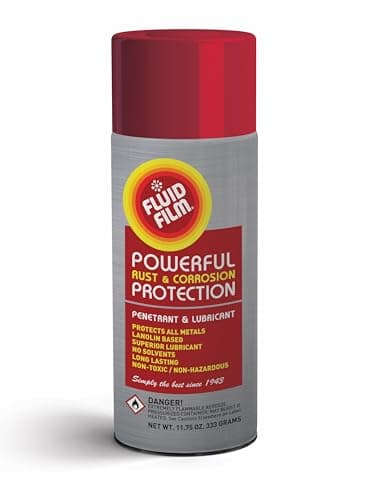
01Fluid Film Fluid Film Rust and Corrosion ProtectionFluid Film Rust and Corrosion ProtectionAnnual DIY underbody protection you reapply rather than seal inBest all-rounder8.7$10.19 - View on Amazon
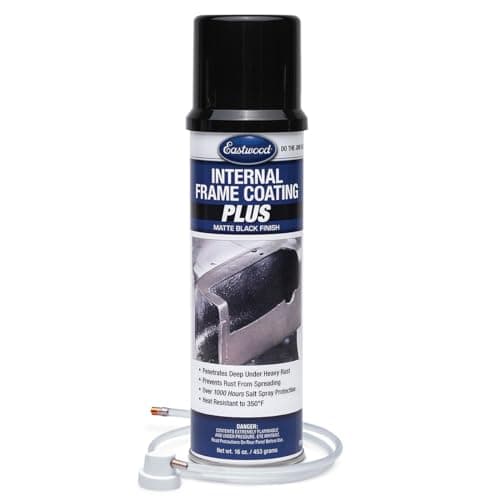
02Eastwood Eastwood Internal Frame Coating PLUS with Extension NozzleEastwood Internal Frame Coating PLUS with Extension NozzleFrame rails and box sections that already have rust inside themBest for rusted frame rails7.4$44.99 - View on Amazon
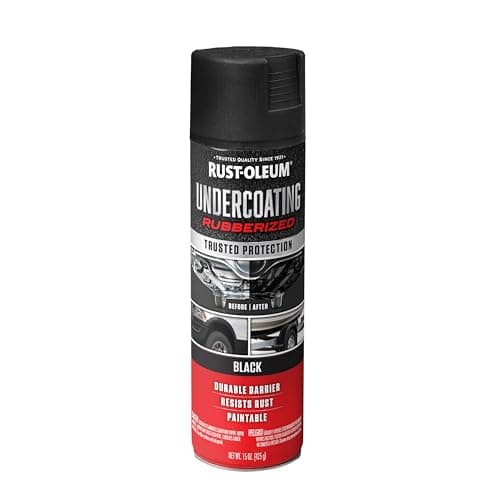
03Rust-Oleum Rust-Oleum Automotive Rubberized UndercoatingRust-Oleum Automotive Rubberized UndercoatingWheel arches and sound deadening on clean, prepared metalBest cheap hard coat for wheel arches6.8$7.59 - View on Amazon

Scores are ours and editorial. They are never published as review or rating markup, because we have not tested these products - see how we pick.

Start with the metal, not the can

“Undercoating spray” covers products that do opposite things. Some dry to a hard rubbery film. Some never dry at all and are meant to creep into seams. One of the cans on this page is sold to go on top of rust that is already there. Buy the wrong type for the metal under your car and you can make things worse. The classic warning is about a hard film sprayed over rust, which can hold water against the steel where you cannot see it.

So before any of the rankings, look underneath with a flashlight and put your car in one of these groups:

  • Newer car, clean metal. You are preventing rust, not treating it. Almost any of these will do something useful, and the choice is about upkeep and mess.
  • Light surface rust in places. This is where the type matters most. The rubberized coat’s maker says to remove loose rust first, while the non-drying spray’s maker says that, applied over existing rust, it stops the rust spreading.
  • Rust inside the frame rails or box sections. A different job, done with a different product and a nozzle that reaches inside.
  • Flaking scale and holes. No can on this page fixes that. It is a shop decision, and we cover it here.

One more thing before spending money. Undercoating protects the metal that salt reaches. It does not remove the salt that is already there. Rinsing the underbody through the winter is still the cheapest protection there is, and a coating works alongside it rather than replacing it.

How we judged these

We have not tested these cans, and we have not run a salt spray cabinet. We ranked them on what each maker publishes, and on how well that fits a budget DIY job done in a driveway or a home garage.

1. Whether it suits the metal it goes on. A product that is right for clean steel can be wrong for rusty steel. The makers’ own instructions tell you which is which, and that counts for more than any marketing claim on the front of the can.

2. Whether you can apply it when you will actually do the job. Most people think about undercoating when the salt trucks come out, which is the worst time of year for anything that has to dry. A published application temperature is a real specification. So is the absence of one.

3. What the maker is willing to publish. Coverage figures, dry times and corrosion test results. We also checked whether a test claim names the test it was measured against. A number with no method attached cannot be compared with anything.

4. What it does to everything else under the car. Two of these makers publish warnings that decide what you can put next to or on top of their product. Most buyers never read them.

What each maker actually publishes

Published specifications for the three undercoating sprays, side by side
Fluid Film AerosolEastwood Frame Coating PLUSRust-Oleum Rubberized
FilmNon-drying - "will not dry out"Moisture-cured urethaneRubberized coating that dries
Goes on rusty metal?Maker says it stops existing rust spreadingLabeled for "bare metal surfaces or rusted areas"Remove loose paint and rust first
Application temperatureNot publishedNot stated on the can label50 to 90 F, humidity below 85%
Dry timeDoes not dry24 hours full cure (retail listing)Touch 30 minutes, fully dry 24 hours at 70 F
CoverageAbout one vehicle per gallon; no aerosol figureNot on the label or listing10-12 sq ft per 15 oz can
Corrosion test claimASTM D-1735: 50 days. ASTM D-1748: 30 days"Over 1000 hours" salt spray, no standard namedNone on the data sheet
Upkeep"Up to a full year" of protectionNot on the labelNot on the data sheet

Read across the rows and the picture is clear. Fluid Film publishes named test methods but no temperature. Rust-Oleum publishes exact application conditions and coverage, but its data sheet gives no corrosion figure at all. Eastwood’s label gives a salt spray figure and names no method behind it. None of them gives you everything, which is why the ranking comes down to the job rather than to a single number.

The temperature problem nobody checks

Rust-Oleum’s technical data sheet for its rubberized undercoating says to apply it between 50 and 90 F with humidity below 85%. Its dry times are measured at 70 F and 50% humidity, and the sheet adds that you should allow more time at cooler temperatures.

That matters because of when people do this job. If your garage is not reaching 50 F on the day you have the car up on ramps, you are applying the rubberized can outside its maker’s published conditions. Our plain advice is to do any hard-coat work early in the fall, on a day warm enough to meet the spec, or leave it until spring.

Fluid Film publishes no application temperature on its product page, its data sheet, its FAQ or its automotive page, and we are not going to invent one. What it does publish is that the film will not dry out, so unlike the other two there is no drying or curing stage involved. That is our reading of the maker’s wording, not a cold-weather rating. The maker also says the product is thixotropic and gets thicker as it sits, and that stirring or shaking it returns it to a thinner consistency.

Eastwood’s label does not state an application temperature either. It is moisture-cured, and the retail listing gives a 24-hour full cure. Beyond that we have no published figure, so if you are working in a cold garage, check with Eastwood before you start.

What 'one can' actually covers, from the makers' own figures

Rust-Oleum: 10 to 12 square feet per 15 oz can, per its data sheet.

Fluid Film: about 250 square feet per gallon when sprayed at 3 to 4 mils, and a gallon should cover approximately one vehicle. Both figures are the maker’s. Put them together and one vehicle works out at roughly 250 square feet of sprayed surface — that combination is our arithmetic, not a number Fluid Film publishes.

So: 250 ÷ 12 = about 21 cans, and 250 ÷ 10 = 25 cans, to cover that area with the rubberized product.

That is not a recommendation to buy 25 cans. The two figures are measured at different film thicknesses, and the two products do different jobs. The point is scale. At 10 to 12 square feet a can, a rubberized aerosol makes sense for wheel arches and patches rather than a whole underbody. If you want the whole underside done, that is a gallon-and-spray-gun job or a shop job, and the DIY-or-shop comparison is the page to read next.

Skip this

Skip layering these on top of each other

This is the mistake that buying more than one can sets you up for, and both makers publish something that covers their half of it.

Fluid Film over a hard coat. Fluid Film’s automotive page says it “may soften some vehicle undercoatings. This includes undercoating type paints” and tells you to check compatibility with the dealer or manufacturer. Spraying it over a rubberized coat you have just put on, or over a factory undercoating, is the situation that warning covers.

A hard coat over Fluid Film. Rust-Oleum’s data sheet requires a surface free of oil and grease. Fluid Film leaves a wet film that is meant to stay, and its own guidance is that treated surfaces need a detergent wash before anything is painted over them. A rubberized coat sprayed onto an oily underbody has nothing clean to stick to.

The fix is to give each product its own zone and not to overlap them. Fluid Film also warns that it may cause swelling on rubber that is not oil-resistant, so keep it off rubber parts unless you know they are.

Where each one goes on a car

Seams, the accessible underbody and suspension mounts: the non-drying spray. The maker’s whole case is that it migrates into places a film cannot reach and does not crack. The trade-off is that it stays wet by design and needs doing again every fall.

Inside frame rails and box sections that already have rust: the frame coating with its extension nozzle. This is the job the Eastwood can is labeled for, and it is the one product here whose label is written around rusted metal.

Wheel arches on clean metal, if you want them quieter: the rubberized coat, on a warm enough day, before anything oily goes near them. Rust-Oleum describes it as sound-deadening as well as protective. Only use it on bare or primed metal, and not on galvanized metal, which its data sheet specifically excludes.

Never: the exhaust, brake rotors or anything that gets hot. Rust-Oleum’s sheet says not to apply to surfaces that exceed 200 F when heated.

Read the Eastwood label before you buy it.

The Internal Frame Coating PLUS label lists diisocyanates among its ingredients and warns that it may cause allergy or asthma symptoms or breathing difficulties if inhaled. It says to use it only outdoors or in a well-ventilated area, and to wear respiratory protection where ventilation is not adequate. You will be spraying into enclosed rails, often lying under the car, so take that seriously. If you cannot work outdoors with a suitable respirator, this is the product to leave to a shop. And as with any job under a car, never rely on a jack alone — use ramps or jack stands on level ground.

What we would buy

For most cars: Fluid Film. It costs little more than the rubberized can, it is the only one of the three that publishes named corrosion tests, and it has no drying or curing stage to wait on. Use aerosols for seams, arches and touch-ups. For the whole underside, compare the gallon price first, because that is the size the maker’s own coverage figure is based on.

For an older truck or SUV with rust inside the frame: the Eastwood frame coating, sprayed outdoors with a respirator. It costs a lot more than the other cans and you should take its safety label seriously, but it is the only product here made for that job.

If you are weighing Fluid Film against Woolwax, which is the other lanolin coating most people shortlist, that is a head-to-head of its own: the published test data against the longer protection claim, including the pack-size problem that decides it for a first-time buyer.

For quieter wheel arches on a newer car: the Rust-Oleum rubberized can. It is cheap and it publishes exactly how to apply it. Just follow those conditions — 50 F or warmer, clean metal, no oil — and keep Fluid Film away from it afterward.

Whatever you buy: it goes on before winter, and the underbody rinse carries on all winter. Add a sealant for the paint you can see; the winter sealants are ranked here, and they also need a warm enough day to cure.
The write-ups

Every pick, in full

01 / Best all-rounderFluid Film Fluid Film Rust and Corrosion Protection

Fluid Film

8.7 / 10

One of the cheapest items on this site - a single aerosol can

Fluid Film Rust and Corrosion Protection

A lanolin-based, non-drying coating. Non-drying is the whole argument: it stays soft, so it creeps into seams and does not crack and trap moisture underneath the way a hard rubberized coating can once it chips.

$10.19 - View on Amazon

#ad Price as of October 18, 2026, from Amazon. Prices change. How this site is funded.

Published specifications for the Fluid Film Rust and Corrosion Protection, with the source of each
SpecificationPublished valueWhere it is published
BaseLanolin-based corrosion preventiveFluid Film product range
CureNon-drying, stays softFluid Film product range
FormsAerosol, gallon and bulkFluid Film product range
Protection claim"Up to a full year of solid protection" as a vehicle undercoatingFluid Film - automotive applications page
Aerosol size11 3/4 ozFluid Film - Aerosol and Non-Aerosol product page (properties and test data)
Coverage"A gallon of material should cover approximately one vehicle" - no per-can figure publishedFluid Film - automotive applications page
Corrosion testingASTM D-1735 humidity cabinet: passes 50 days. ASTM D-1748: passes 30 daysFluid Film - Aerosol and Non-Aerosol product page (properties and test data)
Effect on existing undercoating"May soften some vehicle undercoatings. This includes undercoating type paints"Fluid Film - automotive applications page
Application temperatureNot published by the manufacturerFluid Film - Aerosol and Non-Aerosol product page (properties and test data)

The arithmetic

Budget for about a gallon's worth a year - that is the maker's own figure.

Fluid Film publishes that a gallon should cover approximately one vehicle and gives up to a full year of protection. It publishes no coverage figure for the aerosol, and part of every can is propellant, so we will not turn that into a can count. For a whole underbody, compare the gallon price against the aerosol price before you buy; cans make sense for seams, arches and touch-ups.

What it does well

  • Creeps into seams and box sections where rust actually starts
  • Never cracks, so it cannot trap water under a broken film
  • Cheap enough per year to actually keep doing

What it does not

  • It stays greasy, collects road dirt and transfers to anything that touches it
  • The maker's own claim is up to a full year, so it is a job you repeat every fall
  • Doing it properly needs the car in the air, which is the real cost

Skip this one if

You want a permanent, one-time coating. This is deliberately impermanent and must be redone each year.

How it scores, by criterion

Corrosion protection9.0
Seam penetration9.5
Cleanliness4.5
DIY practicality7.0
Price9.0
02 / Best for rusted frame railsEastwood Eastwood Internal Frame Coating PLUS with Extension Nozzle

Eastwood

7.4 / 10

Several times the price of the other cans on this page

Eastwood Internal Frame Coating PLUS with Extension Nozzle

The one can here that is sold to go over rust rather than in front of it. It is a moisture-cured urethane with an extension nozzle for the inside of frame rails, and the label carries the most serious breathing warning of anything on this page.

$44.99 - View on Amazon

#ad Price as of October 18, 2026, from Amazon. Prices change. How this site is funded.

Published specifications for the Eastwood Internal Frame Coating PLUS with Extension Nozzle, with the source of each
SpecificationPublished valueWhere it is published
ChemistryMoisture-cured urethane that "encapsulates and stops rust from spreading"Eastwood - Internal Frame Coating PLUS published can label
Surfaces"Apply over bare metal surfaces or rusted areas"Eastwood - Internal Frame Coating PLUS published can label
Salt spray claim"Over 1000 hours" - the label names no test standardEastwood - Internal Frame Coating PLUS published can label
Net weight16 oz (453 g)Eastwood - Internal Frame Coating PLUS published can label
Once opened"Use all product in can within 6 months"Eastwood - Internal Frame Coating PLUS published can label
IncludedExtension nozzleRetail listing for Eastwood part 98092 (Eastwood's own product page did not load for us on 2026-09-17)
Full cure24 hoursRetail listing for Eastwood part 98092 (Eastwood's own product page did not load for us on 2026-09-17)
Application temperatureNot stated on the can labelEastwood - Internal Frame Coating PLUS published can label

What it does well

  • Made for the inside of frame rails, with the extension nozzle included
  • Labeled for use over rusted metal, which the rubberized can is not
  • Needs no top coat unless it is exposed to direct sunlight, per the label

What it does not

  • Contains diisocyanates; the label warns of asthma-type symptoms and calls for respiratory protection without good ventilation
  • Several times the price of a can of Fluid Film or rubberized undercoating
  • The salt spray figure comes with no named test method, so it cannot be compared with anything
  • Not sold in California, per the retail listing

Skip this one if

You cannot spray it outdoors or with real ventilation and a respirator. The label warns it may cause allergy or asthma symptoms if inhaled.

How it scores, by criterion

Corrosion protection8.0
Seam penetration7.0
DIY practicality5.5
Price5.0
03 / Best cheap hard coat for wheel archesRust-Oleum Rust-Oleum Automotive Rubberized Undercoating

Rust-Oleum

6.8 / 10

Roughly $8-$14 a can

Rust-Oleum Automotive Rubberized Undercoating

A hard rubberized coating that also deadens road noise. The failure mode is worth understanding before you buy: once a hard film chips, water sits under it against bare steel, and rust spreads out of sight.

$7.59 - View on Amazon

#ad Price as of October 18, 2026, from Amazon. Prices change. How this site is funded.

Published specifications for the Rust-Oleum Automotive Rubberized Undercoating, with the source of each
SpecificationPublished valueWhere it is published
FormRubberized aerosol undercoatingRust-Oleum published product information
Dry timesTouch in 30 minutes, fully dry in 24 hours (at 70F and 50% humidity - more time when cooler)Rust-Oleum technical data sheet ATO-76, Automotive Rubberized Undercoating
Secondary functionSound and vibration deadeningRust-Oleum published product information
Application conditionsApply between 50 and 90F with humidity below 85%Rust-Oleum technical data sheet ATO-76, Automotive Rubberized Undercoating
Coverage10-12 sq ft per 15 oz canRust-Oleum technical data sheet ATO-76, Automotive Rubberized Undercoating
SurfacesBare or primed metal; not galvanized metal. Remove loose paint and rust firstRust-Oleum technical data sheet ATO-76, Automotive Rubberized Undercoating
Corrosion test dataNot published by the manufacturerRust-Oleum technical data sheet ATO-76, Automotive Rubberized Undercoating

What it does well

  • Genuinely reduces road roar in wheel arches
  • Cheap and available everywhere
  • Tough surface that resists stone chipping

What it does not

  • Chips trap water against bare steel and hide the resulting rust
  • Demands proper surface prep to work at all
  • Not a creeping product, so it never reaches inside seams

Skip this one if

The metal underneath is already surface-rusted. Sealing rust in is the classic undercoating mistake.

How it scores, by criterion

Corrosion protection6.0
Seam penetration2.5
Sound deadening9.0
DIY practicality8.0
Price9.5

How this was ranked

Every site in this category says it tested twenty of these. We have not tested any, and we say so. What we did instead: built the candidate set from what Amazon actually stocks, compiled the published specifications from each manufacturer’s own pages, did the arithmetic on running cost and on what the thing prevents, and read owner reviews for failure patterns rather than star averages. Every number on this page has a link to where it was published, so you can check the work.

Units we claim to have tested
0
Sponsored placements
0
Free products accepted
0

The full method, including what we refuse to claim

Questions people actually ask

Frequently asked

What is the best undercoating spray for a DIY job?

For most cars, a non-drying spray such as Fluid Film. It creeps into seams, does not crack, and publishes named humidity cabinet test results. If there is rust inside the frame rails, a rust-encapsulating frame coating with an extension nozzle is the better tool. A rubberized aerosol suits clean wheel arches.

Can you apply undercoating in cold weather?

It depends on the product, so check its data sheet. Rust-Oleum says to apply its rubberized undercoating between 50 and 90 F with humidity below 85%. Fluid Film publishes no application temperature and does not dry. Eastwood’s frame coating label gives no temperature. Do any hard-coat work early in the fall.

Can you spray Fluid Film over rubberized undercoating?

Not without checking first. Fluid Film says it may soften some vehicle undercoatings, including undercoating type paints, and tells you to check compatibility with the dealer or manufacturer. The reverse does not work either: a rubberized coating needs a surface free of oil and grease, so give each product its own area of the car.

How many cans of undercoating spray do I need?

Rust-Oleum publishes 10 to 12 square feet per 15 oz can. Fluid Film publishes no per-can figure, but says a gallon should cover approximately one vehicle. By those numbers, aerosols make sense for arches, seams and touch-ups, and a whole underbody is a job for a gallon and a spray gun, or for a shop.

Does undercoating spray stop existing rust?

Two of these makers say theirs does. Fluid Film says that applied over existing rust it stops it spreading, and Eastwood labels its frame coating for rusted areas. We have not independently tested either claim. A rubberized coating is different: Rust-Oleum says to remove loose paint and rust before applying it.

Is rubberized or oil-based undercoating better?

They do different jobs. A non-drying, oil- or lanolin-based spray creeps into seams and never cracks, but stays wet and needs redoing every year. A rubberized coating dries and helps deaden noise, but needs clean metal and a warm day, and it can hide rust underneath if it chips. For a whole underbody on a budget, most people are better served by the non-drying type.

Sources

Read next