Skip to content
Frost & Fender
Roundup

The best garage dehumidifier when the garage is actually cold

The standard advice is to buy a dehumidifier. The standard dehumidifier stops dehumidifying somewhere around 41 degrees, which in an unheated garage is most of the winter.

By Scooter M.Published September 6, 2026

Heads up: the buy links on this page are affiliate links. If you buy through one, we earn a commission at no extra cost to you. It does not change what we recommend or the order we rank things in - here is how we keep those separate.

The shortlist

Ranked, with the prices

Ranked on published manufacturer specifications and, where the numbers exist, the arithmetic on what each option costs and what it saves. Tap any row for the full write-up, including who should skip it.

#ProductBest forScorePrice
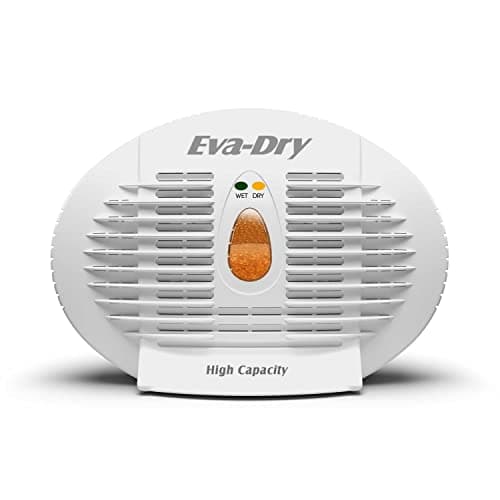
01Eva-Dry Eva-Dry E-500 High-Capacity DehumidifierEva-Dry E-500 High-Capacity DehumidifierThe enclosed spaces where rust actually starts - a tool chest, a gun safe, a parts cabinetBest value in a cold garage8.6$33.06 - View on Amazon
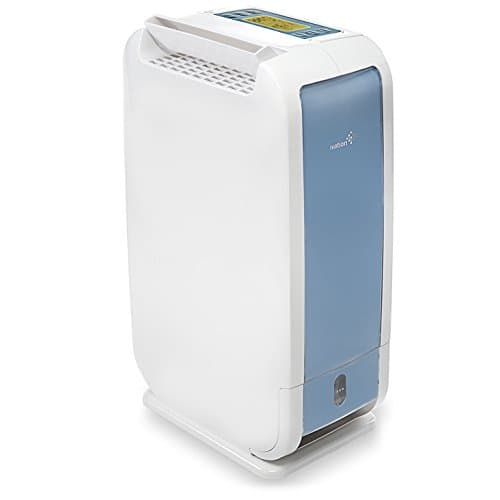
02Ivation Ivation 13-Pint Small-Area Desiccant DehumidifierIvation 13-Pint Small-Area Desiccant DehumidifierActually drying a cold garage, if you are willing to pay for it and run itBest for the whole garage7.6$279.99 - View on Amazon
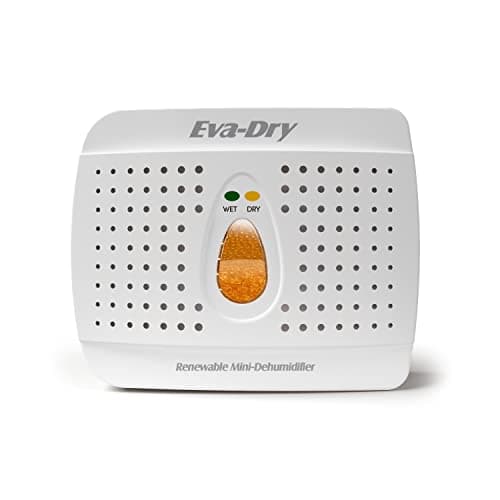
03Eva-Dry Eva-Dry E-333 Mini DehumidifierEva-Dry E-333 Mini DehumidifierOne drawer, one safe, one toolbox - and the cheapest way to find out whether this approach helps youCheapest way to start8.0$14.97 - View on Amazon

Scores are ours and editorial. They are never published as review or rating markup, because we have not tested these products - see how we pick.

The thing the category does not tell you

Nearly every dehumidifier sold in a home improvement store is a refrigerant machine. It works by running air over a coil that is colder than the air, condensing water out of it, and draining that water into a tank. That mechanism has a floor built into it: when the air is already cold, the coil has to be colder still, and below a certain point the moisture on the coil stops being water and starts being ice.

GE publishes the ideal operating conditions for its dehumidifiers, and the guidance is the same across the industry: these machines are designed for warm, humid air. Run one in an unheated garage in January and it will either frost its coil, spend its life in a defrost cycle that removes nothing, or shut itself off to protect the compressor. None of those is a fault. It is the machine doing what it was designed to do, in a room it was not designed for.

So the useful question is not “which dehumidifier is best” but “does your garage get cold, and how much air are you actually trying to dry?” Both answers change the purchase completely.

What you are really protecting

Winter garage moisture has one main source and it arrives on your car. A vehicle carries in snow, slush and road salt solution; that melts onto a cold slab; and the water goes into the air of a closed, unventilated box. What it then condenses on is whatever is coldest and most metal — hand tools, a table saw top, the inside of a tool chest, the contents of a safe.

That matters for sizing, because it means the expensive damage happens in small enclosed volumes, not in the room generally. A drawer full of chisels is a few cubic feet. A two-car garage is roughly 5,000. Drying the drawer is cheap and achievable; drying the room, in the cold, is neither.

The volume problem, stated honestly

A two-car garage of 24 by 22 feet with a 9 foot ceiling is 4,752 cubic feet. The passive unit ranked first below is published for 500 cubic feet. That is about a tenth of the room, and no amount of optimism closes the gap.

But a large rolling tool chest is on the order of 25 to 40 cubic feet of enclosed air, and a full-height gun safe is similar. One passive unit is comfortably oversized for either. Put it where the rust would have started and it is doing real work; put it on a shelf in the open garage and it is doing almost nothing.

That is the whole sizing argument on this page, and it is why the $35 product outranks the $290 one for most readers. The cheap one is correctly sized for the problem that actually costs you money.

The three technologies, and which survive the cold

Dehumidifier types in an unheated garage
TypeHow it worksIn a cold garageRealistic coverage
Refrigerant (compressor)Condenses water on a chilled coilFrosts, defrosts, or shuts down - the wrong toolLarge, but only while it is running
Desiccant rotor (powered)Adsorbs moisture onto a wheel, then drives it off with heatKeeps working - no cold surface to ice upA single-car garage, at a price
Renewable silica gel (passive)Adsorbs moisture into gel beads, recharged in a socketUnaffected - nothing in it is temperature-dependentAn enclosure, not a room
Disposable crystal tubsDeliquescent salt dissolves as it absorbsWorks, but the tub is a container of brineAn enclosure, and a consumable

The second row is the one people miss. A desiccant rotor has no evaporator, so there is nothing to frost. That is a genuine engineering advantage in a cold room, and it is the reason the Ivation unit is on this page at all. The cost of that advantage is money and electricity: the rotor is regenerated with heat, and the unit runs continuously to do it.

Skip this

Skip the bargain compressor dehumidifier for an unheated garage

It is the obvious purchase, it is the cheapest per pint of rated capacity, and in a garage that drops below about 41 F it will spend the winter cycling through defrost and removing very little. The rated capacity on the box is measured at warm, humid conditions — typically around 80 F and 60% relative humidity — and the number does not travel to your garage in February.

If your garage is heated and holds above roughly 65 F, ignore everything in this box: a conventional unit is the right buy and it will cost you far less than the desiccant. The question is genuinely about your garage, not about the product.

What to do before you buy anything

Two free changes do more for winter garage humidity than most purchases, and it would be dishonest to sell you a box without mentioning them.

Stop the water arriving. The moisture in the air came off the car. A containment mat holds the meltwater in one tray where it can be tipped outside, instead of letting it spread across a cold slab and evaporate into the room over the following two days. That is the single highest-leverage thing in this cluster.

Let the air move. A sealed garage with a wet floor is a humidity trap. Cracking the door for twenty minutes after you park, on a dry cold day, exchanges the wet inside air for cold outside air that holds far less moisture. This costs nothing and is the reason a drafty old garage often has less rust than a tightly sealed new one.

If you have just sealed the door properly, that is worth knowing: you have made the space better at holding heat and also better at holding moisture. The two go together, and the answer is ventilation on your terms rather than an open gap on the weather’s.

How to choose, in one paragraph

If the garage goes below freezing and your worry is tools, buy the passive unit and put it inside the chest or the safe. If the garage goes below freezing and you genuinely need to dry the room — a workshop, stored equipment, a classic car — the desiccant rotor is the only type on this list that will do it, and you should budget for the electricity as well as the purchase. If the garage is heated and stays warm, buy a conventional compressor unit and spend the difference elsewhere. And in every one of those cases, deal with the meltwater first.
The write-ups

Every pick, in full

01 / Best value in a cold garageEva-Dry Eva-Dry E-500 High-Capacity Dehumidifier

Eva-Dry

8.6 / 10

$35.95 direct from Eva-Dry, in stock when checked 2026-09-06

Eva-Dry E-500 High-Capacity Dehumidifier

A block of renewable silica gel with no fan, no compressor and no drain. That sounds like a limitation until you remember what a cold garage does to every powered dehumidifier on the market: this one does not care what the temperature is, because there is nothing in it to freeze.

$33.06 - View on Amazon

#ad Price as of October 18, 2026, from Amazon. Prices change. How this site is funded.

Published specifications for the Eva-Dry E-500 High-Capacity Dehumidifier, with the source of each
SpecificationPublished valueWhere it is published
CoveragePublished as up to 500 cubic feetEva-Dry E-500 High-Capacity Dehumidifier product page
AbsorptionPublished as up to 20 oz of moistureEva-Dry E-500 High-Capacity Dehumidifier product page
MediumRenewable silica gel with a color indicatorEva-Dry E-500 High-Capacity Dehumidifier product page
RenewalPlug in to recharge, approximately 10-12 hoursEva-Dry E-500 High-Capacity Dehumidifier product page
Power in useNone - cordless in operation, 110-120V for recharge onlyEva-Dry E-500 High-Capacity Dehumidifier product page
Minimum operating temperatureNot published by the manufacturerEva-Dry E-500 High-Capacity Dehumidifier product page

What it does well

  • Nothing in it stops working when the garage drops below freezing
  • No power draw, no tank to empty, no hose to route to a drain
  • Recharges and goes back in, so there is no consumable to keep buying

What it does not

  • 500 cubic feet is a cabinet, not a garage - be honest about what you are drying
  • Recharging means carrying it indoors for half a day, repeatedly, all winter
  • The maker does not publish a minimum operating temperature, so the cold case rests on the physics rather than on a spec

Skip this one if

You are trying to dry the whole garage. It is rated for 500 cubic feet, and a two-car garage is roughly ten times that.

How it scores, by criterion

Works in the cold9.5
Running cost10.0
Capacity4.5
Effort to maintain6.5
Price8.5
02 / Best for the whole garageIvation Ivation 13-Pint Small-Area Desiccant Dehumidifier

Ivation

7.6 / 10

$289.99 direct from Ivation, in stock when checked 2026-09-06

Ivation 13-Pint Small-Area Desiccant Dehumidifier

A desiccant rotor rather than a refrigerant coil, which is the entire reason it is on this page. A rotor has no cold surface to ice over, so it keeps pulling water out of the air at temperatures where a conventional dehumidifier has already shut itself off.

$279.99 - View on Amazon

#ad Price as of October 18, 2026, from Amazon. Prices change. How this site is funded.

Published specifications for the Ivation 13-Pint Small-Area Desiccant Dehumidifier, with the source of each
SpecificationPublished valueWhere it is published
TechnologyDesiccant rotorIvation 13-Pint Small-Area Desiccant Dehumidifier product page
Capacity13 pintIvation 13-Pint Small-Area Desiccant Dehumidifier product page
CoveragePublished as spaces up to 270 sq ftIvation 13-Pint Small-Area Desiccant Dehumidifier product page
Low-temperature outputThe maker states the rotor retains efficiency at low temperatures but publishes no figure for itIvation 13-Pint Small-Area Desiccant Dehumidifier product page
Minimum operating temperatureNot published by the manufacturerIvation 13-Pint Small-Area Desiccant Dehumidifier product page

What it does well

  • Desiccant rotors have no evaporator coil, so there is nothing to frost over in a cold garage
  • Continuous drain hose means it can be left to run without emptying a tank
  • 270 sq ft is a genuine single-car garage rather than a cupboard

What it does not

  • Roughly eight times the price of the passive option above
  • It runs continuously and a desiccant rotor uses a heater to regenerate, so the electricity is not trivial
  • The maker publishes no minimum operating temperature and no low-temperature extraction figure, which for a product sold on cold performance is a real gap

Skip this one if

Your garage is heated and stays above about 65 F. Then a conventional unit does the same job for a lot less money.

How it scores, by criterion

Works in the cold9.0
Running cost4.0
Capacity8.5
Effort to maintain8.5
Price3.5
03 / Cheapest way to startEva-Dry Eva-Dry E-333 Mini Dehumidifier

Eva-Dry

8.0 / 10

The cheapest dehumidifier on this page

Eva-Dry E-333 Mini Dehumidifier

The smaller sibling, and the cheapest honest thing you can do about winter garage moisture. It goes in the drawer or the safe where the rust would have started, and that is the whole pitch. Do not expect it to change the humidity of a room.

$14.97 - View on Amazon

#ad Price as of October 18, 2026, from Amazon. Prices change. How this site is funded.

Published specifications for the Eva-Dry E-333 Mini Dehumidifier, with the source of each
SpecificationPublished valueWhere it is published
MediumRenewable silica gel with a color indicatorEva-Dry E-333 Mini Dehumidifier product page
Power in useNone - recharged by plugging inEva-Dry E-333 Mini Dehumidifier product page
CoverageSmaller than the E-500; check the maker's current published figure for your enclosureEva-Dry E-333 Mini Dehumidifier product page
Minimum operating temperatureNot published by the manufacturerEva-Dry E-333 Mini Dehumidifier product page

What it does well

  • Cheapest way to protect the enclosure that actually holds your expensive metal
  • No power, no drain, nothing to fail in the cold
  • Small enough to sit in a drawer without displacing anything

What it does not

  • Tiny capacity - this is a drawer solution, not a garage solution
  • Needs recharging more often than the E-500 for the same air volume
  • Easy to forget about until the indicator has been saturated for two months

Skip this one if

You need to cover more than a small enclosed volume. Buy the E-500, or several of these.

How it scores, by criterion

Works in the cold9.5
Running cost10.0
Capacity3.0
Effort to maintain6.0
Price9.5

How this was ranked

Every site in this category says it tested twenty of these. We have not tested any, and we say so. What we did instead: built the candidate set from what Amazon actually stocks, compiled the published specifications from each manufacturer’s own pages, did the arithmetic on running cost and on what the thing prevents, and read owner reviews for failure patterns rather than star averages. Every number on this page has a link to where it was published, so you can check the work.

Units we claim to have tested
0
Sponsored placements
0
Free products accepted
0

The full method, including what we refuse to claim

Questions people actually ask

Frequently asked

Will a dehumidifier work in an unheated garage in winter?

A standard refrigerant one, mostly not. It condenses water on a chilled coil, and once the air is near freezing that coil ices over — so the machine either sits in a defrost cycle or shuts down to protect the compressor. Desiccant units have no coil and keep working, and passive silica gel units are unaffected by temperature entirely. Check the type before you check the capacity.

What size dehumidifier do I need for a two-car garage?

Bigger than most people expect: a 24 by 22 foot garage with a 9 foot ceiling is about 4,752 cubic feet. That is why the passive units on this page, published at 500 cubic feet, are recommended for enclosures rather than for the room. If you are drying the whole space in the cold you are looking at a powered desiccant unit, and 270 sq ft of published coverage is a single-car garage rather than a double.

Do those little renewable dehumidifiers actually work?

Within their published volume, yes — silica gel adsorbs moisture whether it is 70 F or 20 F, which is exactly what a cold garage needs. The catch is the volume. Five hundred cubic feet is a large cabinet, not a garage. Used as a room dehumidifier they do nearly nothing; used inside a tool chest or a safe they are the best value in this article.

Is a desiccant dehumidifier worth the extra money?

Only if you are actually trying to dry a cold room and are prepared to run it. A desiccant rotor is regenerated with heat, so it draws power continuously and the running cost is not trivial. It is the right answer for a workshop or stored equipment in an unheated space, and the wrong answer if what you really want is for the contents of one cabinet to stop rusting.

What humidity should a garage be kept at?

The commonly cited target for preventing rust on steel is below about 50% relative humidity, and that is a reasonable goal for an enclosed cabinet. For an unheated garage in winter it is not a realistic whole-room target with domestic equipment, which is the honest reason this page keeps pointing at enclosures. A cheap hygrometer in the space is worth buying before any dehumidifier, because it tells you whether you have a problem at all.

Does a dehumidifier stop tools rusting?

It helps, but the sequence matters. Rust needs moisture, and the moisture in a winter garage arrives as snowmelt off the car. Catching that water before it evaporates does more than removing it from the air afterwards. Do the mat and the ventilation first, then put a passive unit in the chest, and only then consider drying the room.

Sources

Read next