Skip to content
Frost & Fender
Roundup

The best budget garage heaters, priced by the hour

The sticker price is the small number. The circuit it needs and the electricity it burns are the big ones, and almost nobody publishes either.

By Scooter M.Published September 1, 2026

Heads up: the buy links on this page are affiliate links. If you buy through one, we earn a commission at no extra cost to you. It does not change what we recommend or the order we rank things in - here is how we keep those separate.

The shortlist

Ranked, with the prices

Ranked on published manufacturer specifications and, where the numbers exist, the arithmetic on what each option costs and what it saves. Tap any row for the full write-up, including who should skip it.

#ProductBest forScorePrice
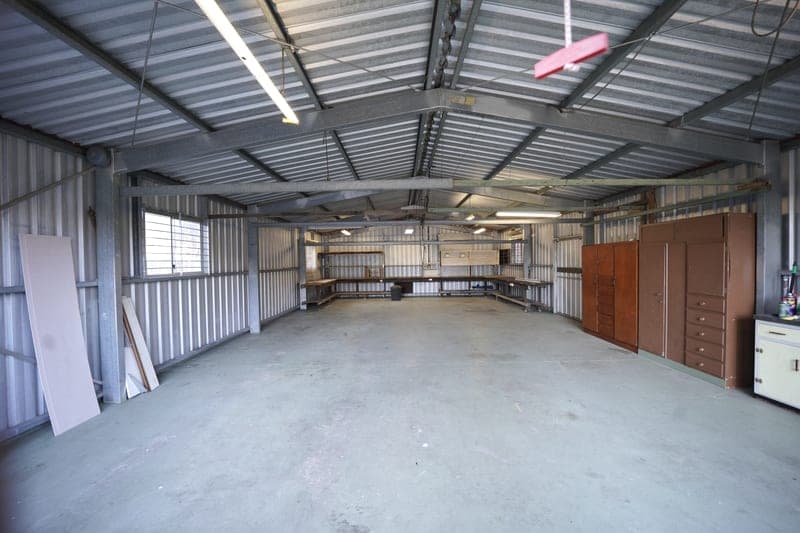
01A cold garage interior of the kind a shop heater is bought for - a stand-in for the Dr. Infrared Heater DR-988A Garage Shop Heater, not a photograph of this modelDr. Infrared Heater DR-988A Garage Shop HeaterA two-car garage where a 240 V circuit already exists or is worth installingBest output per dollar8.6Check price on Amazon
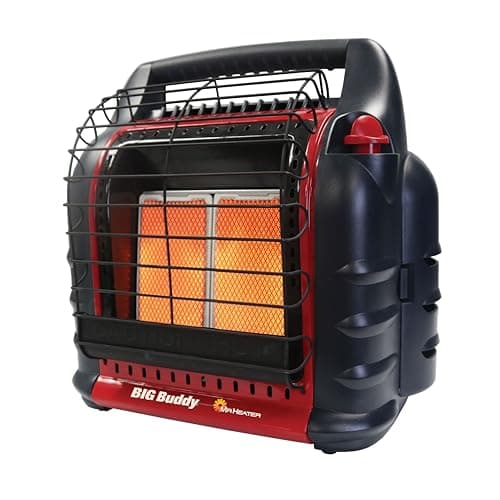
02A cold garage interior of the kind a shop heater is bought for - a stand-in for the Mr. Heater Big Buddy Portable Propane Heater, not a photograph of this modelMr. Heater Big Buddy Portable Propane HeaterA garage with no 240 V circuit, used in short sessions with ventilationBest with no 240V circuit7.6Check price on Amazon
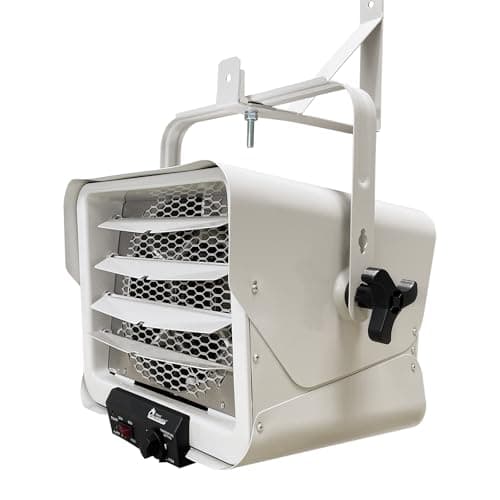
03A cold garage interior of the kind a shop heater is bought for - a stand-in for the Dr. Infrared Heater DR966 240V Hardwired Shop Heater, not a photograph of this modelDr. Infrared Heater DR966 240V Hardwired Shop HeaterA permanent installation in a garage that is used as a workshopBest permanent install8.2Check price on Amazon

Scores are ours and editorial. They are never published as review or rating markup, because we have not tested these products - see how we pick.

Before anything else: have you sealed the door?

We are going to keep saying this, because it changes the answer to every question below. If you can see daylight under or beside your closed garage door, buying a heater is buying a machine to warm your driveway. Spend $30 on a seal first. The heater you then need will be smaller, cheaper to buy and much cheaper to run.

The three questions that decide this purchase

1. What electrical supply do you actually have?

This is the question the box does not answer and the reviews rarely mention. Every genuinely capable electric shop heater runs on 240 volts. The Dr. Infrared DR-988A, for instance, publishes 4,800 W at 208 V or 5,600 W at 240 V, and it ships with a NEMA 6-30P plug — which needs a dedicated 30-amp 240-volt outlet. Most domestic garages do not have one, and running one is an electrician’s visit that frequently costs more than the heater.

On an ordinary 120-volt outlet you are capped at about 1,500 W by the circuit, which is roughly 5,100 BTU/hr. That is enough to take the edge off a small, sealed, insulated single garage. It is not enough to heat a cold two-car space, and no amount of marketing changes the arithmetic.

2. What will it cost you per hour?

Nobody in this category publishes this, which is odd for a purchase that is entirely about money. It is a one-line calculation.

Cost per hour, for any electric heater

Cost per hour = watts ÷ 1000 × your rate per kWh

A 5,600 W heater is 5.6 kW. At the U.S. average residential price of 18.34 cents per kWh (EIA Electric Power Monthly, June 2026), that is 5.6 × 0.1834 = $1.03 per hour at full output. A thermostat cycling at roughly half duty makes it about 51 cents. Two hours a day across a 120-day winter is $123 to $246.

A 1,500 W plug-in heater, by the same sum: 1.5 × 0.1834 = 28 cents per hour. Much cheaper, and much less heat.

Put your own electricity rate into the heater calculator — the national average is a starting point, not your bill. The full running-cost comparison across heater types is here.

3. Electric or combustion?

Propane heaters sidestep the electrical problem completely, which is why they are popular in garages, and they bring two things worth understanding before you buy rather than after.

Burning propane produces water. In a space where the whole objective is keeping metal dry, adding moisture to the air is working against yourself. And every propane heater manual publishes a minimum fresh-air ventilation requirement, which works directly against the sealing you just paid for. Mr. Heater publishes low-oxygen and tip-over shutoffs as standard on its portable range, and those are real safety features — but they are protections against the hazard, not an argument that the hazard is not there. Read the ventilation section of the manual for your specific model before you decide, not after it arrives.

Skip this

Skip the 'garage heater' that is a 1,500 W space heater in a metal box

Search results in this category are full of them. A 1,500 W heater is a 1,500 W heater regardless of the roll cage around it and regardless of whether the listing says “heats up to 1,000 square feet”. That claim is not a specification and it is not derived from one. Work out the wattage you need from the volume and the temperature rise, then buy something that delivers it.

What size do you actually need?

Not what the box says. Volume × temperature rise × 0.133 × an air-change factor. For a sealed, partially insulated two-car garage at 24 × 22 × 9 feet, going from 20 F outside to 55 F inside, that is roughly 22,100 BTU/hr, or about 6,500 W — which is why the honest answer for most two-car garages is a 240-volt unit and a conversation with an electrician.

Change any of those inputs and the answer moves a lot. Target 45 F instead of 55 F and the requirement drops by nearly a third. That is a real decision worth making deliberately, and it is exactly what the calculator is for.
The write-ups

Every pick, in full

01 / Best output per dollarA cold garage interior of the kind a shop heater is bought for - a stand-in for the Dr. Infrared Heater DR-988A Garage Shop Heater, not a photograph of this model

Dr. Infrared Heater

8.6 / 10

Roughly $180-$280 for the heater alone

Dr. Infrared Heater DR-988A Garage Shop Heater

A 240-volt electric shop heater, and the reason it is here is the plug: it needs a dedicated 30-amp 240-volt circuit with a NEMA 6-30R outlet. That is an electrician's visit, and nobody selling this heater leads with it.

Check price on Amazon

#ad We hold no verified live price for this product, so we show none. How this site is funded.

Published specifications for the Dr. Infrared Heater DR-988A Garage Shop Heater, with the source of each
SpecificationPublished valueWhere it is published
Power4,800 W at 208 V / 5,600 W at 240 VDr. Infrared Heater DR-988A product page
Supply208/240 V, NEMA 6-30P plug, requires a 6-30R 30 A outletDr. Infrared Heater DR-988A product page
Rated coveragePublished for spaces up to about 600 sq ftDr. Infrared Heater DR-988A product page
Thermostat range37 F to 113 FDr. Infrared Heater DR-988A product page
SafetyOverheat and tip-over protection, enclosed motorDr. Infrared Heater DR-988A product page

The arithmetic

About $1.03 an hour at full output.

5,600 W is 5.6 kW. At the U.S. average residential rate of 18.34 cents per kWh (EIA Electric Power Monthly, June 2026), 5.6 x 0.1834 = $1.027 per hour of full-output running. A thermostat cycling at roughly half duty is about 51 cents an hour. Two hours of garage time a day for a 120-day winter is roughly $123 to $246 - before the cost of running the circuit.

What it does well

  • Enough output to actually change the temperature of a two-car garage
  • Thermostat holds a set temperature rather than running flat out
  • No combustion, so no moisture and no fumes added to the space

What it does not

  • Requires a dedicated 240 V 30 A circuit that most garages do not have
  • Running cost at full output is over a dollar an hour at average U.S. electricity rates
  • The installed cost, not the sticker price, is the real number

Skip this one if

You do not have a 240 V circuit and are not prepared to pay to have one run. Then this is a heater you cannot plug in.

How it scores, by criterion

Heat output9.5
Running cost5.0
Installation burden3.5
Safety9.0
Published data9.0
02 / Best with no 240V circuitA cold garage interior of the kind a shop heater is bought for - a stand-in for the Mr. Heater Big Buddy Portable Propane Heater, not a photograph of this model

Mr. Heater

7.6 / 10

Roughly $130-$180 plus fuel

Mr. Heater Big Buddy Portable Propane Heater

Propane, so no electrical circuit and no installation - which is exactly why it is popular and exactly why the ventilation requirement in the manual is not optional reading. Burning propane indoors produces water vapor and combustion products, in a space you also park a car in.

Check price on Amazon

#ad We hold no verified live price for this product, so we show none. How this site is funded.

Published specifications for the Mr. Heater Big Buddy Portable Propane Heater, with the source of each
SpecificationPublished valueWhere it is published
FuelPropaneMr. Heater published specifications
VentilationThe manufacturer publishes a minimum fresh-air requirement - follow the manual for your modelMr. Heater published specifications
SafetyPublished with low-oxygen shutoff and tip-over shutoffMr. Heater published specifications
OutputPublished as multiple selectable settings - check the current model listingMr. Heater published specifications

What it does well

  • No electrical work at all - this is its whole advantage
  • Portable between a garage, a shed and a job site
  • Low-oxygen and tip-over shutoffs are standard

What it does not

  • Combustion adds water vapor to a space where you want metal to stay dry
  • Requires fresh-air ventilation, which fights the point of sealing the garage
  • Fuel cost per hour is not trivial and there is no thermostat holding a set point on the basic models

Skip this one if

You want unattended, thermostat-controlled background heat, or you cannot ventilate. Read the manufacturer's ventilation instructions before buying, not after.

How it scores, by criterion

Heat output8.0
Running cost6.0
Installation burden10.0
Safety6.0
Suits a sealed garage4.0
03 / Best permanent installA cold garage interior of the kind a shop heater is bought for - a stand-in for the Dr. Infrared Heater DR966 240V Hardwired Shop Heater, not a photograph of this model

Dr. Infrared Heater

8.2 / 10

Roughly $150-$250 for the heater alone

Dr. Infrared Heater DR966 240V Hardwired Shop Heater

A wall or ceiling-mounted 240-volt unit for people who want the heater out of the way permanently. Same electrical caveat as its portable sibling, plus it is hardwired, so the electrician visit is not optional.

Check price on Amazon

#ad We hold no verified live price for this product, so we show none. How this site is funded.

Published specifications for the Dr. Infrared Heater DR966 240V Hardwired Shop Heater, with the source of each
SpecificationPublished valueWhere it is published
Supply240 V, hardwired installationDr. Infrared Heater garage and shop range
MountingWall or ceiling bracket, adjustable louvresDr. Infrared Heater garage and shop range
ControlBuilt-in thermostatDr. Infrared Heater garage and shop range
Output optionsPublished with selectable wattage settings - check the current model listingDr. Infrared Heater garage and shop range

What it does well

  • Off the floor and out of the way of the car
  • Selectable output means you can size it down rather than run flat out
  • Thermostat and remote control on current models

What it does not

  • Hardwired, so professional installation is required
  • Same 240 V requirement as the portable unit
  • Not portable and not something you take when you move

Skip this one if

You rent, or you want to take the heater with you.

How it scores, by criterion

Heat output9.0
Running cost5.5
Installation burden3.0
Safety9.0
Published data7.5

How this was ranked

Every site in this category says it tested twenty of these. We have not tested any, and we say so. What we did instead: built the candidate set from what Amazon actually stocks, compiled the published specifications from each manufacturer’s own pages, did the arithmetic on running cost and on what the thing prevents, and read owner reviews for failure patterns rather than star averages. Every number on this page has a link to where it was published, so you can check the work.

Units we claim to have tested
0
Sponsored placements
0
Free products accepted
0

The full method, including what we refuse to claim

Questions people actually ask

Frequently asked

What size garage heater do I need for a 2-car garage?

For a typical 24 × 22 ft garage with a 9 ft ceiling, going from 20 F to 55 F, with some insulation and a door that seals: roughly 22,000 BTU/hr, or about 6,500 watts. That exceeds what a 120-volt circuit can supply, so it means a 240-volt unit. Lowering your target temperature or improving the seal both reduce it substantially — put your own numbers into the calculator.

Is a garage heater expensive to run?

A 5,600 W electric heater costs about $1.03 an hour at full output, using the U.S. average residential rate of 18.34 cents per kWh (EIA, June 2026). Across a 120-day winter at two hours a day, that is roughly $123 to $246 depending on how much the thermostat cycles. A 1,500 W plug-in unit is about 28 cents an hour.

Do I need a 240V circuit for a garage heater?

For anything above about 1,500 W, yes. A standard 120-volt 15-amp circuit tops out around 1,800 W and is normally shared with outlets and lighting. Heaters like the DR-988A publish a NEMA 6-30P plug, which requires a dedicated 30-amp 240-volt outlet. Budget for the electrician when you budget for the heater; on a domestic garage with no existing 240-volt run, the wiring is frequently the larger number.

Is a propane garage heater safe?

It can be, if you follow the manual, and the manual is not optional reading. Propane combustion consumes oxygen and produces water vapor and combustion products, so every manufacturer publishes a minimum fresh-air ventilation requirement for indoor use. Reputable units include low-oxygen and tip-over shutoffs. Never run one in a sealed space, never leave one running unattended, and fit a carbon monoxide alarm in any garage where you burn fuel.

What is the cheapest garage heater to run?

The one you need least. Sealing the door reduces required output by roughly a factor of five on the standard sizing formula, and a smaller heater running less of the time is cheaper than any efficiency claim on a box. Between fuels, the comparison depends entirely on your local electricity and propane prices — which is why we published a comparison you can put your own rates into rather than a verdict.

Sources

Read next