The cheapest garage heater to run, computed
Every listing in this category claims to be efficient. None of them prints a cost per hour. Here is the sum, and the inputs, so you can redo it with your rates.
Heads up: the buy links on this page are affiliate links. If you buy through one, we earn a commission at no extra cost to you. It does not change what we recommend or the order we rank things in - here is how we keep those separate.
The answer first
The cheapest garage heater to run is the smallest one that does the job, and the way you make it smaller is by sealing the door rather than by choosing a cleverer heater. On the standard sizing formula, closing the gaps around a garage door cuts required output by roughly a factor of five. No efficiency claim on any box competes with that.
Once the space is sealed, the comparison between fuels comes down to your local prices, and it can genuinely go either way. So here is the method rather than a verdict.
Electric heat: the sum
Electric resistance heating is essentially 100 percent efficient at the point of use — every watt drawn becomes heat in the room. That makes the cost calculation unusually simple, and it means “efficiency” claims between electric heaters are largely marketing. A 1,500 W infrared heater and a 1,500 W fan heater put the same energy into the room; they distribute it differently.
Electric cost per hour
Cost per hour = watts ÷ 1000 × rate per kWh
At the U.S. average residential price of 18.34 cents per kWh (EIA Electric Power Monthly, Table 5.3, June 2026):
1,500 W plug-in → 1.5 × 0.1834 = $0.28/hour
3,000 W 240 V unit → 3.0 × 0.1834 = $0.55/hour
5,600 W shop heater → 5.6 × 0.1834 = $1.03/hour
Those are full-output figures. A thermostat holding a set temperature in a sealed garage typically cycles well below 100 percent duty once the space is up to temperature, so real cost usually lands between half and three-quarters of the number above.
Propane: the sum, and its caveats
Propane is priced per gallon and heaters are rated in BTU/hr, so the conversion needs one constant: propane contains approximately 91,500 BTU per gallon.
Propane cost per hour
Cost per hour = (BTU/hr ÷ 91,500) × price per gallon
An 18,000 BTU/hr heater at $4.00 a gallon: (18,000 ÷ 91,500) × 4.00 = $0.79/hour. At $3.00 a gallon it is $0.59; at $5.00 it is $0.98.
Two honest caveats. First, small exchange-cylinder propane costs far more per gallon than bulk delivery, and if you are swapping 20 lb tanks at a hardware store cage you should use that effective price, not the bulk one. Second, unvented propane heat requires fresh-air ventilation per the manufacturer’s manual, and ventilating a heated space costs heat that this calculation does not capture.
Side by side, honestly
| Electric | Propane | |
|---|---|---|
| Cost per hour (typical) | $0.28 at 1.5 kW, $1.03 at 5.6 kW | About $0.79 at 18,000 BTU and $4/gal |
| Install cost | $0 on 120V; an electrician's visit for 240V | $0 |
| Adds moisture to the air | No | Yes - combustion produces water |
| Ventilation required | No | Yes, per the manufacturer's manual |
| Thermostat control | Standard on most units | Basic units run flat out |
| Unattended running | Reasonable with a thermostat | No |
| Best suited to | A sealed garage you heat regularly | Occasional use where no 240V exists |
Pick electric if you already have or can justify a 240-volt circuit, you want thermostat-held background heat, and you care about keeping moisture out of the space.
Pick propane if there is no realistic path to a 240-volt circuit, you heat in short attended sessions while working, and you can ventilate as the manual requires.
The comparison that beats both
Sealing versus heating
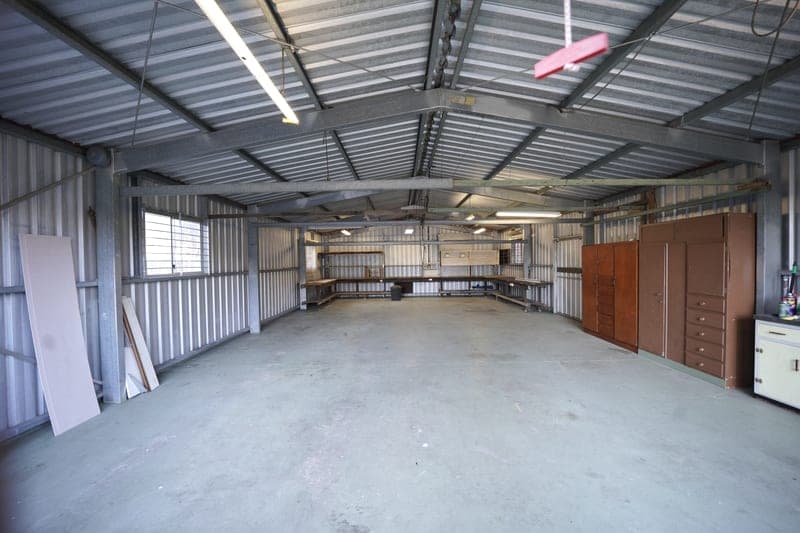
Take a two-car garage, 24 × 22 × 9 ft = 4,752 cu ft, raised from 20 F to 55 F.
Gappy door (air-change factor 2.5): 4,752 × 35 × 0.133 × 2.5 = about 55,300 BTU/hr, or 16.2 kW. At 18.34 cents/kWh that is $2.97 an hour — and no domestic circuit can even deliver it.
Sealed door, some insulation (factor 1.0): 4,752 × 35 × 0.133 × 1.0 = about 22,100 BTU/hr, or 6.5 kW = $1.19 an hour.
The seal costs about $30 once. The difference is $1.78 for every hour you heat, forever. There is no heater purchase with a payback period remotely like that.
Insulating the door panels is the next lever after sealing, and it is a much smaller one: on the same electricity rate it is worth roughly $16 a winter at two hours of heating a day. That calculation, and the three kits worth buying, are here.
Put your own dimensions, temperatures and electricity rate into the calculator — the numbers above are worked examples, not your garage.
What to buy, given all that
Dr. Infrared Heater
Dr. Infrared Heater DR-988A Garage Shop Heater
Roughly $180-$280 for the heater alone
A 240-volt electric shop heater, and the reason it is here is the plug: it needs a dedicated 30-amp 240-volt circuit with a NEMA 6-30R outlet. That is an electrician's visit, and nobody selling this heater leads with it.
Skip it if: You do not have a 240 V circuit and are not prepared to pay to have one run. Then this is a heater you cannot plug in.
#ad We hold no verified live price for this product, so we show none. How this site is funded.
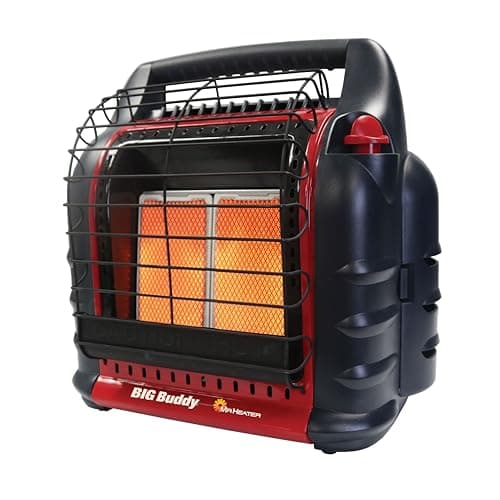
Mr. Heater
Mr. Heater Big Buddy Portable Propane Heater
Roughly $130-$180 plus fuel
Propane, so no electrical circuit and no installation - which is exactly why it is popular and exactly why the ventilation requirement in the manual is not optional reading. Burning propane indoors produces water vapor and combustion products, in a space you also park a car in.
Skip it if: You want unattended, thermostat-controlled background heat, or you cannot ventilate. Read the manufacturer's ventilation instructions before buying, not after.
#ad Price as of October 18, 2026, from Amazon. Prices change. How this site is funded.
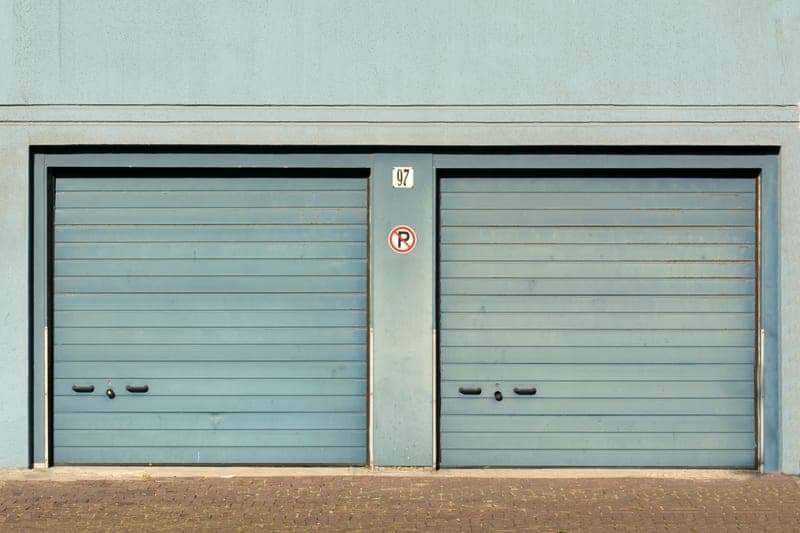
M-D Building Products
M-D Building Products Garage Door Bottom Seal
Roughly $20-$40 for a door width
The cheapest fix on this entire site, and the one with the biggest effect. A worn bottom seal leaves a gap the width of the door open to the outside all winter, and no amount of heating overcomes an open gap.
Skip it if: Your existing seal is intact and your door still closes flush. Replacing a good seal changes nothing.
#ad We hold no verified live price for this product, so we show none. How this site is funded.
How this was ranked
Every site in this category says it tested twenty of these. We have not tested any, and we say so. What we did instead: built the candidate set from what Amazon actually stocks, compiled the published specifications from each manufacturer’s own pages, did the arithmetic on running cost and on what the thing prevents, and read owner reviews for failure patterns rather than star averages. Every number on this page has a link to where it was published, so you can check the work.
- Units we claim to have tested
- 0
- Sponsored placements
- 0
- Free products accepted
- 0
Frequently asked
How much does it cost to run a garage heater per month?
Multiply cost per hour by hours per day by 30. A 5,600 W electric heater at the U.S. average 18.34 cents/kWh is $1.03 an hour at full output, so two hours a day is about $62 a month at full output and roughly $31 to $46 with a thermostat cycling. A 1,500 W plug-in unit on the same schedule is about $17 a month.
Is propane or electric cheaper for a garage?
It depends entirely on your local prices, which is why we published both formulas rather than a verdict. At $4.00 a gallon propane and 18.34 cents per kWh electricity, propane is cheaper per BTU delivered. Electric wins on convenience, thermostat control and not adding water vapor to the space, and it has no ventilation requirement.
Does an infrared garage heater cost less to run?
Not per watt. Electric resistance heat is essentially 100 percent efficient however it is delivered, so a 1,500 W infrared heater and a 1,500 W fan heater cost exactly the same per hour. What infrared changes is distribution: it warms surfaces and people directly rather than the air, which can mean you are comfortable at a lower air temperature and therefore run the heater less. That is a real effect, and it is a usage saving rather than an efficiency one.
What electricity rate should I use for this calculation?
Yours, from your bill. The 18.34 cents per kWh used here is the U.S. residential average for June 2026 published by the EIA in Electric Power Monthly, and state averages range widely around it. Your bill shows the number that actually applies to you, and the calculator takes it as an input for exactly this reason.
Sources
- Big Buddy or Portable Buddy?
- Is a garage heater worth it?
- Heat tape for pipes, and the rules nobody reads
- What size garage heater do I need?
- The best budget garage heaters, priced by the hour
- The best garage door seals for cold weather
- The best garage door insulation kits, and when not to buy one
- Garage winterizing