Skip to content
Frost & Fender
Guide

Ice melt on pavers, brick, asphalt and decking

The answer changes with the surface, and on two of these surfaces the published guidance points at the cheapest bag in the store rather than the premium one. It also points away from the bag that is kindest to your car, which is the trade nobody writes down.

By Scooter M.Published October 18, 2026

Heads up: the buy links on this page are affiliate links. If you buy through one, we earn a commission at no extra cost to you. It does not change what we recommend or the order we rank things in - here is how we keep those separate.

The shortlist

Ranked, with the prices

Ranked on published manufacturer specifications and, where the numbers exist, the arithmetic on what each option costs and what it saves. Tap any row for the full write-up, including who should skip it.

#ProductBest forScorePrice
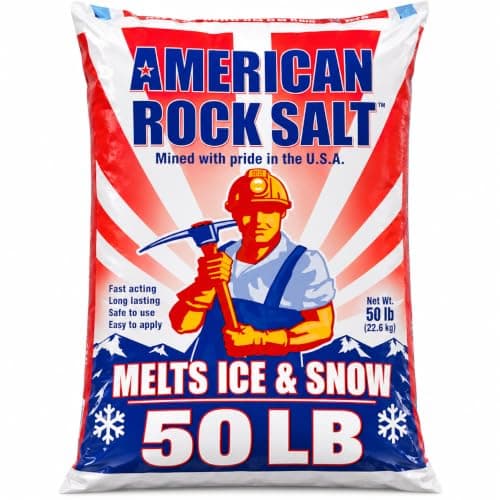
01EasyGo Products EasyGo American Rock Salt Ice Melt, 50 lbEasyGo American Rock Salt Ice Melt, 50 lbConcrete pavers, brick and mortar joints, where the published guidance is explicitly for sodium chloride over the premium chemistriesBest for pavers and brick7.0$35.99 - View on Amazon
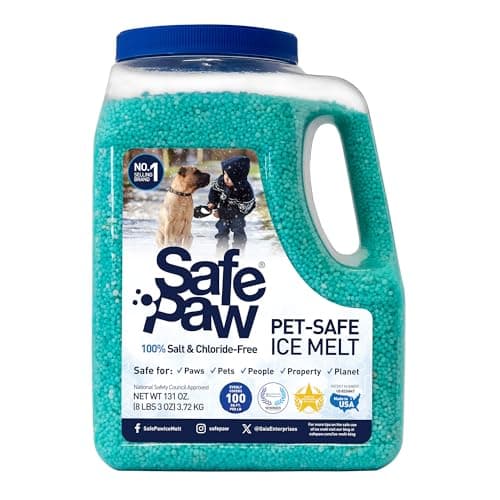
02Safe Paw Safe Paw Ice MeltSafe Paw Ice MeltA driveway or apron you care about, pets, and anywhere runoff reaches plantsBest where it drains toward your car8.5$29.95 - View on Amazon
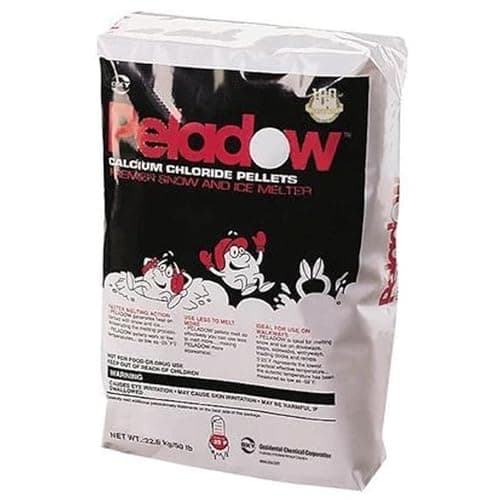
03OxyChem Peladow Calcium Chloride PelletsPeladow Calcium Chloride PelletsDeep cold, on mature, well-cured concrete or asphaltBest for a composite deck in deep cold8.2$50.99 - View on Amazon
04Frost King Frost King Automatic Electric Heat Cable KitFrost King Automatic Electric Heat Cable KitAn exposed run of water pipe in an unheated garage or crawl spaceBest for a roof, where no bag belongs8.5$26.99 - View on Amazon

Scores are ours and editorial. They are never published as review or rating markup, because we have not tested these products - see how we pick.

The answer first

On concrete pavers, brick and mortar joints, buy plain rock salt — sodium chloride — and use as little of it as you can. That is not the cheap answer dressed up; it is what the industry body for interlocking concrete pavement publishes. Its guidance says rock salt “is the least damaging to concrete materials and should be used whenever possible,” tells you to “consider the judicial use of calcium chloride” when you need something faster, and states that “the use of magnesium chloride or CMA is not recommended because they can chemically degrade all types of concrete.”

On a composite deck, Trex names the chemistry itself: “Calcium chloride or rock salt, available in many home centers, will melt ice on Trex decking,” followed by “rinse off when first practical.” The thing Trex prohibits is not a chemical at all — it is a metal shovel.

On a roof, no bag is the answer. Throwing ice melt up there is how the chloride ends up in gutters, on siding, in planting beds and down the driveway. The published fix for roof ice is a heat cable, and that is a different purchase.

And the part that makes this site disagree with its own sources: every one of those recommendations is optimizing for the surface. We are also optimizing for the car you park next to it. Chlorides are what get walked into the garage and splashed onto an underbody, and rock salt is the cheapest, most mobile chloride there is. Where the treated surface drains toward where you park, the published surface advice and the right answer for your car pull in opposite directions. The rest of this page is about choosing deliberately rather than by accident.

How we judged this

1. What the surface maker publishes. A paver manufacturer, a decking manufacturer and a roofing manufacturer all have warranties to protect, so their published de-icing guidance is the most specific you will find. It beats the front of any bag.

2. What the chemistry does in deep cold. Sodium chloride is the weakest of the common chemistries once it gets genuinely cold, so “least damaging” and “works tonight” are not always the same bag.

3. Where the runoff goes. This is the question that is missing from every other page on this topic. A paver path that drains into a planting bed is a different decision from an apron that drains under your front wheels.

4. Published coverage, where it exists. A product spread at half the rate is not twice the price, and over-application is the single most common mistake on every surface here.

Pavers and brick: the published guidance is sodium chloride

Concrete pavers are not a poured slab. They are dry-cast units made to a density and absorption specification, laid on sand with sand-filled joints, and the joints are usually what fails first. The relevant published standards are ASTM C936, which carries freeze-thaw durability criteria for paving units, and ASTM C1645, the test method it references for freeze-thaw and de-icing salt durability. A unit that meets those is already engineered against this problem.

What the published guidance adds is a ranking between chemistries, and it is the opposite of the shelf hierarchy. Rock salt is named as least damaging. Calcium chloride is allowed, with a caution to be judicious. Magnesium chloride and calcium magnesium acetate — the two that get sold as the gentle, premium, pet-and-plant-friendly options — are not recommended, on the stated grounds that they can chemically degrade all types of concrete.

That matters here because our own concrete page ranks a CMA blend highly, and we are not quietly walking that back. The two recommendations are answering different questions. On a poured, cured, well-finished driveway slab, the mechanism that does the damage is freeze-thaw cycling driven by liquid water in the pores, and keeping chloride off your car matters more than the marginal difference between chemistries. On dry-cast pavers with sand joints and mortar nearby, the industry body is pointing at a chemical degradation path and naming the products it does not want on them. Same site, different surface, different answer — and you should know which surface you have.

Published de-icing guidance, by surface
SurfaceWhat the maker or industry body publishesWhat that means in a bag
Concrete pavers, brick, mortar jointsRock salt is "the least damaging to concrete materials and should be used whenever possible"; calcium chloride judiciously; magnesium chloride and CMA "not recommended"Plain sodium chloride, spread thin
Composite decking (Trex)"Calcium chloride or rock salt ... will melt ice on Trex decking"; "rinse off when first practical"; plastic shovel onlyEither of the two cheap chlorides, then a hose
Poured concrete driveway slabCalcium chloride stated for concrete at least one year old, properly designed, constructed and curedChloride-free if it drains toward the car; otherwise calcium chloride, sparingly
AsphaltNo chemistry restriction published by the chemistry makers; the failure mode is softening and binder damage from heat and water, not salt attackAny of them, thin - the risk is the shovel and the plow blade
Roof and guttersNo bagged product is published for roof use by any maker on this pageA heat cable, not a bag

Composite decking: the chemistry is fine, the shovel is not

This is the surface people are most nervous about and the one with the clearest published answer. Trex publishes, for its early-generation boards, that “calcium chloride or rock salt, available in many home centers, will melt ice on Trex decking,” and to “rinse off when first practical.” For the Transcend, Enhance and Select lines it publishes the same thing: “use calcium chloride or rock salt to melt the snow and ice from the deck surface,” and “a plastic shovel may be used to remove snow from composite decking.”

The prohibition is mechanical. Trex publishes “NEVER use a metal snow shovel on Trex decking” and warns that “a shovel may scratch the deck, which is not covered under warranty.” So the thing that will actually cost you money on a composite deck this winter is the aluminum scoop in the garage, not the bag.

The rinse instruction is the part people skip, and it is doing real work. Chloride left on the surface after the ice has gone has nothing left to melt and plenty of time to sit in the board grain and the gaps. Rinsing when it is practical — which in February means the first mild day, not the same afternoon — is the whole maintenance routine.

Why the cheap bag is also the one you use most of

Sodium chloride is the weakest common chemistry in deep cold, and that has a cost that is not on the price tag. Calcium chloride is published by OxyChem as effective to −25 F. The CMA blend on our concrete page is published to −10 F. The rock salt bag here publishes no working temperature at all, which is itself the answer: plain salt gives up first, and when it stops working people respond by putting more down.

So the arithmetic that matters is not dollars per pound, it is pounds per winter. A bag that works at the temperature you actually get gets spread once. A bag that does not gets spread three times, and all three applications end up in the same places — the joints, the planting bed, and the tread of your boots.

That is ours, not a maker’s claim, and it is the reason the paver guidance pairs “use sodium chloride” with “do not over apply deicing chemicals; follow the recommended dosage” in the same breath. The published advice is both halves or neither.

Asphalt, gravel and the surfaces nobody publishes for

Asphalt gets asked about constantly and has the least published guidance, because chlorides are not really its failure mode. Asphalt is a flexible pavement held together by bitumen; what hurts it is water getting into cracks and freezing, and heat softening the binder. The de-icer is not attacking the material the way it can attack cement paste.

The practical risks on asphalt are mechanical and seasonal: a plow blade or a metal shovel on a soft or patched surface, and water sitting in cracks you have now kept liquid for longer. If you have asphalt, spend the effort on sealing the cracks in the fall rather than on choosing an exotic bag.

Gravel is simpler still: nothing to protect, so use whatever clears safely and least of it. A thin spread for grip beats a melt you cannot drain anywhere.

Skip this

Do not put a bag of anything on your roof

Ice dams produce the single most common version of this question, and a bagged de-icer is the wrong tool for it. Everything you throw up there comes down — over the shingles, into the gutter, onto the siding, through the downspout and across whatever the downspout drains onto, which is very often the driveway you park on.

An ice dam is a heat-loss and ventilation problem wearing an ice costume, and the hardware answer is a heat cable laid in the gutter and up the lower courses, on a thermostat so it is not running in March. We work the published rules for those, including the temperature and the circuit requirements, on the heat cable page — the same hardware, the same rules, a different run.

If the ice on your roof is already a structural worry, that is a roofer, not a product decision.

The runoff question, which decides it for most people here

Everything above is the surface’s point of view. Here is yours.

Salt does not stay where you spread it. It dissolves, it runs downhill, and it gets carried indoors on footwear and tires. The path from a treated paver walk to the underside of your car is short: brine on the slab, brine on the tread, brine in the footwell carpet and brine on the seams and the subframe. That is the mechanism the whole road-salt page is about, and it does not care whether the chloride came from a county truck or from your own bag.

So the decision is really about slope. If the surface you are treating drains away from where you park and away from the garage door, take the published surface advice and buy rock salt. If it drains toward either, buy the chloride-free product and accept that it costs more and works less hard. Safe Paw publishes a salt-free, chlorine-free, acetate-free formula, a coverage rate of two cups per 150 square feet, and that it “lasts 72 hours on the surface” — and the only surface it explicitly claims is cured concrete, which is worth knowing before you put it on anything else.

There is a third move that costs nothing: treat less area. Most people salt a whole driveway when what they need is a clear path to the door and a clear strip where they put their feet getting out of the car. A containment mat inside the door catches what still gets through, which is the cheapest half of this whole problem.

What we would buy

Paver or brick path, draining to a lawn or a bed: plain rock salt, spread thin, with the published dosage respected rather than eyeballed. It is the cheapest bag and the one the paver industry body actually names.

Anything draining toward the car or the garage door: the chloride-free product, and less of it. You are paying a premium to keep a chloride out of your wheel arches, and on a $30-versus-$300 basis that is the same trade this whole site is built on.

Composite deck, and it gets properly cold: calcium chloride, because Trex names it and it still works when salt has stopped. Then the plastic shovel, then the rinse.

Roof or gutter ice: a heat cable on a thermostat, and nothing from a bag.
The write-ups

Every pick, in full

01 / Best for pavers and brickEasyGo Products EasyGo American Rock Salt Ice Melt, 50 lb

EasyGo Products

7.0 / 10

Mid-two-figure for 50 lb, the cheapest per pound on this site

EasyGo American Rock Salt Ice Melt, 50 lb

Plain sodium chloride, and the thing the paver industry body actually recommends: its published guidance names rock salt as the least damaging to concrete materials and says to use it whenever possible. It is also the chloride most likely to end up on your underbody, which is the trade this site cares about.

$35.99 - View on Amazon

#ad Price as of October 18, 2026, from Amazon. Prices change. How this site is funded.

What it does well

  • The chemistry the paver industry body publishes as least damaging to concrete
  • Cheapest per pound of anything in this category
  • Approved by Trex for use on its composite decking, alongside calcium chloride

What it does not

  • Publishes no working temperature, and plain salt gives up first in deep cold
  • It is chloride, so it is exactly what tracks into the garage and onto the underbody
  • No published coverage rate, which makes over-application easy

Skip this one if

The treated surface drains toward where you park. Rock salt is the cheapest bag and the one that reaches your car most readily.

How it scores, by criterion

Published surface guidance9.0
Deep cold performance4.0
Kind to your car2.5
Published data2.5
Price10.0
02 / Best where it drains toward your carSafe Paw Safe Paw Ice Melt

Safe Paw

8.5 / 10

The most expensive per pound on this page

Safe Paw Ice Melt

The chloride-free one, which is the whole point: no chloride means none of the chemistry people worry about near concrete, pets and steel. It is also the most expensive per pound here, and the maker publishes a coverage rate that helps you work out whether that matters.

$29.95 - View on Amazon

#ad Price as of October 18, 2026, from Amazon. Prices change. How this site is funded.

Published specifications for the Safe Paw Ice Melt, with the source of each
SpecificationPublished valueWhere it is published
CompositionModified carbonyldiamide crystal with glycols and surfactants - salt-free and chloride-freeSafe Paw - product page (chloride-free composition, 72-hour claim, 2 cups per 150 sq ft)
Coverage2 cups covers 150 sq ftSafe Paw - product page (chloride-free composition, 72-hour claim, 2 cups per 150 sq ft)
Duration"Lasts 72 hours on the surface"Safe Paw - product page (chloride-free composition, 72-hour claim, 2 cups per 150 sq ft)
ConcreteStated non-corrosive and safe on cured concreteSafe Paw - product page (chloride-free composition, 72-hour claim, 2 cups per 150 sq ft)
Pets and plantsStated safe if ingested, and stated not to harm plantsSafe Paw - product page (chloride-free composition, 72-hour claim, 2 cups per 150 sq ft)
Lowest working temperatureNot published by the manufacturerSafe Paw - product page (chloride-free composition, 72-hour claim, 2 cups per 150 sq ft)

What it does well

  • No chloride at all, which removes the corrosion argument entirely
  • Publishes a coverage rate, so the price per pound is comparable
  • The one to use where dogs walk and runoff reaches planting

What it does not

  • No published lowest working temperature, which is the figure a cold snap needs
  • Most expensive per pound here by a distance
  • Works by destabilizing ice rather than blasting through it, so it is not the fast option

Skip this one if

You need to clear deep ice fast at very low temperatures. This is not the chemistry for that job.

How it scores, by criterion

Safe on concrete9.5
Cold performance5.5
Published detail7.5
Pet and plant safety9.5
Price4.5
03 / Best for a composite deck in deep coldOxyChem Peladow Calcium Chloride Pellets

OxyChem

8.2 / 10

Cheapest per pound of the three, in the biggest bag

Peladow Calcium Chloride Pellets

The one that actually works when it is properly cold: calcium chloride, published effective to -25 F. It is also the one with the real homework attached, because OxyChem's own guidance ties safe use to concrete that is at least a year old and properly cured.

$50.99 - View on Amazon

#ad Price as of October 18, 2026, from Amazon. Prices change. How this site is funded.

Published specifications for the Peladow Calcium Chloride Pellets, with the source of each
SpecificationPublished valueWhere it is published
Lowest working temperatureEffective to -25FOxyChem - PELADOW Premier Snow & Ice Melter (effective to -25F; concrete guidance on age and curing)
CompositionCalcium chloride pelletsOxyChem - PELADOW Premier Snow & Ice Melter (effective to -25F; concrete guidance on age and curing)
Purity standardMeets or exceeds ASTM D98 and AASHTO M144OxyChem - PELADOW Premier Snow & Ice Melter (effective to -25F; concrete guidance on age and curing)
Concrete guidancePublished for concrete at least one year old, properly designed, constructed and curedOxyChem - PELADOW Premier Snow & Ice Melter (effective to -25F; concrete guidance on age and curing)
Stated riskPorous or not fully cured surfaces are more vulnerable to freeze-thaw scalingOxyChem - PELADOW Premier Snow & Ice Melter (effective to -25F; concrete guidance on age and curing)

What it does well

  • Works at temperatures where the gentler products have given up
  • Published against ASTM and AASHTO purity standards, which almost no consumer bag is
  • Cheapest per pound, and a 50 lb bag lasts a season on a normal driveway

What it does not

  • The concrete guidance is a real constraint on newer slabs
  • Chloride, with everything that implies for steel it is tracked onto
  • Sold in a 50 lb bag, which is a lot of product to store and handle

Skip this one if

Your slab is new, porous or already scaling. The published guidance is about concrete age and curing, and it is worth taking seriously.

How it scores, by criterion

Safe on concrete5.5
Cold performance9.5
Published detail9.0
Pet and plant safety4.5
Price8.5
04 / Best for a roof, where no bag belongsFrost King Frost King Automatic Electric Heat Cable Kit

Frost King

8.5 / 10

$25.99 for the 6 ft kit at Ace Hardware, checked 2026-09-06; longer kits cost more

Frost King Automatic Electric Heat Cable Kit

The standard domestic answer, and the published numbers are the reason to trust it: 120 V at 7 watts per foot, a built-in thermostat that closes below 38 F and opens above 45 F, and a stated ability to keep water moving down to -40 F.

$26.99 - View on Amazon

#ad Price as of October 18, 2026, from Amazon. Prices change. How this site is funded.

Published specifications for the Frost King Automatic Electric Heat Cable Kit, with the source of each
SpecificationPublished valueWhere it is published
Electrical120V, 7 watts per foot, maximum draw 15 ampsFrost King Automatic Electric Heat Cable Kits product page
ThermostatTurns on below 38 F and off above 45 FFrost King Automatic Electric Heat Cable Kits product page
Lengths3, 6, 9, 12, 18, 24 and 30 feetFrost King Automatic Electric Heat Cable Kits product page
Pipe compatibilityFor metal and plastic water pipes up to 2 in; plastic must be Schedule 40 with an outside diameter between 3/8 in and 1-1/2 inFrost King Automatic Electric Heat Cable Kits product page
Rated toPublished as keeping water flowing down to -40 FFrost King Automatic Electric Heat Cable Kits product page
Prohibited usesPublished as not for PVC, flexible hose, mobile home feed lines, or inside walls, floors and ceilings, and no overwrappingFrost King Automatic Electric Heat Cable Kits product page
Street price$25.99 for the HC6A 6 ft kit when read on 2026-09-06Frost King HC6A heating cable, Ace Hardware listing (price read 2026-09-06)

The arithmetic

Under 20 cents a day of electricity for a 6 ft run, against a pipe that splits.

Six feet at 7 watts per foot is 42 watts. Run continuously for 24 hours that is about 1.0 kWh, or roughly 18 cents at the U.S. average residential rate of 18.34 cents per kWh (EIA, June 2026). The thermostat only closes below 38 F, so on a typical winter day it draws a fraction of that. The comparison is not the electricity bill; it is a pipe that splits in an unheated garage and empties into the slab until somebody notices.

What it does well

  • Every number that matters is published, including the thermostat set points
  • Built-in thermostat means it is not heating the pipe in October for nothing
  • Sold in seven lengths, so you can buy the run you actually have

What it does not

  • Constant-wattage cable - it cannot vary output along its length the way a self-regulating cable can
  • The prohibited-use list is long and people ignore it, which is how heat tape got its reputation
  • Overwrapping the cable on itself is explicitly forbidden and is the most common installation mistake

Skip this one if

The pipe is PVC, a flexible hose, or buried in a wall. The maker prohibits all three, and those prohibitions are not advisory.

How it scores, by criterion

Published data9.5
Cold performance9.0
Ease of fitting7.5
Running cost7.0
Price8.5

How this was ranked

Every site in this category says it tested twenty of these. We have not tested any, and we say so. What we did instead: built the candidate set from what Amazon actually stocks, compiled the published specifications from each manufacturer’s own pages, did the arithmetic on running cost and on what the thing prevents, and read owner reviews for failure patterns rather than star averages. Every number on this page has a link to where it was published, so you can check the work.

Units we claim to have tested
0
Sponsored placements
0
Free products accepted
0

The full method, including what we refuse to claim

Questions people actually ask

Frequently asked

Can you use ice melt on pavers?

Yes, and the published guidance is specific about which kind. The Concrete Masonry & Hardscapes Association states that rock salt — sodium chloride — “is the least damaging to concrete materials and should be used whenever possible,” that calcium chloride should be used judiciously, and that magnesium chloride and CMA are “not recommended because they can chemically degrade all types of concrete.” It also says not to over-apply and to follow the recommended dosage.

Can you use ice melt on composite decking like Trex?

Trex publishes that “calcium chloride or rock salt ... will melt ice on Trex decking” and to “rinse off when first practical.” The thing it prohibits is a metal snow shovel — it publishes “NEVER use a metal snow shovel on Trex decking” and notes that shovel scratches are not covered under warranty. A plastic shovel is published as acceptable.

Is pet-safe ice melt safe for pavers?

Not automatically, and that is the counterintuitive part. Several chloride-free and acetate products are marketed on pet and plant safety, but the paver industry guidance specifically does not recommend magnesium chloride or calcium magnesium acetate on concrete. Safe Paw, the chloride-free product we rank, publishes safety only for cured concrete and makes no paver claim either way. If your pavers matter more than your runoff, rock salt is the published choice; if the runoff reaches your car, you are choosing between two imperfect answers.

Can you put ice melt on a roof?

We would not. No maker on this page publishes a roof application for a bagged product, and everything you spread up there washes over the shingles into the gutter and down onto whatever the downspout drains to. Roof and gutter ice is a heat-loss problem; the hardware answer is a thermostatically controlled heat cable.

Does ice melt damage asphalt?

Chlorides are not asphalt’s main enemy. Asphalt is bound with bitumen rather than cement paste, so it is not vulnerable to the chemical attack that concrete can suffer. What damages asphalt is water entering cracks and freezing, plus mechanical damage from blades. Seal cracks in the fall and use a plastic shovel.

What ice melt is safest for a car?

The one with no chloride in it. Chlorides are what get carried into the footwell and splashed onto the underbody, and rock salt is the cheapest and most mobile of them. If the surface you treat drains toward where you park, a chloride-free product is the one protecting the expensive thing in this equation, even though it costs more and works less hard.

How much ice melt should I use?

Less than you think, and the published dosage rather than a guess. The paver guidance pairs its rock-salt recommendation with “do not over apply deicing chemicals; follow the recommended dosage.” Safe Paw publishes two cups per 150 square feet, and that it lasts 72 hours on the surface. Over-application is the one mistake that damages every surface on this page at once.

Sources

Read next