Skip to content
Frost & Fender
Roundup

The best ice melt for a concrete driveway

The damage people blame on chemistry is mostly physics: more melting means more water in the slab, and more water means more freeze-thaw cycles. Which product you buy changes how much.

By Scooter M.Published September 21, 2026

Heads up: the buy links on this page are affiliate links. If you buy through one, we earn a commission at no extra cost to you. It does not change what we recommend or the order we rank things in - here is how we keep those separate.

The shortlist

Ranked, with the prices

Ranked on published manufacturer specifications and, where the numbers exist, the arithmetic on what each option costs and what it saves. Tap any row for the full write-up, including who should skip it.

#ProductBest forScorePrice
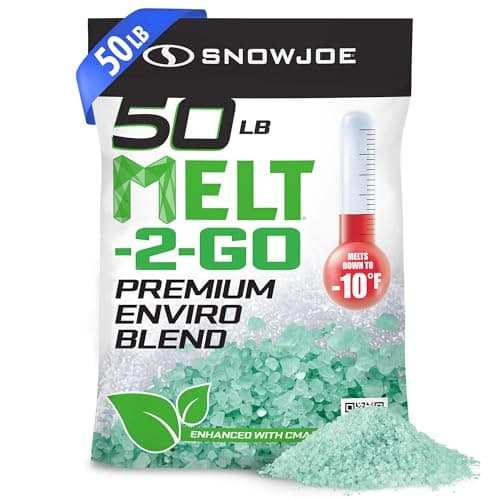
01Snow Joe Snow Joe MELT Premium Enviro Blend with CMASnow Joe MELT Premium Enviro Blend with CMAMost driveways, most winters, at a price you will actually keep buyingBest all-rounder8.6$34.97 - View on Amazon
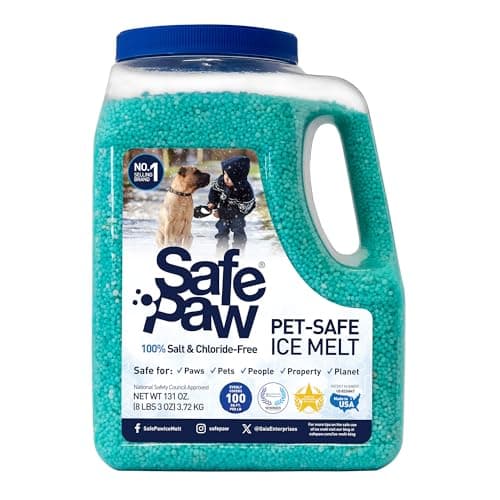
02Safe Paw Safe Paw Ice MeltSafe Paw Ice MeltA driveway or apron you care about, pets, and anywhere runoff reaches plantsBest for pets and planting8.5$29.95 - View on Amazon
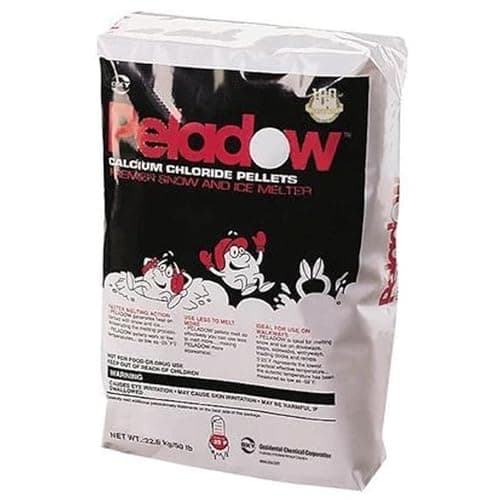
03OxyChem Peladow Calcium Chloride PelletsPeladow Calcium Chloride PelletsDeep cold, on mature, well-cured concrete or asphaltBest in deep cold8.2$50.99 - View on Amazon

Scores are ours and editorial. They are never published as review or rating markup, because we have not tested these products - see how we pick.

What actually damages a concrete driveway

The popular version is that salt eats concrete. That is not really what happens, and the difference matters when you are choosing a bag.

Cured concrete is porous. It takes up water, and when that water freezes it expands inside the pores. Repeat the cycle often enough and the surface spalls — it flakes away in sheets. What ice melt does is keep liquid water present at temperatures where the slab would otherwise simply be frozen, which means more cycles, and more water in the pores to drive them.

OxyChem, which makes one of the products on this page, publishes this in its own guidance: its calcium chloride is stated for concrete at least one year old and properly designed, constructed and cured, and it notes that surfaces which are more porous or not fully cured are more vulnerable to freeze-thaw cycles, where absorbed moisture can refreeze and lead to spalling or scaling.

That is the honest frame for this whole category. New concrete, badly finished concrete and concrete that was never sealed are the vulnerable cases. Mature, well-cured concrete is far more tolerant — but the less product you use, the fewer cycles you cause.

How we judged these

1. Published working temperature. The single most useful number on a bag, and the one that decides whether you are spreading something that will work tonight.

2. What the maker publishes about concrete. Specific, conditional guidance beats a "safe for concrete" splash on the front of the bag.

3. Chloride or not. Chlorides are what get tracked into your garage and onto your car's underbody. That is a separate problem from the slab, and it is the one this site cares most about.

4. Coverage, where it is published. A product that costs twice as much per pound but is spread at half the rate is not twice the price.

The three chemistries, compared on what they publish

Published figures for the three products
Snow Joe Enviro BlendSafe PawPeladow calcium chloride
ChemistryBlend with calcium magnesium acetateChloride-free, carbonyldiamide basedCalcium chloride pellets
Works down to-10 FNot published-25 F
Chloride contentBlend - not fully publishedNoneChloride
Concrete guidanceStated safer than rock or chloride saltStated safe on cured concreteConcrete at least 1 year old, properly cured
CoverageNot published2 cups per 150 sq ftNot published
Pets and plantsStated safer for vegetationStated safe if ingestedNot claimed

Three genuinely different products. The Snow Joe blend publishes a working temperature and a sensible middle position. Safe Paw removes chlorides entirely and publishes a coverage rate, but not a temperature. Peladow publishes the coldest working figure on the page and the most specific concrete conditions, which is the trade you are making.

The arithmetic that actually protects your slab

Safe Paw publishes a rate of 2 cups per 150 square feet. A typical two-car driveway apron of, say, 600 square feet is therefore about 8 cups — half a gallon of product.

Now look at how people actually spread ice melt: by the scoop, until the surface looks white. That is routinely several times the published rate, and every extra granule is more meltwater in the pores of the slab for the next freeze.

So the cheapest improvement available here is not a different bag. It is spreading the bag you have at the rate the maker publishes, which is also why the Snow Joe product's green-coated crystals are a genuine feature: you can see where you have been.

Skip this

Skip ice melt entirely on concrete poured this year

New concrete is the one case where the answer is to use none at all. It is still curing, it is at its most porous, and the surface paste is the part that goes first.

For the first winter, clear mechanically — shovel early, shovel often, and use sand for grip rather than anything that melts. Sand does nothing to the ice; it just gives your boots and tires something to bite, which is all you need on a driveway you can also shovel.

The same advice applies to a slab that is already scaling. Ice melt will accelerate what is happening, and no product on this page is a repair.

The part that reaches your car

Everything you spread on the driveway gets driven over, thrown into the wheel arches and carried into the garage on tires and boots. A chloride-based melt is the same chemistry that arrives from the road, and it keeps working on metal long after the driveway is dry because salt holds moisture out of the air.

Two practical consequences. A containment mat under the car catches the brine that drips off in a warm garage instead of letting it pool on the slab. And rinsing the underbody on mild days matters more if your own driveway is contributing to the problem.

If that bothers you, the chloride-free option is the one that takes your driveway out of the equation entirely. It costs more per pound, and for some people that is a fair trade.

One caveat worth following up on if your driveway is not a single poured slab: the published guidance changes with the surface, and on concrete pavers, brick or a composite deck it points at a different bag than this page does. We work through what each surface maker actually publishes rather than assuming the driveway answer carries over.

What we would buy

For most driveways: the CMA blend. It publishes a working temperature, it is gentler than straight rock salt on concrete and metal, and the coated crystals make over-spreading visible.

If you have dogs, planting or young concrete nearby: the chloride-free option. Nothing chloride-based reaches the lawn, the paws or the slab, and the published coverage rate makes the price per application less alarming than the price per pound.

When it is genuinely cold: calcium chloride, on mature concrete, spread sparingly. It is the only product here published to work at -25 F, and the published concrete conditions are the homework that comes with it.

And whatever is in the bag: shovel first, spread at the published rate, and sweep up what is left once the ice is gone. Every granule that stays on the slab is waiting for the next thaw.
The write-ups

Every pick, in full

01 / Best all-rounderSnow Joe Snow Joe MELT Premium Enviro Blend with CMA

Snow Joe

8.6 / 10

Mid-priced per pound, cheap per application

Snow Joe MELT Premium Enviro Blend with CMA

The middle path, and the one we would spread on a normal winter driveway: a blend carrying calcium magnesium acetate, published to melt down to -10 F, and sold as easier on concrete, metal and plants than straight rock salt.

$34.97 - View on Amazon

#ad Price as of October 18, 2026, from Amazon. Prices change. How this site is funded.

Published specifications for the Snow Joe MELT Premium Enviro Blend with CMA, with the source of each
SpecificationPublished valueWhere it is published
Lowest working temperatureMelts to -10FSnow Joe - MELT Premium Enviro Blend with CMA product page (melts to -10F)
CompositionBlend carrying calcium magnesium acetate (CMA)Snow Joe - MELT Premium Enviro Blend with CMA product page (melts to -10F)
SurfacesStated safer for concrete, metals and vegetation than rock or chloride saltSnow Joe - MELT Premium Enviro Blend with CMA product page (melts to -10F)
Visual indicatorGreen-coated crystals so you can see how much you have spreadSnow Joe - MELT Premium Enviro Blend with CMA product page (melts to -10F)
CoverageNot published by the manufacturerSnow Joe - MELT Premium Enviro Blend with CMA product page (melts to -10F)

What it does well

  • Publishes a working temperature, which most bagged ice melt does not
  • Green coating makes over-spreading visible, and over-spreading is the usual mistake
  • CMA content is the part that earns the gentler-on-concrete claim

What it does not

  • No published coverage rate to compare price per square foot
  • -10 F floor is real: in a hard snap it stops working while you are still spreading it
  • A blend, so the CMA proportion is not published

Skip this one if

You are dealing with ice below -10 F, which is the published floor for this blend.

How it scores, by criterion

Safe on concrete8.0
Cold performance7.5
Published detail7.0
Pet and plant safety7.5
Price7.5
02 / Best for pets and plantingSafe Paw Safe Paw Ice Melt

Safe Paw

8.5 / 10

The most expensive per pound on this page

Safe Paw Ice Melt

The chloride-free one, which is the whole point: no chloride means none of the chemistry people worry about near concrete, pets and steel. It is also the most expensive per pound here, and the maker publishes a coverage rate that helps you work out whether that matters.

$29.95 - View on Amazon

#ad Price as of October 18, 2026, from Amazon. Prices change. How this site is funded.

Published specifications for the Safe Paw Ice Melt, with the source of each
SpecificationPublished valueWhere it is published
CompositionModified carbonyldiamide crystal with glycols and surfactants - salt-free and chloride-freeSafe Paw - product page (chloride-free composition, 72-hour claim, 2 cups per 150 sq ft)
Coverage2 cups covers 150 sq ftSafe Paw - product page (chloride-free composition, 72-hour claim, 2 cups per 150 sq ft)
Duration"Lasts 72 hours on the surface"Safe Paw - product page (chloride-free composition, 72-hour claim, 2 cups per 150 sq ft)
ConcreteStated non-corrosive and safe on cured concreteSafe Paw - product page (chloride-free composition, 72-hour claim, 2 cups per 150 sq ft)
Pets and plantsStated safe if ingested, and stated not to harm plantsSafe Paw - product page (chloride-free composition, 72-hour claim, 2 cups per 150 sq ft)
Lowest working temperatureNot published by the manufacturerSafe Paw - product page (chloride-free composition, 72-hour claim, 2 cups per 150 sq ft)

What it does well

  • No chloride at all, which removes the corrosion argument entirely
  • Publishes a coverage rate, so the price per pound is comparable
  • The one to use where dogs walk and runoff reaches planting

What it does not

  • No published lowest working temperature, which is the figure a cold snap needs
  • Most expensive per pound here by a distance
  • Works by destabilizing ice rather than blasting through it, so it is not the fast option

Skip this one if

You need to clear deep ice fast at very low temperatures. This is not the chemistry for that job.

How it scores, by criterion

Safe on concrete9.5
Cold performance5.5
Published detail7.5
Pet and plant safety9.5
Price4.5
03 / Best in deep coldOxyChem Peladow Calcium Chloride Pellets

OxyChem

8.2 / 10

Cheapest per pound of the three, in the biggest bag

Peladow Calcium Chloride Pellets

The one that actually works when it is properly cold: calcium chloride, published effective to -25 F. It is also the one with the real homework attached, because OxyChem's own guidance ties safe use to concrete that is at least a year old and properly cured.

$50.99 - View on Amazon

#ad Price as of October 18, 2026, from Amazon. Prices change. How this site is funded.

Published specifications for the Peladow Calcium Chloride Pellets, with the source of each
SpecificationPublished valueWhere it is published
Lowest working temperatureEffective to -25FOxyChem - PELADOW Premier Snow & Ice Melter (effective to -25F; concrete guidance on age and curing)
CompositionCalcium chloride pelletsOxyChem - PELADOW Premier Snow & Ice Melter (effective to -25F; concrete guidance on age and curing)
Purity standardMeets or exceeds ASTM D98 and AASHTO M144OxyChem - PELADOW Premier Snow & Ice Melter (effective to -25F; concrete guidance on age and curing)
Concrete guidancePublished for concrete at least one year old, properly designed, constructed and curedOxyChem - PELADOW Premier Snow & Ice Melter (effective to -25F; concrete guidance on age and curing)
Stated riskPorous or not fully cured surfaces are more vulnerable to freeze-thaw scalingOxyChem - PELADOW Premier Snow & Ice Melter (effective to -25F; concrete guidance on age and curing)

What it does well

  • Works at temperatures where the gentler products have given up
  • Published against ASTM and AASHTO purity standards, which almost no consumer bag is
  • Cheapest per pound, and a 50 lb bag lasts a season on a normal driveway

What it does not

  • The concrete guidance is a real constraint on newer slabs
  • Chloride, with everything that implies for steel it is tracked onto
  • Sold in a 50 lb bag, which is a lot of product to store and handle

Skip this one if

Your slab is new, porous or already scaling. The published guidance is about concrete age and curing, and it is worth taking seriously.

How it scores, by criterion

Safe on concrete5.5
Cold performance9.5
Published detail9.0
Pet and plant safety4.5
Price8.5

How this was ranked

Every site in this category says it tested twenty of these. We have not tested any, and we say so. What we did instead: built the candidate set from what Amazon actually stocks, compiled the published specifications from each manufacturer’s own pages, did the arithmetic on running cost and on what the thing prevents, and read owner reviews for failure patterns rather than star averages. Every number on this page has a link to where it was published, so you can check the work.

Units we claim to have tested
0
Sponsored placements
0
Free products accepted
0

The full method, including what we refuse to claim

Questions people actually ask

Frequently asked

What ice melt will not damage concrete?

Chloride-free products such as Safe Paw remove the chemistry people worry about, and CMA blends are published as safer for concrete than rock salt. But the main driver of damage is freeze-thaw cycling in porous or young concrete, so using less product matters as much as which bag you buy.

Does salt actually eat concrete?

Not in the way people mean. Ice melt keeps liquid water present on the slab at temperatures where it would otherwise be frozen; that water soaks into the pores and expands each time it refreezes. OxyChem publishes this directly, and ties safe use of its calcium chloride to concrete at least a year old and properly cured.

What temperature does ice melt stop working at?

It depends on the chemistry, and the good products publish it. Snow Joe's Enviro Blend is published to melt to -10 F, and Peladow calcium chloride to -25 F. Safe Paw does not publish a lowest working temperature.

Can you use ice melt on a new concrete driveway?

Not in its first winter. New concrete is still curing and at its most porous, which is exactly the condition the makers warn about. Shovel early and use sand for grip instead.

How much ice melt should I use?

Far less than most people spread. Safe Paw publishes 2 cups per 150 square feet - around half a gallon for a 600 square foot driveway. Spreading until the surface looks white is several times that, and every extra granule means more meltwater in the slab.

Is pet safe ice melt worth the extra cost?

If you have dogs walking on it, planting beside it or a young slab, yes - and the published coverage rate means you use less of it than salt. If none of those apply and the concrete is mature, a CMA blend at the published rate is the better value.

Sources

Read next