Skip to content
Frost & Fender
Roundup

The best snow socks for tires

They fit where chains cannot and they go on in a minute. They also wear out fast on bare pavement, and that is the whole trade.

By Scooter M.Published September 1, 2026

Heads up: the buy links on this page are affiliate links. If you buy through one, we earn a commission at no extra cost to you. It does not change what we recommend or the order we rank things in - here is how we keep those separate.

The shortlist

Ranked, with the prices

Ranked on published manufacturer specifications and, where the numbers exist, the arithmetic on what each option costs and what it saves. Tap any row for the full write-up, including who should skip it.

#ProductBest forScorePrice
01A tire in deep snow, where a textile snow sock is used - a stand-in for the AutoSock Textile Snow Sock, not a photograph of this modelAutoSock Textile Snow SockLow-clearance vehicles and occasional, short snow sectionsBest textile traction8.2Check price on Amazon
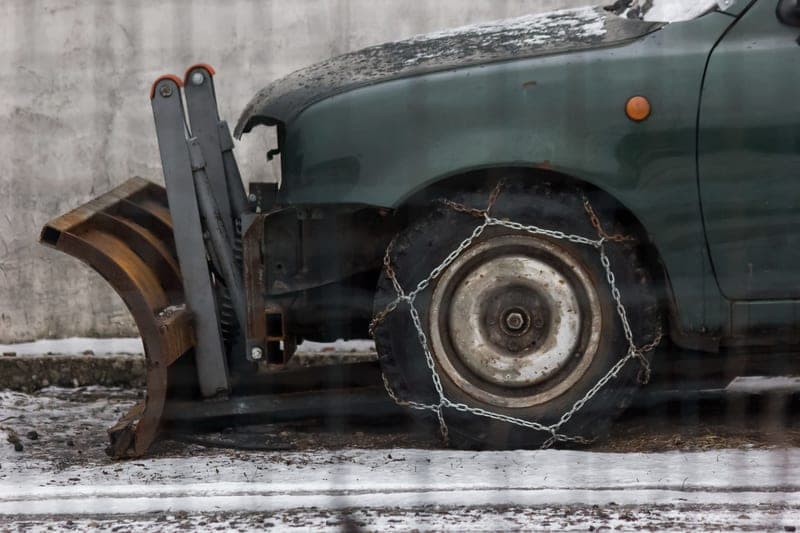
02A tire chain fitted over a wheel in snow - a stand-in for the Security Chain Company Super Z6 Cable Chains, not a photograph of this modelSecurity Chain Company Super Z6 Cable ChainsModern cars and crossovers with limited wheel-well clearanceBetter in deep snow8.8Check price on Amazon

Scores are ours and editorial. They are never published as review or rating markup, because we have not tested these products - see how we pick.

What a snow sock actually is

A high-friction textile cover that pulls over the tire like a sleeve. There is no metal and no mechanism. The fabric grips snow and ice through friction and by wicking the thin water film that forms between a tire and ice under pressure — which is a genuinely different mechanism from a chain, which bites mechanically.

The consequence of having no metal is that there is nothing rigid to clear. That is the entire reason they exist.

The three things they are genuinely better at

1. They fit where chains physically cannot

Many modern cars have very little space between the tire and the strut, and a great many vehicles publish a chain prohibition or a low-clearance requirement in their manuals. A textile cover adds a few millimeters of fabric and nothing more, so the clearance objection largely disappears.

If your manual says no chains, this is often the only compliant option — but check the manual for that too rather than assuming.

2. Fitting time, with cold hands

About a minute a wheel. You stretch the sock over the top of the tire, drive forward a few feet, and pull the remainder over the section that was on the ground. There are no tensioners, no hooks, no reaching behind the wheel and no instruction sheet.

The difference sounds small on a product page and is very large on a road shoulder in the dark.

3. Ride quality

They are quiet and smooth, because there is no metal contacting the road. Chains are loud and rough by comparison, and the vibration is fatiguing on a long descent.

The limitation, stated plainly

Textile wears fast on bare pavement. Fast enough that a few miles of cleared road will do visible damage, and enough of it will wear through.

That makes them a product for a snow section, not a journey. Fit them at the bottom of a pass, take them off at the top. If your use case is repeated long distances on mixed surfaces, this is the wrong tool and chains are the right one.

Cost per use, honestly

A pair is $80 to $150. Manufacturers publish durability in terms of distance on snow rather than a number of uses, and the figure varies by product, so we are not going to invent one.

The practical framing: if you fit them for the same twenty-mile snowy section three or four times a winter, a pair lasts several seasons and the cost per use is low. If you drive them on and off bare pavement, you will be replacing them.

The legal question, which you must check yourself

Some jurisdictions accept textile traction devices where chains are required and some do not, and the rules change. AutoSock publishes approval information for its products, and it is worth reading for the places you actually drive.

We are not going to publish a jurisdiction-by-jurisdiction table, because it would be out of date and because getting it wrong on a chain-control road is expensive. Check the current published rules for your route before you rely on a sock in place of a chain.

Skip this

Skip snow socks if you need traction repeatedly over distance

The wear problem is not marginal. These are designed to be fitted for a snow-covered section and removed afterwards, and using them as a general winter traction device wears them out quickly and expensively.

If you are regularly driving mixed surfaces in winter, the right answer is winter tires, and the budget answer is cable chains fitted for the sections that need them.

Fitting them properly

  1. Stop somewhere safe and flat, with the parking brake on.
  2. Stretch the sock over the top two-thirds of the tire, as far down each side as it will go.
  3. Drive forward or back a few feet so the uncovered section comes off the ground.
  4. Pull the rest of the sock over that section.
  5. Check it is seated evenly all the way round, with no fabric caught on the wheel rim.
  6. Drive off gently. They center themselves within a short distance.

And the same rule as chains: fit them once in the driveway before the season, so the first time is not in a storm.
The write-ups

Every pick, in full

01 / Best textile tractionA tire in deep snow, where a textile snow sock is used - a stand-in for the AutoSock Textile Snow Sock, not a photograph of this model

AutoSock

8.2 / 10

Roughly $80-$150 a pair

AutoSock Textile Snow Sock

A textile cover that pulls over the tire. It fits vehicles with no clearance for chains, takes about a minute a wheel, and is the option that is accepted in some places where chains are not - which is worth checking before you buy either.

Check price on Amazon

#ad We hold no verified live price for this product, so we show none. How this site is funded.

Published specifications for the AutoSock Textile Snow Sock, with the source of each
SpecificationPublished valueWhere it is published
TypeTextile traction coverAutoSock published product information
Clearance requirementPublished as suitable where chains do not fitAutoSock published product information
FitmentSized to the tire size marked on the sidewallAutoSock published product information
ApprovalsCheck current published approval status for your jurisdictionAutoSock published product information

What it does well

  • Fits where a chain physically cannot
  • Genuinely quick to fit with cold hands
  • Quiet and smooth compared with chains

What it does not

  • Wears quickly on bare pavement
  • Less bite than chains in deep, rutted snow
  • Not accepted everywhere chains are required - check local rules

Skip this one if

You need traction repeatedly over long distances. Textile wears fast on bare pavement.

How it scores, by criterion

Fits modern vehicles10.0
Grip in snow7.0
Ease of fitting9.5
Durability5.0
Price6.0
02 / Better in deep snowA tire chain fitted over a wheel in snow - a stand-in for the Security Chain Company Super Z6 Cable Chains, not a photograph of this model

Security Chain Company

8.8 / 10

Roughly $70-$120 a pair

Security Chain Company Super Z6 Cable Chains

A low-clearance cable chain, which is the type most modern cars actually need. The clearance requirement is the entire buying decision here and most people never check it: many vehicles do not have room for a conventional link chain in the wheel well.

Check price on Amazon

#ad We hold no verified live price for this product, so we show none. How this site is funded.

Published specifications for the Security Chain Company Super Z6 Cable Chains, with the source of each
SpecificationPublished valueWhere it is published
TypeLow-clearance cable traction chainSecurity Chain Company published product information
FitmentSized to the tire size marked on the sidewallSecurity Chain Company published product information
TensioningSelf-tensioning, published as requiring no re-tightening stopSecurity Chain Company published product information
Clearance requirementPublished per model in the maker's fitment data - always check against your manualSecurity Chain Company published product information

What it does well

  • Fits vehicles that cannot take a conventional link chain
  • Self-tensioning removes the stop-and-retighten step that people skip
  • Diagonal cable pattern gives more consistent grip than a simple ladder

What it does not

  • Cables wear faster than links on bare pavement
  • Less bite than a link chain in deep, rutted snow
  • Still needs fitting in the cold, on the ground, in the dark

Skip this one if

Your owner's manual prohibits chains on your vehicle, or specifies a clearance you do not have. Check the manual before you check the price.

How it scores, by criterion

Fits modern vehicles9.5
Grip in snow8.0
Ease of fitting8.5
Durability6.5
Price6.5

How this was ranked

Every site in this category says it tested twenty of these. We have not tested any, and we say so. What we did instead: built the candidate set from what Amazon actually stocks, compiled the published specifications from each manufacturer’s own pages, did the arithmetic on running cost and on what the thing prevents, and read owner reviews for failure patterns rather than star averages. Every number on this page has a link to where it was published, so you can check the work.

Units we claim to have tested
0
Sponsored placements
0
Free products accepted
0

The full method, including what we refuse to claim

Questions people actually ask

Frequently asked

Do snow socks actually work?

Yes, on snow and packed snow, through a different mechanism from chains: the textile grips by friction and by wicking the thin water film between the tire and ice. They are less effective than chains in deep, rutted snow and on thick ice, and they wear quickly on bare pavement.

Are snow socks better than chains?

Better in three specific ways: they fit vehicles with no clearance for chains, they fit in about a minute a wheel, and they ride quietly. Worse in two: less grip in deep snow and on ice, and much faster wear on bare pavement. Which matters more depends on your car and your roads.

How long do snow socks last?

Manufacturers publish durability as a distance on snow rather than a number of uses, and it varies by product, so check the figure for the one you are buying. What determines it in practice is how much bare pavement you drive on them — that is what wears the textile, and it wears it fast.

Are snow socks legal where chains are required?

It depends on the jurisdiction and the rules change, so check the current published requirement for the roads you drive. Manufacturers publish approval information for their products. Do not assume equivalence on a chain-control road.

Sources

Read next