Tire chains vs snow socks
Two questions decide this: what your owner's manual says about clearance, and how much bare pavement you will drive on them.
Heads up: the buy links on this page are affiliate links. If you buy through one, we earn a commission at no extra cost to you. It does not change what we recommend or the order we rank things in - here is how we keep those separate.
The decision table
| Chains (cable or link) | Snow socks | |
|---|---|---|
| Grip in deep snow | Better - mechanical bite | Adequate - friction and wicking |
| Grip on thick ice | Better | Limited |
| Clearance required | Real, and many cars lack it | Essentially none |
| Fitting time per wheel | Several minutes, first time longer | About a minute |
| Fitting in the dark, cold hands | Genuinely difficult | Straightforward |
| Wear on bare pavement | Slow | Fast - this is the main limitation |
| Noise and ride | Loud and rough | Quiet and smooth |
| Accepted on chain-control roads | Yes | Depends on jurisdiction - check |
| Price per pair | $70 to $140 | $80 to $150 |
Question one: does your car have the clearance?
This one can settle it before you get to any other consideration.
Open the owner’s manual and find the section on tire chains. It will say one of three things: chains are permitted with a stated clearance requirement, only low-clearance or SAE Class S chains are permitted, or chains are not permitted at all.
If it is the third, socks may be your only option — and check the manual for those too, because some manufacturers address textile devices separately.
If it is the second, you are choosing between cable chains and socks, not between link chains and socks.
Question two: how much bare pavement?
This is the wear question, and it is the one that decides it for most people whose manual permits both.
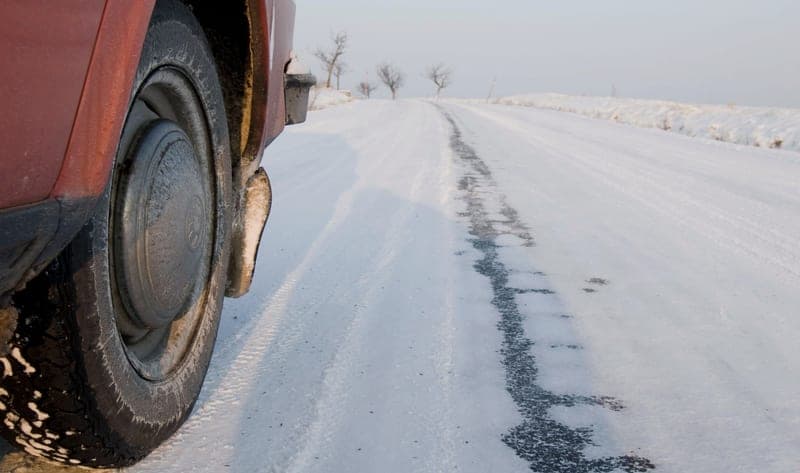
Socks are designed for a snow-covered section: fitted at the bottom of a pass, removed at the top. Driven on cleared road they wear quickly, and enough of it wears through the fabric.
Chains also should not be driven on bare pavement, and the consequence is much less severe — some accelerated wear rather than the end of the product.
So: predictable snow sections with cleared road either side favors socks. Mixed, unpredictable conditions over distance favors chains.
Pick chains if...
- Your manual permits them and you have the clearance.
- You drive genuinely deep or rutted snow, or thick ice.
- You are on chain-control roads where socks may not be accepted.
- Conditions vary and you cannot predict where you will need them.
- You want the device that lasts longest per dollar.
Pick socks if...
- Your manual prohibits chains or requires very low clearance.
- You need traction for a known, bounded section rather than a whole journey.
- Fitting speed matters — you will realistically be doing it in the dark, in weather, alone.
- Ride comfort and noise matter over a long descent.
Skip this
The case where the answer is neither
If you regularly drive in winter conditions rather than occasionally crossing them, both of these are the wrong answer and winter tires are the right one. They work all the time, need no fitting, and are not a compromise.
They are also a $600-plus considered purchase, which is outside what this site is for — we cover the budget alternatives honestly rather than pretending they are equivalent. If you need traction most days, save for tires and treat chains as the thing you carry for the exceptional day.
Both, for a specific reason
A small number of people genuinely want both, and it is not belt-and-braces. Socks live in the car for the unexpected section where fitting speed matters; chains come out for the planned trip over a pass where grip matters more than convenience.
For everyone else, buy one, and get the size right from your sidewall before you order either.
What to buy, given all that
Security Chain Company
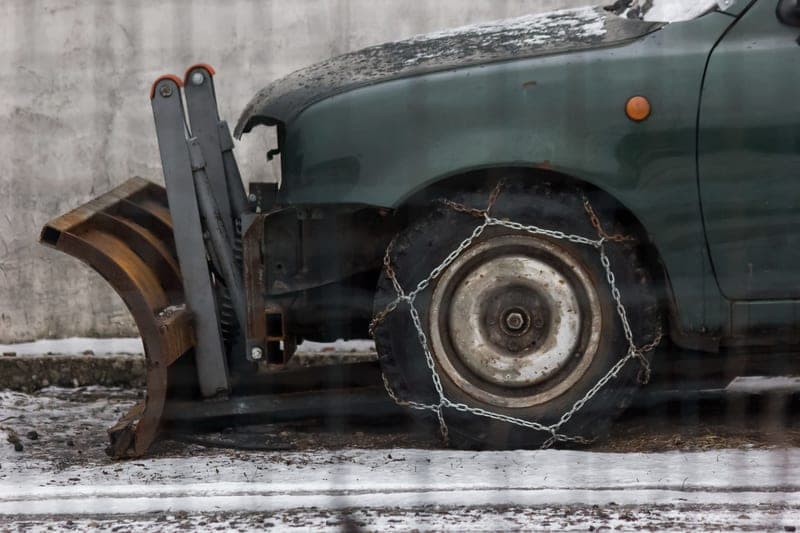
Security Chain Company Super Z6 Cable Chains
Roughly $70-$120 a pair
A low-clearance cable chain, which is the type most modern cars actually need. The clearance requirement is the entire buying decision here and most people never check it: many vehicles do not have room for a conventional link chain in the wheel well.
Skip it if: Your owner's manual prohibits chains on your vehicle, or specifies a clearance you do not have. Check the manual before you check the price.
#ad We hold no verified live price for this product, so we show none. How this site is funded.
AutoSock
AutoSock Textile Snow Sock
Roughly $80-$150 a pair
A textile cover that pulls over the tire. It fits vehicles with no clearance for chains, takes about a minute a wheel, and is the option that is accepted in some places where chains are not - which is worth checking before you buy either.
Skip it if: You need traction repeatedly over long distances. Textile wears fast on bare pavement.
#ad We hold no verified live price for this product, so we show none. How this site is funded.
How this was ranked
Every site in this category says it tested twenty of these. We have not tested any, and we say so. What we did instead: built the candidate set from what Amazon actually stocks, compiled the published specifications from each manufacturer’s own pages, did the arithmetic on running cost and on what the thing prevents, and read owner reviews for failure patterns rather than star averages. Every number on this page has a link to where it was published, so you can check the work.
- Units we claim to have tested
- 0
- Sponsored placements
- 0
- Free products accepted
- 0
Frequently asked
Are snow socks as good as chains?
Not for outright grip in deep snow or on thick ice, where chains bite mechanically and socks rely on friction. Socks are better where clearance is limited, where fitting speed matters, and for ride comfort. The wear rate on bare pavement is their main limitation.
Which is easier to fit, chains or snow socks?
Socks, by a wide margin: about a minute a wheel, with no tensioners and no reaching behind the wheel. Chains take several minutes and need re-tensioning unless they are self-tensioning. In the dark with cold hands that difference is larger than it sounds.
Do snow socks damage tires?
No, when fitted correctly. The textile sits on the tread and the fabric is softer than the rubber. What damages a sock is bare pavement, and what damages a tire is driving on a sock that has worn through and is no longer covering evenly.
Can you use snow socks on all-wheel drive?
Yes, and the same rule as chains applies: follow your owner’s manual for which axle to fit, and how many. All-wheel drive helps you accelerate, not stop, so traction devices still change how the car behaves under braking.
Sources
- AutoSock review: the snow sock, assessed on its published limits
- The best traction mats for getting out of snow
- Tire chains vs winter tires
- When tire chains are required, and who is exempt
- The best tire chains, and the check to do first
- The best snow socks for tires
- Do you actually need tire chains?
- Traction and emergency