Tire chains vs winter tires
This is the biggest spending decision in winter driving, and the honest answer is that it turns on how many days a year you meet the conditions - not on which product grips better.
Heads up: the buy links on this page are affiliate links. If you buy through one, we earn a commission at no extra cost to you. It does not change what we recommend or the order we rank things in - here is how we keep those separate.
They are not the same category of purchase
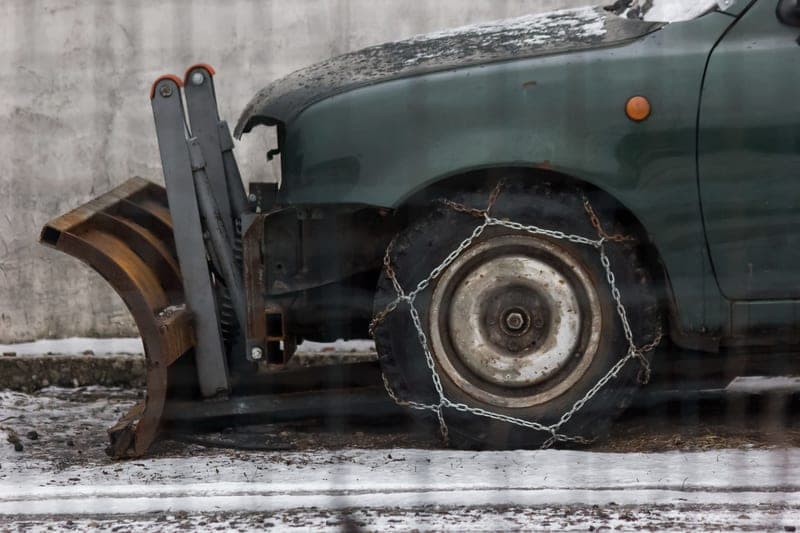
People frame this as a product comparison and it is really a frequency question. Winter tires are a seasonal fitment: they go on in November, come off in April, and improve every mile you drive in between. Chains are an occasional device: they live in the trunk, go on for a specific stretch of road at under 30 mph, and come off at the bottom of the pass.
That difference explains everything else. Winter tires cost several times what chains cost and give you a better car for months. Chains cost a fraction and give you a legal and physical answer for a few hours a year. Neither is a substitute for the other and the marketing on both sides pretends otherwise.
| Winter tires | Tire chains | |
|---|---|---|
| What it improves | Every mile, all season - braking, cornering, starting | Traction on a specific snow or ice section |
| Speed limit | Normal road speeds | Typically 30 mph - Peerless publishes that figure for Auto-Trac |
| Cost bracket | A four-figure-adjacent seasonal set for many vehicles, plus fitting and storage | A two-figure to low-three-figure pair that lasts years |
| Where it lives | On the car for the season, off it for the summer | In the trunk, most of the time unused |
| Effort per use | Two tire changes a year | Fitting at the roadside in weather, every time |
| Fits every vehicle | Yes, in your tire size | No - many modern cars lack the wheel-well clearance |
The states settle part of the argument for you
This is unusual and worth knowing: the traction laws treat these two as partly interchangeable, and they publish the terms.
Caltrans runs three chain control levels. At R1, autos and pickups with approved legal snow tires are exempt from fitting chains. At R2, the exemption is four-wheel or all-wheel drive with snow-tread tires on all four wheels. At R3, there are no exceptions and everyone fits something.
Colorado publishes the same idea differently. Under its Passenger Vehicle Traction Law you comply with either mud and snow or winter tires at 3/16 inch of tread, or with chains or an approved alternative traction device. Escalate to the Passenger Vehicle Chain Law and the tire exemption disappears: every vehicle needs chains or an approved alternative.
Read together, those rules say something useful. Winter tires get you through the common conditions without stopping to fit anything. Chains are what remains when conditions are bad enough that tires alone are no longer accepted — which is precisely the situation where you would want them anyway. The full published rules are here.
The frequency calculation
Put your own numbers in; ours are only a worked example. Say a winter tire set for your car is a four-figure purchase once every several seasons, plus two changeovers a year and somewhere to keep the other set. Say a chain set is a low-three-figure purchase that lasts many years and lives in the trunk.
Now count the days. If you drive on snow or ice most weeks of the winter — a mountain town, a snowbelt commute, an unplowed rural road — winter tires are improving every one of those trips, and the chains only help on the worst few. The tires win easily and it is not close.
If you drive on snow a handful of times a year— a city that plows well, two ski trips, one bad week — then winter tires spend most of the season improving conditions you do not encounter, and a chain set covers the specific occasions that actually catch you out. Chains win on pure economics.
The honest bit people leave out: if you are in the second group and you buy chains, you must also be willing to fit them, at night, in weather, on a shoulder. Plenty of people buy chains and drive past the conditions rather than stop. If that is you, the chains were not the cheaper option - they were the unused one.
Skip this
All-wheel drive is not the third option
The most common way this decision goes wrong is deciding that an all-wheel-drive vehicle makes both purchases unnecessary. All-wheel drive helps you accelerate. It does nothing for braking or cornering grip, which is where winter incidents actually happen, and a heavier vehicle needs more distance to stop on the same surface.
The traction laws make the same point in writing. Under Caltrans R2 the exemption is all-wheel drive with snow-tread tires on all four wheels — drivetrain alone does not qualify. Colorado requires AWD or 4WD to have mud and snow or winter tires at 3/16 inch of tread. Two states have independently decided that all-wheel drive on all-seasons is not enough, and that is worth more than any manufacturer’s brochure.
The case for buying both, which is smaller than it sounds
If you run winter tires and also cross a pass with chain controls, you may still need chains in your trunk — at R3, or under Colorado’s chain law, tires stop exempting you. For a mountain commuter that is a real scenario and both purchases are justified.
For everyone else it is not. Buying both because each covers an edge case is how a budget gets spent on redundancy. Pick the one that matches your actual frequency, and be open to the answer being neither if you never leave plowed roads.
If chains are the answer, buy them correctly
Clearance first, price second. Many modern cars do not have room for a conventional link chain, and your owner’s manual is the only authority on that. Some specify SAE Class S devices only; some prohibit chains on one axle or entirely.
Buy for your sidewall, not your model. Chains are sized to the tire size code, and two trims of the same car often take different sizes. The size finder does the lookup.
If nothing fits, textile is a real answer. Snow socks are published as suitable where chains do not fit, which on some vehicles is simply the situation. We compare those two directly, and the value-tier chains are here if the budget is the constraint.
What to buy, given all that
Security Chain Company
Security Chain Company Super Z6 Cable Chains
Roughly $70-$120 a pair
A low-clearance cable chain, which is the type most modern cars actually need. The clearance requirement is the entire buying decision here and most people never check it: many vehicles do not have room for a conventional link chain in the wheel well.
Skip it if: Your owner's manual prohibits chains on your vehicle, or specifies a clearance you do not have. Check the manual before you check the price.
#ad We hold no verified live price for this product, so we show none. How this site is funded.
AutoSock
AutoSock Textile Snow Sock
Roughly $80-$150 a pair
A textile cover that pulls over the tire. It fits vehicles with no clearance for chains, takes about a minute a wheel, and is the option that is accepted in some places where chains are not - which is worth checking before you buy either.
Skip it if: You need traction repeatedly over long distances. Textile wears fast on bare pavement.
#ad We hold no verified live price for this product, so we show none. How this site is funded.
Peerless Chain
Peerless Auto-Trac Light Truck and SUV Tire Chains
In the same bracket as the passenger Auto-Trac set
The light-truck version of the self-tightening Auto-Trac, and the published clearance figure is why it belongs on an SUV page: 14 mm on the inside sidewall, which is a genuinely small number for a link chain and the reason it clears wheel wells that reject heavier sets.
Skip it if: Your owner's manual prohibits chains on that axle, or your tire size is not in the published fitment list. Neither is negotiable.
#ad We hold no verified live price for this product, so we show none. How this site is funded.
How this was ranked
Every site in this category says it tested twenty of these. We have not tested any, and we say so. What we did instead: built the candidate set from what Amazon actually stocks, compiled the published specifications from each manufacturer’s own pages, did the arithmetic on running cost and on what the thing prevents, and read owner reviews for failure patterns rather than star averages. Every number on this page has a link to where it was published, so you can check the work.
- Units we claim to have tested
- 0
- Sponsored placements
- 0
- Free products accepted
- 0
Frequently asked
Are tire chains as good as winter tires?
They are better on the specific bad section and worse everywhere else. Chains bite into packed snow and ice harder than any tire, but only at low speed - Peerless publishes 30 mph for Auto-Trac - and only while fitted. Winter tires improve braking and cornering on every mile of the season. They answer different questions.
Do winter tires exempt me from chain controls?
Sometimes, and the states publish exactly when. Under Caltrans R1, autos and pickups with approved legal snow tires are exempt; under R2 the exemption needs four-wheel or all-wheel drive with snow-tread tires on all four wheels; under R3 there are no exceptions. Colorado accepts winter tires at 3/16 inch tread under its Traction Law, but not once it escalates to the Chain Law.
Is all-wheel drive enough instead of chains or winter tires?
No, and two states say so in writing. All-wheel drive helps you accelerate and does nothing for braking or cornering. Caltrans R2 requires AWD plus snow-tread tires on all four wheels; Colorado requires AWD or 4WD with mud and snow or winter tires at 3/16 inch of tread. Drivetrain alone does not qualify.
Which is cheaper, chains or winter tires?
Chains, by a wide margin up front - a pair is a two-figure to low-three-figure purchase that lasts years, against a seasonal tire set plus changeovers and storage. Whether cheaper means better value depends entirely on how many days a year you actually drive on snow. Few days: chains. Most of the winter: tires.
Can I put chains on winter tires?
Generally yes, and on a mountain route you may have to - at Caltrans R3 or under Colorado's chain law, winter tires stop exempting you. Check your manual for clearance and the permitted axle first, because fitting chains over a wider winter tire can reduce the clearance the manufacturer assumed.
What if my car cannot take chains at all?
That is common on modern low-clearance vehicles and it is a real constraint rather than an inconvenience. Textile snow socks are published as suitable where chains do not fit, though whether a given alternative device is accepted in a chain control is a jurisdiction question worth checking for your route in advance.
Sources
- Caltrans - published chain control requirements (R1, R2 and R3 definitions and the 6/32 in tread minimum)
- Colorado DOT - published Traction Law and Passenger Vehicle Chain Law, including the 3/16 in tread minimum and published fines
- Peerless Chain - published traction product information
- AutoSock - published textile traction product information