Do you actually need tire chains?
For a lot of people the honest answer is no, and a set of chains that lives unused in a trunk for five years is not a purchase we want to have sold you.
Heads up: the buy links on this page are affiliate links. If you buy through one, we earn a commission at no extra cost to you. It does not change what we recommend or the order we rank things in - here is how we keep those separate.
The three-question test
Answer these honestly. If all three are no, you do not need chains, and the money is better spent elsewhere.
- Do you drive a road with chain controls? Mountain passes and some state highways post chain requirements in winter. If you cross one, this is settled — you need whatever the requirement specifies, and the requirement is legal rather than advisory. What the published levels actually require, and who is exempt, is worth reading before a trip rather than at a checkpoint.
- Is there a specific place you get stuck, repeatedly? A steep driveway, an unplowed private road, a hill on your street that defeats the car twice a winter. Something you can name.
- Do you drive somewhere the plow does not reach for a day or more? Rural roads, private lanes, and areas that are simply far down the priority list.
Three noes means chains would spend years in your trunk, unpracticed, and an unpracticed set of chains at 9pm in a blizzard is not much use to anyone.
What people buy chains for that chains do not fix
“It snowed and my car struggled.” On a plowed road with slush, chains are the wrong tool — they are for snow-covered surfaces and they wear badly on cleared pavement. The struggle you experienced is a tire problem, and the answer is either winter tires or accepting the limits of all-seasons.
“I could not stop at the junction.” Braking distance on ice is dominated by the tire compound, not by drive traction. Chains help, and nothing like as much as people expect, and all-wheel drive does not help at all.
“I got stuck in the driveway.” That is a recovery problem, not a traction problem. A shovel and recovery boards solve it faster than chains, and you do not have to fit them to all four corners in the cold first.
Where the money is better spent
A set of chains is $70 to $140, plus the practice fitting and the trunk space.
For the same money: a folding shovel ($25), a pair of recovery boards ($60), and a set of proper floor mats ($40). All three of which you will use.
Or a jump pack ($90), which addresses the single most likely winter failure rather than a rare one.
When the answer is genuinely yes
Chain-control roads are the clearest case. If you cross a pass where controls are posted, carrying the specified device is a legal requirement and you can be turned back without it. That is not a judgment call.
After that: a named, foreseeable situation. Not “it might snow badly”, but “the road to my house is not plowed until the afternoon and I leave at six”. If you can describe the specific morning, buy them, size them from your sidewall, and fit them once in October so you can do it in the dark.
Skip this
All-wheel drive is not a reason to skip this, and not a reason to buy it either
All-wheel drive helps you accelerate. It does essentially nothing for braking or cornering on ice, both of which are decided by the tire.
That cuts both ways. It does not exempt an all-wheel-drive car from a chain control — many controls apply to all vehicles or specify traction tires as an alternative. And it does not mean an all-wheel-drive car needs chains less in the situations where they actually matter.
What to do instead, in order
- Check your tires. Tread depth and age matter more than anything else. An all-season tire at 4/32 inch is a different car in snow from the same tire new.
- Get a shovel and recovery boards. They address the common failure — being stuck in one place — rather than the rare one.
- Fix the starting problem. A dead battery on a cold morning is far more likely than a traction emergency. A maintainer is $30.
- If you drive winter conditions regularly, save for winter tires. They are the actual answer, they work all the time, and no budget alternative is equivalent.
What to buy, given all that
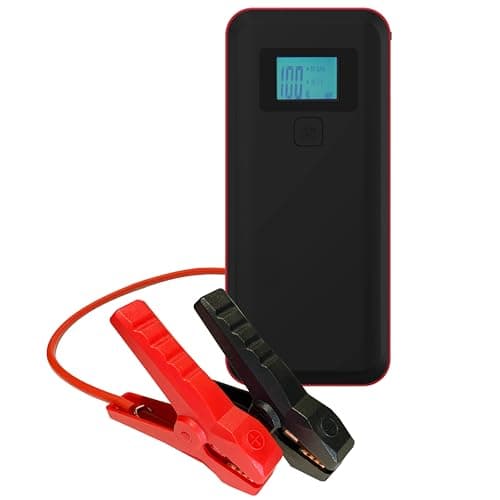
Schumacher
Schumacher SL1639 Lithium Jump Starter and Power Pack
The cheapest jump starter on this page
A lithium jump pack that starts a dead car without a second vehicle, and the one here that publishes the most capability for the least money: 1000 peak amps, 29.6 watt-hours, and engine ratings of 8.0 liters gas and 6.0 diesel. It solves the emergency; it does not solve the cause, which is why it belongs beside a maintainer rather than instead of one.
Skip it if: The battery is simply old. A jump pack is a way to keep restarting a battery you should be replacing.
#ad Price as of October 18, 2026, from Amazon. Prices change. How this site is funded.
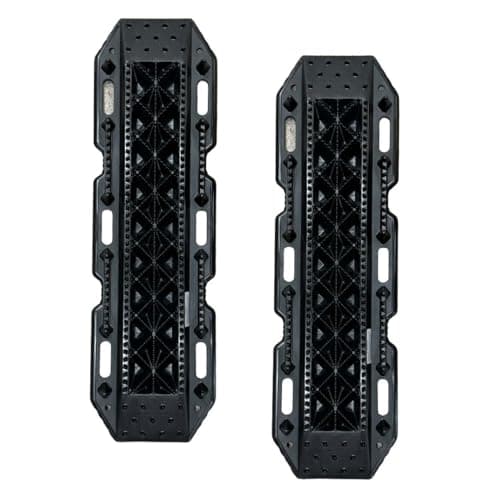
MAXSA Innovations
MAXSA Escaper Buddy Traction Mats
A three-figure pair - the most expensive single item in a winter trunk kit
Rigid recovery boards that go under a spinning wheel. They solve a different problem from chains: chains are for driving on snow, boards are for the moment you are already stuck in a driveway or a parking space.
Skip it if: You need traction while moving. Boards are a recovery tool, not a traction device.
#ad Price as of October 18, 2026, from Amazon. Prices change. How this site is funded.
How this was ranked
Every site in this category says it tested twenty of these. We have not tested any, and we say so. What we did instead: built the candidate set from what Amazon actually stocks, compiled the published specifications from each manufacturer’s own pages, did the arithmetic on running cost and on what the thing prevents, and read owner reviews for failure patterns rather than star averages. Every number on this page has a link to where it was published, so you can check the work.
- Units we claim to have tested
- 0
- Sponsored placements
- 0
- Free products accepted
- 0
Frequently asked
Do I need snow chains for my car?
Only if you drive a chain-control road, or you have a specific repeated situation you can name — a steep unplowed driveway, a rural road that is not cleared for a day. For occasional snow on plowed roads, chains will sit unused and the money is better spent on a shovel, recovery boards or a jump pack.
Do I need chains if I have all-wheel drive?
All-wheel drive helps you accelerate and does essentially nothing for braking or cornering on ice. It does not exempt you from a chain control — many apply to all vehicles or specify traction tires as an alternative — and it does not remove the need in the situations where chains genuinely matter.
Are winter tires better than chains?
Yes, for regular winter driving. They work continuously, need no fitting, and improve braking and cornering rather than only traction. They are also a $600-plus purchase. Chains are the thing you carry for the exceptional day; winter tires are the answer if most days are winter days.
What is the cheapest way to get better traction in snow?
Check your tread depth first, because it costs nothing and it is the biggest single variable. After that, a folding shovel and a pair of recovery boards address the most common winter immobilization — being stuck in one spot — for well under the price of chains.
Sources
- Tire chains vs winter tires
- The best snow shovel for a car, by which job you are buying it for
- When tire chains are required, and who is exempt
- The best tire chains, and the check to do first
- Tire chains vs snow socks
- The winter car emergency kit checklist
- The best battery maintainers for winter
- Traction and emergency