Skip to content
Frost & Fender
Guide

Can you jump start an electric car?

You are not jump starting the drive battery. You are reviving a small 12-volt battery that unlocks the doors and wakes the computers - and every EV has one, every one of them dies, and the cold is when it happens.

By Scooter M.Published October 18, 2026

Heads up: the buy links on this page are affiliate links. If you buy through one, we earn a commission at no extra cost to you. It does not change what we recommend or the order we rank things in - here is how we keep those separate.

The shortlist

Ranked, with the prices

Ranked on published manufacturer specifications and, where the numbers exist, the arithmetic on what each option costs and what it saves. Tap any row for the full write-up, including who should skip it.

#ProductBest forScorePrice
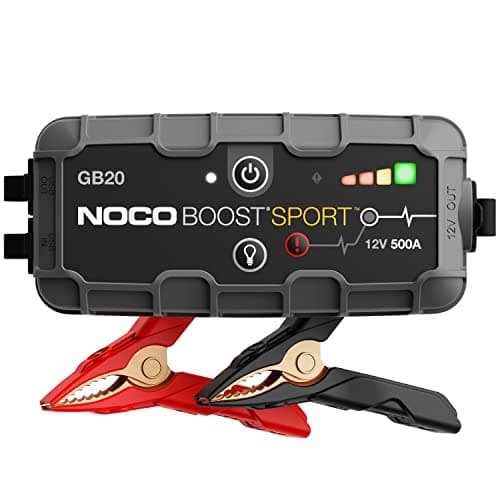
01NOCO NOCO Boost Sport GB20 Jump StarterNOCO Boost Sport GB20 Jump StarterA small gas engine, a motorcycle, a mower - and a glovebox rather than a trunkBest 12V pack for an EV8.1$79.95 - View on Amazon
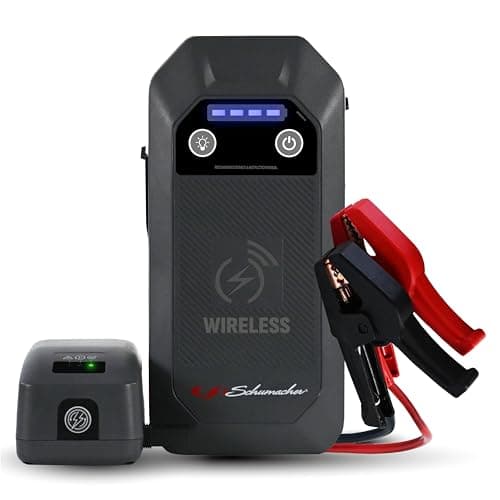
02Schumacher Schumacher SL1674 4-in-1 Jump Starter and Power PackSchumacher SL1674 4-in-1 Jump Starter and Power PackLarger gas engines and diesels, or a household covering several vehicles with one unitBest if you want a power bank too8.5$108.94 - View on Amazon
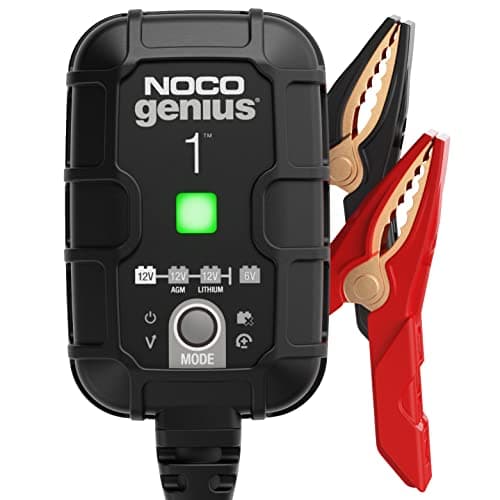
03NOCO NOCO GENIUS1 1A Smart Charger and MaintainerNOCO GENIUS1 1A Smart Charger and MaintainerA car, motorcycle or mower left parked through a cold winterBest for an EV parked for weeks9.3$29.95 - View on Amazon

Scores are ours and editorial. They are never published as review or rating markup, because we have not tested these products - see how we pick.

The answer first

Yes. You jump the 12-volt low-voltage battery, not the drive battery, and a portable 12-volt jump pack is exactly the tool the manufacturer assumes you are using. Tesla’s published procedure for the Model Y says so in as many words: “The following instructions assume you are using an external low voltage power supply (such as a portable jump starter).”

But an EV cannot be used to jump start anything else. Tesla publishes this for every model we checked: “Model Y cannot be used to jump start another vehicle. Doing so can result in damage.” The same sentence appears for the Cybertruck. If you drive an EV, you are not the person in the parking lot who can help — which is itself a reason to carry a pack.

And on a Model 3 or Model Y the procedure depends on which 12-volt battery you have. Tesla publishes: “The procedure for jump starting differs depending on whether the low voltage battery is lead-acid or lithium-ion. To determine which battery your vehicle uses, touch Controls > Software > Additional Vehicle Information.” Look that up now, in the warm, rather than at 6am in a snowstorm.

Why an electric car has a 12-volt battery at all

This is the bit that surprises people. An EV carries a large high-voltage traction battery for driving, and a small, conventional low-voltage battery for everything else: the door locks, the computers, the screens, the contactors that connect the big battery in the first place.

That last item is the whole problem. The small battery is what lets the car connect the big one. When the 12-volt battery dies, a car with nearly a full traction pack can be completely inert — doors locked, screen dark, charging impossible. It is the single most common way an EV strands its owner, and it has nothing to do with range.

Cold makes it worse for exactly the reasons it does on any other car. A lead-acid 12-volt battery loses cranking ability as it cools, and its electrolyte freeze point depends on state of charge. An EV that sits unplugged for weeks in a cold driveway is the textbook case.

What Tesla publishes about jump starting, by model
Published statementModelWhat it means for you
"The following instructions assume you are using an external low voltage power supply (such as a portable jump starter)"Model 3, Model YA 12V jump pack is the expected tool
"cannot be used to jump start another vehicle. Doing so can result in damage"Model Y and Cybertruck, published separatelyYour EV cannot help a stranded neighbor
Procedure differs for lead-acid versus lithium-ion low voltage battery; check Controls > Software > Additional Vehicle InformationModel 3, Model YFind out which you have before you need to know
Lead-acid: built in Shanghai before approximately October 2021, or Fremont before approximately December 2021Model 3, Model YEarlier cars use the battery terminals
Lithium-ion: built after those dates; the HEPA filter bolt serves as the negative jump postModel 3, Model YLater cars use jump posts, not terminals
"use jump cables that are 30 ft. (9 meters) or less in length"CybertruckA long cheap cable can damage the car or the pack
48 V low voltage architecture; functions "may be unavailable or degraded" when supported with less than 30 VCybertruckA 12V pack gets you in, not fully running

The 48-volt wrinkle, and why it is about to matter more

The Cybertruck is the first mass-market vehicle to move its low-voltage system from 12 volts to 48, and Tesla publishes what that means when you arrive with an ordinary jump pack: “Cybertruck uses a 48V low voltage architecture. As a result, some functions may be unavailable or degraded if you are supporting Cybertruck with less than 30V (for example, another vehicle or a 12V portable jump starter).”

It still publishes 12 volts as the minimum that will do something — “use an external power source that is capable of supplying at least 12V” — and for a variable supply it publishes the acceptable windows: “set the supplied voltage to a value between 12V and 16.5V or between 30V and 50V.”

Two further published cautions belong in anyone’s head before they try this. Steering: “It may be more difficult to steer Cybertruck when the vehicle is being supported by an external low voltage power supply.” And the shutdown order: “Shut off the external power supply before removing either cable. Removing the cables while the external power source is active may cause arcing.”

48-volt architectures are coming to more cars because they let manufacturers use thinner wiring. Whatever you buy now, the lesson from the Cybertruck documentation is to read your own car’s published procedure rather than assuming the 12-volt one applies.

The thing an EV jump pack is actually sized for

A jump pack for a gas car is sized by the engine it has to crank — that is why we rank jump starters by engine size rather than by peak amps.

An EV has no starter motor. There is no engine to turn over. All the pack has to do is supply enough current to wake the low-voltage bus so the car can unlock itself, light the screen and close its own contactors.

That inverts the usual advice. The enormous 3,000-amp lithium pack sold for diesel trucks is not the right purchase for an electric car. A compact 12-volt pack is, and the money is better spent on the things that matter in this specific emergency: that it holds charge for months in a cold trunk, that it has a light, and that it can also charge a phone while you read the manual you cannot open on the car’s screen.

That reasoning is ours. The published input behind it is simply that the maker’s own procedure names “a portable jump starter” rather than any amp figure.

Before the morning it happens: three things to do now

1. Find out which 12-volt battery you have. On a Model 3 or Model Y, Controls > Software > Additional Vehicle Information. Lead-acid cars connect to the battery terminals under a maintenance panel; lithium cars use dedicated jump posts, and Tesla publishes that on later cars the HEPA filter bolt serves as the negative post — not something you will deduce in the dark.

2. Learn the mechanical door release and the frunk release. If the 12-volt battery is flat, the electric door handles may not work, and the published procedure starts with “open the hood with no power.” That is a specific, physical sequence in your manual. Read it before you need it.

3. Keep the owner’s manual somewhere that is not the car. On many EVs the manual lives on the center screen, which is dark in exactly the situation where you need it. Save the jump-starting page to your phone.

Two published cautions nobody mentions

Tesla’s documentation carries two warnings that have no analog on a gas car, and both are easy to walk straight into.

The steering goes heavy. Tesla publishes: “It may be more difficult to steer Cybertruck when the vehicle is being supported by an external low voltage power supply. The wheels may not be as responsive to the steering wheel as expected, and extreme caution should be taken when repositioning.” Electric power steering is a low-voltage load, and on external support there is not much to spare. If you are moving the car at all while it is on a jump pack, assume the steering is worse than normal.

Turn the supply off before you unclip anything. Tesla publishes: “Shut off the external power supply before removing either cable. Removing the cables while the external power source is active may cause arcing.” On a gas car you are used to pulling clamps off a running engine. Here the sequence is: power off, then negative cable, then positive.

A third detail that saves a panic: Tesla publishes that after you turn the supply on, it “may take up to two minutes” for the touchscreen to wake and the low-voltage system to become responsive. Two minutes of a dark screen in a cold parking lot feels like failure. It usually is not.

Skip this

What not to do, per the published cautions

Do not use your EV to jump another car. Tesla publishes that the vehicle “cannot be used to jump start another vehicle. Doing so can result in damage.” The DC-DC converter that keeps the 12-volt system topped up is not built to deliver starter-motor current to someone else’s engine.

Do not improvise the connection points. Tesla publishes a specific caution against short circuits: connecting cables to the wrong jump post or touching the leads together “can damage” the car, and on the positive lead, “do not allow the positive cable to contact other metal components, such as the battery tie-down bracket.”

Do not run the car’s accessories while it is on external power. Tesla publishes that using low-voltage components during a jump “may disable low voltage systems and make it necessary to jump start” the car again.

Do not go near the high-voltage system. Nothing on this page concerns the orange cables or the traction pack. That is not a roadside job and never will be.

Which pack, and the cheaper thing that prevents all of it

For an EV, a compact 12-volt lithium pack. It wakes the low-voltage bus, it fits in a glovebox, it holds charge for months, and that is the entire job. Charge it indoors rather than in the car — a lithium cell has a published charging floor around freezing, which is covered on the cold-charging page.

If you would rather it did double duty, the larger Schumacher unit is a jump starter and a power bank in one, which is genuinely useful when the thing you most need is a phone with enough battery to load the manual.

And the preventative, which is cheaper than either: if the EV sits for weeks at a time in a cold driveway, a 1-amp maintainer on the 12-volt battery stops this happening at all. It is the same device, for the same reason, as on any other car that sits — and at this point in the winter it is the most useful thirty dollars in this hub.
The write-ups

Every pick, in full

01 / Best 12V pack for an EVNOCO NOCO Boost Sport GB20 Jump Starter

NOCO

8.1 / 10

The cheapest way into a jump starter that publishes its numbers

NOCO Boost Sport GB20 Jump Starter

The cheapest NOCO, and the published specifications are the reason to think carefully rather than just buy the small one: it is rated for a 4.0 liter gas engine and, in NOCO's own words, is not recommended for diesel at all.

$79.95 - View on Amazon

#ad Price as of October 18, 2026, from Amazon. Prices change. How this site is funded.

What it does well

  • Published engine ratings and watt-hour capacity, which the cheap end of this category does not give you
  • Small enough to live in a glovebox rather than a trunk, which is where it will actually be
  • Same spark-proof, reverse-polarity-protected clamp design as the bigger units

What it does not

  • Diesel is published as Not Recommended - if you drive one, this model is simply not for you
  • 4.0 liters of gas engine is a real ceiling, and a cold V6 at the top of it is asking a lot
  • No published operating temperature range, on a device whose whole job happens in the cold

Skip this one if

You drive a diesel, or anything with a large gas engine. NOCO publishes 'Not Recommended' for diesel on this model, and that is not a hedge worth arguing with.

How it scores, by criterion

Gets you moving7.5
Published data9.0
Engine coverage6.0
Portability9.5
Price8.5
02 / Best if you want a power bank tooSchumacher Schumacher SL1674 4-in-1 Jump Starter and Power Pack

Schumacher

8.5 / 10

Around twice the price of the smaller Schumacher

Schumacher SL1674 4-in-1 Jump Starter and Power Pack

The most stored energy on this page: Schumacher publishes a 37 watt-hour four-cell battery, against 29.6 in its own smaller unit. Capacity is what does the work on the second and third attempt, and because it is the same maker as our top pick, the engine ratings here are directly comparable rather than marketing against a rival's scale.

$108.94 - View on Amazon

#ad Price as of October 18, 2026, from Amazon. Prices change. How this site is funded.

Published specifications for the Schumacher SL1674 4-in-1 Jump Starter and Power Pack, with the source of each
SpecificationPublished valueWhere it is published
Peak current1500 ASchumacher SL1674 4-in-1 Lithium Jump Starter and Portable Power Pack - published product page (1500 A peak, 8.0 L gas / 4.5 L diesel, 37 Wh, IP65)
Gas engine ratingUp to 8.0 litersSchumacher SL1674 4-in-1 Lithium Jump Starter and Portable Power Pack - published product page (1500 A peak, 8.0 L gas / 4.5 L diesel, 37 Wh, IP65)
Diesel engine ratingUp to 4.5 litersSchumacher SL1674 4-in-1 Lithium Jump Starter and Portable Power Pack - published product page (1500 A peak, 8.0 L gas / 4.5 L diesel, 37 Wh, IP65)
Internal battery37 Wh four-cell lithium-ion polymerSchumacher SL1674 4-in-1 Lithium Jump Starter and Portable Power Pack - published product page (1500 A peak, 8.0 L gas / 4.5 L diesel, 37 Wh, IP65)
Ingress protectionIP65Schumacher SL1674 4-in-1 Lithium Jump Starter and Portable Power Pack - published product page (1500 A peak, 8.0 L gas / 4.5 L diesel, 37 Wh, IP65)
Recharge time4-5 hoursSchumacher SL1674 4-in-1 Lithium Jump Starter and Portable Power Pack - published product page (1500 A peak, 8.0 L gas / 4.5 L diesel, 37 Wh, IP65)
Weight1.99 lbSchumacher SL1674 4-in-1 Lithium Jump Starter and Portable Power Pack - published product page (1500 A peak, 8.0 L gas / 4.5 L diesel, 37 Wh, IP65)
ProtectionReverse polarity and overload protectionSchumacher SL1674 4-in-1 Lithium Jump Starter and Portable Power Pack - published product page (1500 A peak, 8.0 L gas / 4.5 L diesel, 37 Wh, IP65)
Warranty2 year limitedSchumacher SL1674 4-in-1 Lithium Jump Starter and Portable Power Pack - published product page (1500 A peak, 8.0 L gas / 4.5 L diesel, 37 Wh, IP65)
Operating temperature rangeNot published by the manufacturerSchumacher SL1674 4-in-1 Lithium Jump Starter and Portable Power Pack - published product page (1500 A peak, 8.0 L gas / 4.5 L diesel, 37 Wh, IP65)

What it does well

  • 37 Wh is the most stored energy here, and stored energy is what survives repeated attempts
  • Published for 8.0 liters of gas and 4.5 of diesel, on the same scale as our top pick
  • IP65 rating and a published 2-year warranty, both of which the smaller unit lacks

What it does not

  • Roughly twice the price of the smaller Schumacher for headroom most drivers never use
  • The wireless charging pad is cabin-gadget value, not jump-starting value
  • No published operating temperature range, which is the figure a cold-start buyer most wants

Skip this one if

Your car is a normal gas hatchback or sedan. You are paying for headroom and a wireless charging pad you will not use.

How it scores, by criterion

Gets you moving9.5
Published data9.5
Engine coverage9.5
Portability7.5
Price5.5
03 / Best for an EV parked for weeksNOCO NOCO GENIUS1 1A Smart Charger and Maintainer

NOCO

9.3 / 10

Roughly $25-$35

NOCO GENIUS1 1A Smart Charger and Maintainer

The published operating range is the reason this is the pick: NOCO rates it from -4 F to 104 F, which is the only spec on this page that speaks to whether the thing works in an unheated garage in January. Most rivals simply do not publish one.

$29.95 - View on Amazon

#ad Price as of October 18, 2026, from Amazon. Prices change. How this site is funded.

Published specifications for the NOCO GENIUS1 1A Smart Charger and Maintainer, with the source of each
SpecificationPublished valueWhere it is published
Charging current1 A DCNOCO GENIUS1 specification sheet
Voltages6 V and 12 VNOCO GENIUS1 specification sheet
Operating temperature-4 F to 104 F (-20 C to 40 C)NOCO GENIUS1 specification sheet
Battery capacity rangeUp to 30 Ah, maintains all battery sizesNOCO GENIUS1 specification sheet
Power consumption15 W maximumNOCO GENIUS1 specification sheet
ChemistriesWet, gel, MF, CA, EFB, AGM and lithiumNOCO GENIUS1 specification sheet

The arithmetic

About 4 cents a night to run, against a battery that costs $200 to replace.

NOCO publishes 15 W maximum consumption, and a maintainer draws far less than that once a battery is topped up. Even at the full 15 W for 8 hours that is 0.12 kWh, and at the U.S. average residential rate of 18.34 cents per kWh (EIA Electric Power Monthly, June 2026) it costs about 2.2 cents. Over a 120-night winter the worst case is roughly $2.64.

What it does well

  • Publishes a cold operating limit, which is the spec that decides winter suitability
  • Handles AGM and lithium as well as flooded lead-acid
  • Small enough to leave permanently zip-tied in an engine bay

What it does not

  • 1 amp is slow if you are trying to recover rather than maintain
  • The clamps are small; the ring-terminal lead is the better way to leave it connected
  • Status lights need a manual to interpret confidently

Skip this one if

You need to recover a flat battery quickly. At 1 amp this is a maintainer, and a genuinely dead battery takes it more than a day.

How it scores, by criterion

Cold-weather rating10.0
Published data10.0
Recovery speed5.0
Chemistry support9.5
Price8.5

How this was ranked

Every site in this category says it tested twenty of these. We have not tested any, and we say so. What we did instead: built the candidate set from what Amazon actually stocks, compiled the published specifications from each manufacturer’s own pages, did the arithmetic on running cost and on what the thing prevents, and read owner reviews for failure patterns rather than star averages. Every number on this page has a link to where it was published, so you can check the work.

Units we claim to have tested
0
Sponsored placements
0
Free products accepted
0

The full method, including what we refuse to claim

Questions people actually ask

Frequently asked

Can you jump start an electric car?

Yes — the 12-volt low-voltage battery, not the drive battery. Tesla’s published procedure says the instructions “assume you are using an external low voltage power supply (such as a portable jump starter).” On a Model 3 or Model Y the exact steps depend on whether the low-voltage battery is lead-acid or lithium-ion, which you check under Controls > Software > Additional Vehicle Information.

Can an EV jump start another car?

No. Tesla publishes it directly for both the Model Y and the Cybertruck: the vehicle “cannot be used to jump start another vehicle. Doing so can result in damage.” The DC-DC converter that maintains the 12-volt system is not designed to supply starter-motor current to a second vehicle.

Does an EV need a jump starter in the trunk?

It is a better argument than for a gas car, because a flat 12-volt battery in an EV can leave you locked out of a vehicle with a nearly full traction pack, and because you cannot borrow a jump from another EV. A compact 12-volt pack is enough — there is no engine to crank, so the big high-amp units sold for diesel trucks are the wrong purchase.

Why does an electric car have a 12V battery?

To run the locks, computers, lights and screens, and to close the contactors that connect the high-voltage traction battery. That last function is why a dead 12-volt battery can immobilize a fully charged EV: the car cannot connect its own main battery without it.

What size jump starter do I need for an EV?

Small. There is no starter motor to turn, so peak amps are close to irrelevant; the pack only has to wake the low-voltage bus. Prioritize self-discharge over months in a cold trunk, a work light, and a USB output for the phone you will be reading the manual on. The exception is a 48-volt vehicle such as the Cybertruck, where Tesla publishes that functions may be degraded on less than 30 V.

Can you jump start a Tesla with another car?

Tesla’s published instructions assume a portable low-voltage supply and add: “If jump starting Model Y using another vehicle, refer to that vehicle manufacturer’s instructions.” For the Cybertruck it publishes 12 V as the minimum useful supply while noting that below 30 V some functions are degraded. The reverse — using the Tesla to start someone else — is published as not possible.

Do electric cars need a block heater?

No — there is no engine block, no engine oil to thicken and no compression start to assist. An EV in the cold loses range to battery chemistry and cabin heating instead, and the equivalent move is preconditioning while still plugged in. The block heater question applies to combustion engines.

Sources

Read next