The number on the box is the wrong number
Every jump starter listing leads with peak amps. It is a large, impressive, unregulated figure, and shopping on it is how people end up with a unit that cannot start their car.
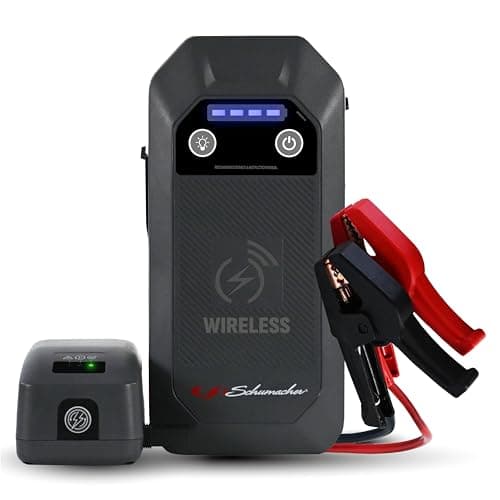
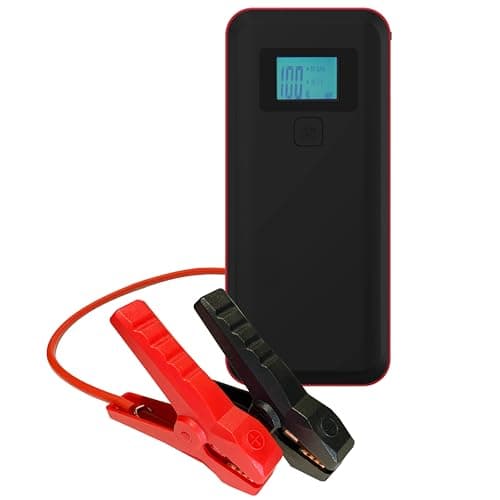
Here is the evidence, from one maker’s own published figures. Schumacher rates the SL1639 at 1000 peak amps and the SL1674 at 1500 — half again as much. Yet it publishes the same 8.0 liter gas engine rating for both. Fifty percent more peak amps, no additional published engine capability, and roughly twice the price.
That does not mean the cheap one is secretly better. It means something more useful: these ratings are declared by each manufacturer with no common test standard behind them, so they do not compare across brands at all. Within one brand they are genuinely informative — NOCO’s own range runs 4.0, then 7.0 liters of gas as you go up it, and that ordering tells you something real. Across brands, treat them as a bracket, never as a ranking.
How we judged these
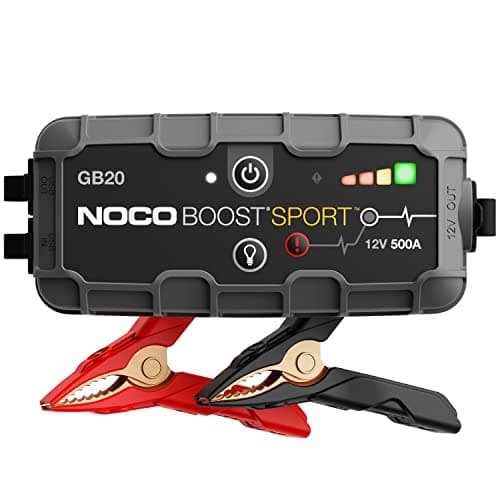
1. Engine displacement rating, first. It is the only published figure that maps to your actual car. NOCO states a gas rating and a diesel rating for each model, and on the GB20 the diesel entry reads “Not Recommended” — which is a manufacturer telling you, in writing, not to buy it for that job.
2. Watt-hours, second. This is the one figure on the page that does compare across brands, because a watt-hour is a physical unit rather than a marketing one. Stored energy is what survives repeated cranking: peak amps describes an instant, watt-hours describe how many instants you get. Here that runs 24 Wh on the GB20, 29.6 on the SL1639 and 37 on the SL1674.
3. What the maker refuses to publish. And here every unit on this page fails the same test, so it is worth saying plainly: none of them publishes an operating temperature range. On a device whose entire purpose happens on a freezing morning, and on a site that ranks battery maintainers largely on their published cold rating, that is a real gap. Lithium cells deliver less when cold. The makers know this and none of them puts a number on it.
4. Ingress protection. All three publish IP65, which matters for a device used at the roadside in weather rather than in a workshop.
What each maker publishes - note that the engine ratings are not cross-comparable | Schumacher SL1639 | NOCO GB20 | Schumacher SL1674 |
|---|
| Peak current | 1000 A | 500 A | 1500 A |
|---|
| Gas engine rating | Up to 8.0 L | Up to 4.0 L | Up to 8.0 L |
|---|
| Diesel engine rating | Up to 6.0 L | Not Recommended | Up to 4.5 L |
|---|
| Internal battery | 29.6 Wh | 24 Wh | 37 Wh |
|---|
| Ingress protection | Not published | IP65 | IP65 |
|---|
| Operating temperature range | Not published | Not published | Not published |
|---|
What it is actually competing against
A jump starter is not a value purchase in the way most things on this site are, and it would be dishonest to pretend the arithmetic is tidy. It does not prevent anything. It rescues you after the thing has already happened.
The comparison is against a roadside call-out, which you pay once and remember, and against the hour or three of waiting for one in weather. Against that, a two-figure device in the trunk is easy to justify — particularly for anyone who parks where nobody will be along with jumper cables.
But the honest ordering is this: a maintainer is the better purchase first. NOCO publishes a 15 W maximum draw for the GENIUS1, which even run flat out for a 120-day winter is about $7.92 at the U.S. average residential rate of 18.34 cents per kWh (EIA, June 2026). That prevents the flat battery. The jump starter handles the morning the prevention was not in place, or the battery finally aged out.
Both, if you can. The maintainer first, if you cannot. We separate those two jobs in full here.
Skip this
Skip the 8000-amp unit that costs less than dinner
Search this category and you will find units advertising 6000 or 8000 peak amps for under sixty dollars — numbers several times what an established maker claims for a device costing three times as much.
We are not going to make a claim about what those units can or cannot do, because we have not tested them and nobody has published figures we could check. That is exactly the point. What we can say is what is disclosed: NOCO publishes a peak amp figure and a watt-hour capacity and a gas engine displacement rating and a diesel rating and an IP rating. Schumacher publishes four of those five for the SL1639 and no ingress rating, which we mark as unpublished on its entry. The sub-sixty-dollar units we found publish a peak amp number and little else.
You cannot compare a disclosed specification with an undisclosed one, and a peak-amp figure with no capacity behind it is not a specification — it is a headline. Buy from whoever will tell you what is inside the box.
The air compressor question
A lot of people search for a jump starter with a built-in tire inflator, and it is a reasonable thing to want: the two roadside problems arrive from the same kind of morning, and one device in the trunk beats two.
The honest position is that the combination units split sharply. The ones from makers that publish full specifications sit at roughly triple the price of a plain jump starter of similar capability. The cheap ones are the same undisclosed-specification units as above, now with a compressor attached and a second headline number.
If you want both functions, our suggestion is to buy them separately rather than reaching for the cheap combo: a jump starter whose numbers you can check, and a separate inflator. It is two things in the trunk instead of one, and it is the version where you know what you bought. The inflators we would pair with one are ranked on the same basis: what the maker is willing to publish.
Living with it, which is where most of these fail
Charge it before the season, and again mid-winter. A lithium jump starter self-discharges on the shelf. The classic failure in this category is not the device being too small — it is the device being flat on the morning you finally need it, eighteen months after you bought it and put it in the trunk.
Think about where it lives. Lithium cells deliver less when cold, and none of these publishes a figure for how much. A unit stored in a freezing trunk all winter is being asked to perform at its worst exactly when you need it at its best. Indoors, or in the cabin, is measurably better treatment even if nobody will put a number on how much better.
Do not use it to keep a dying battery going. This is the real trap. A jump starter makes it possible to keep restarting a battery that should have been replaced in October, right up until the morning it strands you somewhere worse. A battery that cranks slowly in the cold is telling you something, and the jump pack is not the answer to it.
What we would buy
For an ordinary gas car: the Schumacher SL1639. It is the cheapest unit here, it publishes both of the figures that decide this purchase, and 29.6 watt-hours is more stored energy than the smaller NOCO carries. The trade is that Schumacher publishes no ingress rating where NOCO publishes IP65, and this is a device used at the roadside in weather.
For a small gas engine, a bike or a mower: the GB20, and note the ceiling rather than discovering it. Published to 4.0 liters of gas, published as not recommended for diesel at all, and the smallest of the three to actually carry.
For an electric car, the sizing logic on this page does not apply at all: there is no engine to crank, so peak amps stop mattering and the pack only has to wake the 12-volt system. What the manufacturers publish about jump starting an EV is a separate page, including the detail that an EV cannot be used to jump start anyone else.
For a diesel or a large gas engine: the SL1674, which carries the most stored energy here at 37 watt-hours and adds an IP65 rating and a published two-year warranty that the cheaper Schumacher does not have. Published to 4.5 liters of diesel and 8.0 of gas — and because it comes from the same maker as our top pick, those two engine ratings are directly comparable with each other.
And in every case, the thing that stops you needing it is the cheaper purchase. The maintainer roundup is here, and a maintainer is the item we would buy first for any car that sits.