What ends up back there in winter
The cargo floor is the part of a car that gets the worst of winter and the least attention. A snow shovel goes in wet. Boots come off and go in the back. Grocery bags arrive coated in whatever the parking lot was salted with. Then the car sits in a warm garage and all of it melts at once.
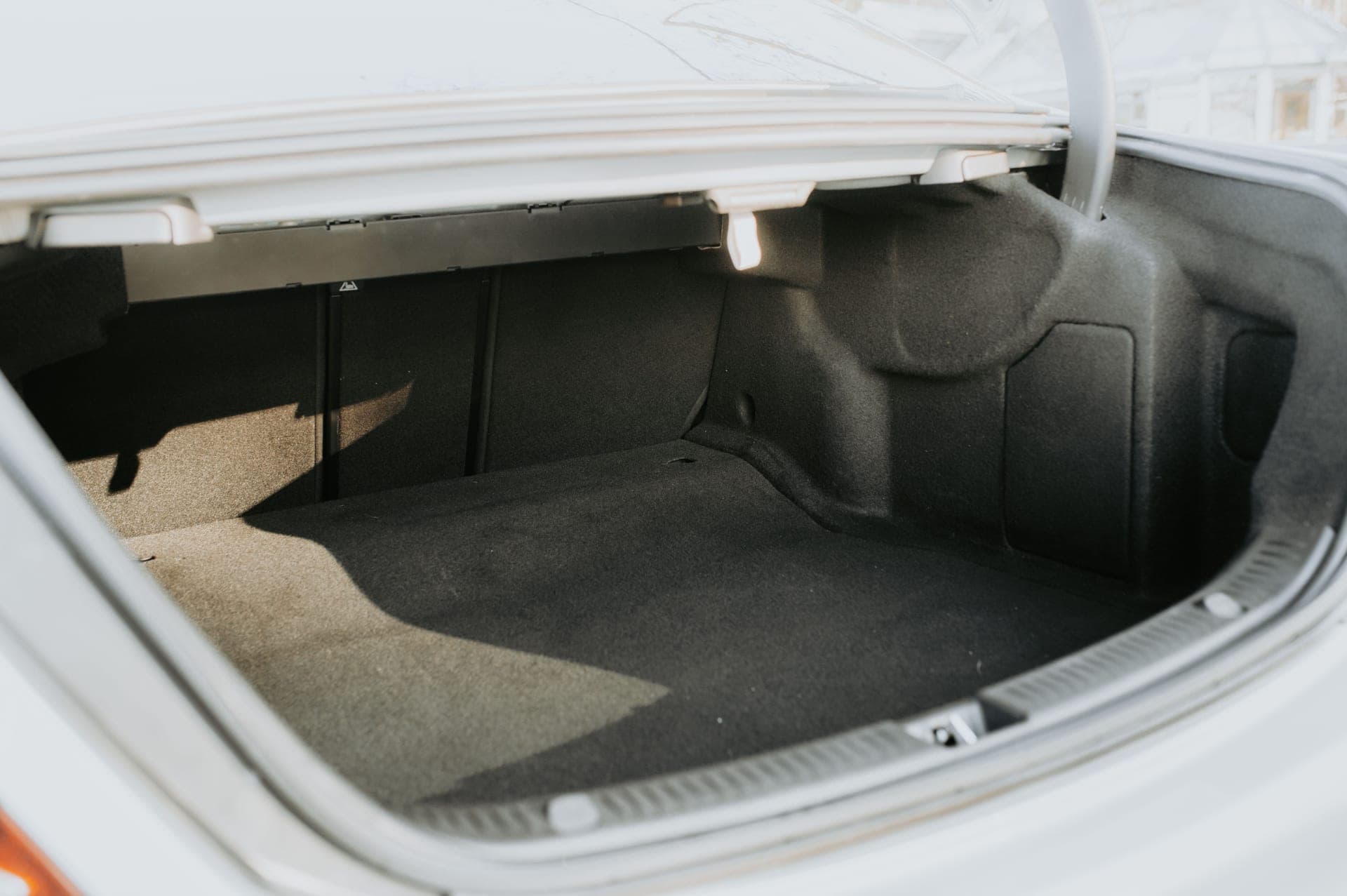
Underneath that carpet is a steel floor, usually with a spare wheel well and drain plugs in the lowest part of it. Water that gets past the carpet collects exactly there, and the well is the last place anyone looks until something smells.
So the job of a cargo liner is not tidiness. It is to keep melt and brine in something you can lift out and empty.
How we judged these
1. Containment. Does it have a raised lip that holds liquid, or is it a flat sheet that only redirects it? This is the single biggest difference between the products here.
2. Fitment, and the traps in it. Molded liners are cut per vehicle and per configuration, and modern crossovers have more configurations than people expect.
3. What happens when it is full. A tray with two gallons of slush in it has to come out without tipping into the bumper. An absorbent mat has to dry before it can be put back.
4. Whether it survives the next car. A molded liner is worth more while you own the vehicle and nothing afterward. A universal mat is the opposite.
The fitment trap on modern crossovers
Cargo liners are not just cut per model. They are cut per cargo floor position, and a lot of current crossovers have a two-height floor that slides or flips between an upper and lower setting.
Husky publishes its CR-V cargo liner for the 2023-2025 CR-V including hybrid models, specifically with the adjustable cargo floor in the upper position. On a vehicle like that, the liner you buy assumes a floor height, and if you keep the floor in the other position the fit is wrong in a way no photograph shows.
The same applies to third-row vehicles, where liners are published "behind 2nd row" or "behind 3rd row" and the two are completely different products. Read the configuration line, not just the model year.
Which type suits what you carry| What lives in your trunk | What to buy | Why |
|---|
| Wet boots, snow gear, a shovel | Molded tray with raised edges | Melt has somewhere to pool that is not the carpet |
|---|
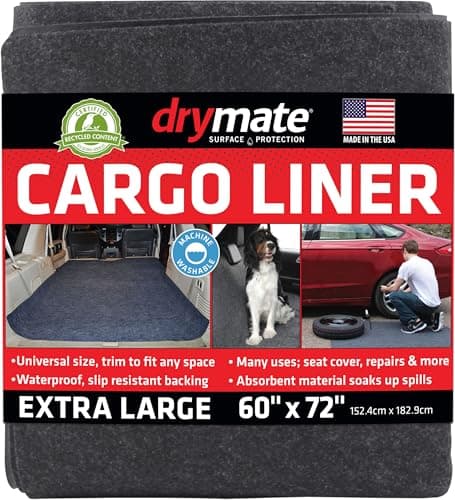
| Groceries and the occasional wet bag | Absorbent universal mat | Soaks up drips, costs a fraction, trims to fit |
|---|
| A dog that swims, or anything that spills liters | Molded tray, and check the lip height | Absorbency has a capacity; walls do not |
|---|
| Tools and sharp gear | Molded tray | Punctured absorbent fabric stops being waterproof |
|---|
| You change cars often | Universal mat | A molded liner is worth nothing on the next vehicle |
|---|
Where the water actually goes
A pair of winter boots and a coat can carry a surprising amount of snow into a car — enough that you can watch it pool on a rubber tray after twenty minutes in a heated garage.
On carpet, that same melt does not sit on top. It goes into the padding, which is designed to absorb, and then into the lowest part of the floor pan: the spare wheel well. A well with a plugged drain holds it against bare metal for weeks.
That is the whole argument for a tray with a lip rather than a mat that lies flat. It is also why we would rather see a cheap tray than an expensive flat mat on a car that carries wet gear all winter.
Skip this
Skip the liner if the leak is already there
If your cargo carpet is damp and you have not been carrying anything wet, a liner will hide the symptom rather than fix it. Tailgate seals perish, tail light gaskets leak, and on hatchbacks the upper corners of the tailgate are a common path for water.
Pull the carpet and the spare wheel cover once at the start of winter and look. If there is standing water in the well, find the leak first, dry the well properly, and then line it. A wet trunk is also one of the reasons a car fogs up, because that water evaporates into the cabin every time you run the heater.
Living with each type
Molded trays are rigid, which is what makes them hold liquid, and also what makes them awkward. A full one has to come out level. They wipe clean in seconds and go back in one piece, and they are the only option here that meaningfully protects the seat backs when you brake with a wet load.
Absorbent mats are the opposite trade. They soak up what lands on them, which is genuinely better for damp gear and groceries than a tray of sloshing water. But absorbency has a limit, they need to dry out, and a wet mat left in a cold trunk stays wet for days — which puts the moisture right back into the car.
The compromise we would actually make: a molded tray in the vehicle, and a cheap absorbent mat folded on top of it for the weeks when the gear is soaked. The tray handles the volume, the mat handles the drips, and you can take the mat inside to dry.
What we would buy
If you carry wet gear all winter: a molded per-vehicle tray with raised edges, bought against your exact cargo configuration. It is the most expensive option and the only one that turns melt into something you tip out.
If you want per-vehicle fit for less: the Husky, which is cut for the same vehicles at a lower price with a more flexible tray. More flexible means easier to lift out and slightly less composed when it is full.
If the car changes or the budget is tight: an absorbent universal mat you trim yourself. It will not stop a spill, but it will stop a winter of drips reaching the padding, and it moves to your next vehicle.
And check the floor position before you order. On a crossover with an adjustable cargo floor, that one line in the fitment text decides whether the liner sits flat or rocks.