WeatherTech vs Husky Liners vs a $25 universal set
Between the two premium liners the difference is stiffness, not quality. The interesting comparison is against the cheap set neither of them wants you to consider.
Heads up: the buy links on this page are affiliate links. If you buy through one, we earn a commission at no extra cost to you. It does not change what we recommend or the order we rank things in - here is how we keep those separate.
The three-way table
| WeatherTech FloorLiner | Husky X-act Contour | Universal rubber set | |
|---|---|---|---|
| Price per row | $120 to $200 | $110 to $180 | $20 to $35 for four mats |
| Fit | Vehicle-specific, digitally measured | Vehicle-specific, contoured | Trim to fit |
| Walls | Yes, rigid | Yes, softer | No |
| Underfoot feel | Firm and slightly noisy | Softer, quieter, warmer | Thin |
| Lifting out full of slush | Holds its shape - easiest | Flexes a little | Not applicable |
| Cold flexibility | Rigid by design; unpublished figure | Better; unpublished figure | Stiffens noticeably |
| Model coverage | Very broad, including older cars | Broad, thinner on older and rarer models | Everything |
WeatherTech vs Husky: it is stiffness
These two are close enough that most comparisons resort to brand loyalty. The genuine, describable difference is material stiffness, and it produces a consistent set of consequences in both directions.
The rigid liner holds its shape when you lift it out full of slush, which is the moment you appreciate it most. It is firmer and slightly noisier underfoot, and it feels colder to stand on.
The softer liner is quieter and more pleasant underfoot, and it flexes when you carry it out loaded, which is mildly annoying and occasionally messy. Its compound stays more pliable in deep cold, which matters in a car parked outside at 0 F.
Neither publishes a low-temperature flexibility figure, so we are describing observable material behavior rather than quoting a specification, and we say so on both product entries rather than inventing one.
The comparison that actually matters
Both premium liners against the $25 universal set. This is the question people are really asking when they search for a brand comparison, and the answer is more interesting than the brand one.
Cost per winter
Universal set: $25, replaced every two winters as the compound hardens and curls = $12.50 a winter.
Premium liner, front row: $150, lasting the life of the car. Over eight winters that is $18.75 a winter. Over four, $37.50.
On a car you keep a long time, the gap narrows to almost nothing. On a car you will sell in three years, the cheap set is straightforwardly better value, and the next owner gets carpet that has not been soaked either way.
What the extra money genuinely buys
- Walls. Containment of a real volume of snow rather than a wet day. This is the functional difference.
- Exact fit. No gaps at the edges where water escapes, and no trimming step to get wrong.
- Factory anchoring. The liner uses your car’s floor hooks, which is both more secure and one fewer thing to source. The dealer set does the same thing, and what it really charges you for is the fitment lookup and the warranty.
- A compound that behaves in the cold. Unquantified by anyone, but consistently observable.
Skip this
Skip the second and third rows on the first purchase
The driver’s footwell takes the overwhelming majority of the water, because the driver gets in every single time and everyone else does not. Buying a full three-row set at once triples the spend to protect footwells that may never get wet.
Buy the front row. Look at the back in March. Add it if the carpet back there shows anything at all.
One more fork if you have landed on WeatherTech: the brand now sells two liners, and they are made of different polymers. The rigid FloorLiner against the softer FloorLiner HP matters for a salted winter, because WeatherTech publishes that the HP “may show more wear in high-traffic areas”.
Our actual recommendation
For most people in most winters: vehicle-specific flat mats, which sit between these three options and are the pick in the main roundup. Correct shapes and real channel depth at roughly half the liner price.
Step up to a liner if you get heavy snow or intend to keep the car. Step down to the universal set if the budget is genuinely tight — an anchored $25 mat beats no mat by a very large margin, and that is the comparison that actually decides whether your floor pan rusts.
What to buy, given all that
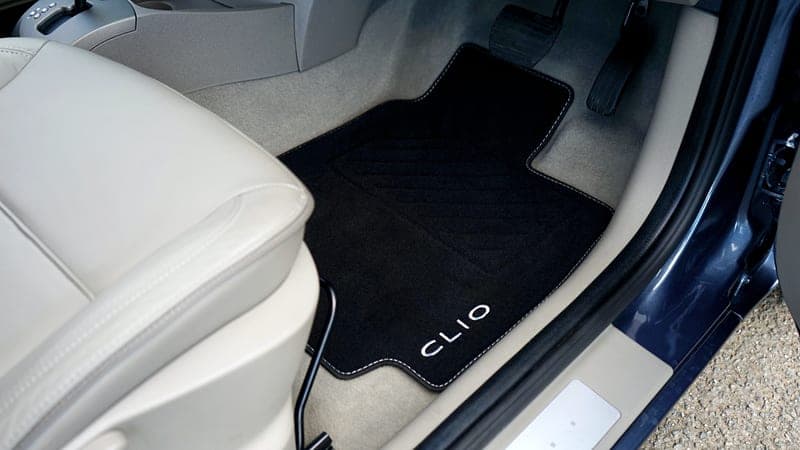
WeatherTech
WeatherTech FloorLiner
Roughly $120-$200 a row
A laser-measured, vehicle-specific liner with walls that run up the sides of the footwell. The walls are what you are paying for: they hold slush and salt solution where a flat mat lets it run off onto the carpet edges.
Skip it if: Your budget is the reason you are here. This is three to four times the price of a universal rubber mat that catches most of the same water.
#ad We hold no verified live price for this product, so we show none. How this site is funded.
Husky Liners
Husky Liners X-act Contour Floor Liners
Roughly $110-$180 a row
The main rival to the WeatherTech liner, and softer underfoot. The trade is straightforward: a more pliable compound is quieter and warmer to stand on, and slightly less rigid when you lift a full liner out of the car.
Skip it if: You want the most rigid tray possible for lifting out full of slush.
#ad We hold no verified live price for this product, so we show none. How this site is funded.
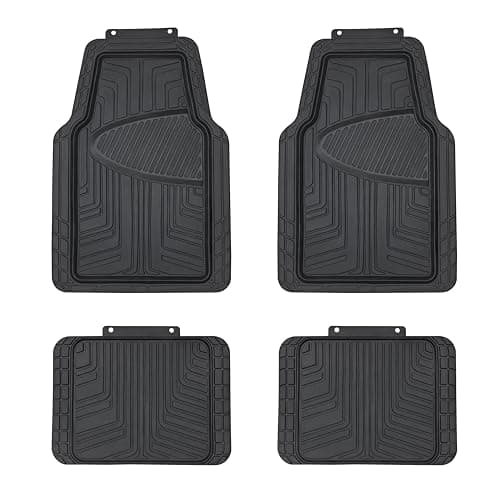
Amazon Basics
Amazon Basics 4-Piece All-Season Floor Mats
Roughly $20-$30 a set
The cheapest way to get something washable under all four sets of boots. It is a flat trim-to-fit mat, so it holds less water than a molded liner and it will never fit like one - but the salt ends up on the mat instead of the carpet, which is the entire job.
Skip it if: You want the driver's footwell done properly. A universal mat trimmed with scissors does not engage the factory retention posts, and that is the one footwell where it matters.
#ad Price as of October 18, 2026, from Amazon. Prices change. How this site is funded.
How this was ranked
Every site in this category says it tested twenty of these. We have not tested any, and we say so. What we did instead: built the candidate set from what Amazon actually stocks, compiled the published specifications from each manufacturer’s own pages, did the arithmetic on running cost and on what the thing prevents, and read owner reviews for failure patterns rather than star averages. Every number on this page has a link to where it was published, so you can check the work.
- Units we claim to have tested
- 0
- Sponsored placements
- 0
- Free products accepted
- 0
Frequently asked
Is WeatherTech or Husky better?
They are close, and the describable difference is stiffness. WeatherTech is more rigid, which makes it easier to lift out loaded and firmer underfoot. Husky is softer, quieter and warmer to stand on, and flexes a little when carried full. Both contain water well. Neither publishes a cold-flexibility figure.
Are WeatherTech mats worth the price?
On a car you keep for years, the cost per winter lands close to a cheap set replaced every other season, and you get walls, exact fit and factory anchoring. On a car you will sell in three years, a universal set at a fraction of the price protects the carpet adequately.
What is the cheapest way to protect car carpet in winter?
A universal rubber mat set for about $25, trimmed to fit with the factory mat as a template and anchored to the floor hooks. It puts a waterproof barrier between wet boots and the carpet padding, which is the mechanism that causes floor-pan corrosion.
Do I need floor liners in all three rows?
Almost never on the first purchase. The driver’s footwell takes the great majority of the water because the driver gets in every time. Buy the front row, check the rear carpet at the end of the season, and add rows only where there is evidence they are getting wet.