Start with the trap, because it costs people a return
The RAV4 is sold as a gas car, a hybrid and a plug-in hybrid, and the floorpan is not identical across them. That has a direct consequence on the shelf, and the makers publish it plainly.
Husky Liners publishes its WeatherBeater floor mats for the 2019-2025 RAV4 with the explicit note that they do not fit Hybrid models, and its cargo liner for the same span excludes the plug-in hybrid and specifies a second-row bench seat. WeatherTech publishes its FloorLiner HP fitment for the 2019-2025 RAV4 and the 2019-2025 RAV4 Hybrid, along with the 2021-2024 RAV4 Prime.
If you drive a RAV4 Hybrid — and a large share of RAV4s on the road now are hybrids — that difference decides the purchase before any question of material or edge height. Check the fitment note on the listing against your exact powertrain, not just the model year.
Published RAV4 fitment, as stated by the makers| Range | Published RAV4 coverage | Hybrid? |
|---|
| WeatherTech FloorLiner HP | 2019-2025 RAV4, 2019-2025 RAV4 Hybrid, 2021-2024 RAV4 Prime; also 2013-2018 RAV4 | Yes, published for the Hybrid and the Prime |
|---|
| Husky WeatherBeater floor mats | 2019-2025 RAV4 | No - published as not fitting Hybrid models |
|---|
| Husky WeatherBeater cargo liner | 2019-2025 RAV4 with a 2nd row bench seat | Excludes the plug-in hybrid |
|---|
| Universal trim-to-fit rubber mats | Any RAV4, with scissors | Irrelevant - but so is the fit |
|---|
Fitment data changes as makers add and drop applications. What is above is what they published when we checked; the listing you are about to buy from is the version that matters, and it is worth thirty seconds.
Which generation are you buying for?
The RAV4 has had two relevant redesigns for this purpose. The 2013-2018 car and the 2019-onward car have different footwells, and liners are published separately for each. If you are shopping a used RAV4 and are not certain, the model year on the door jamb sticker is the number to trust rather than the year you bought it.
There is one more RAV4-specific thing worth knowing: like every modern Toyota, it has retention hooks in the driver’s footwell, and any mat that goes in there must engage them. That is not a preference. NHTSA’s guidance on floor mats and pedal entrapment exists because an unsecured mat can slide forward and trap the accelerator, and the driver’s side is where that happens. A liner that does not use the factory posts, or a universal mat laid on top of the original, is the specific configuration to avoid.
What the mat is actually protecting
The visible problem is a dirty carpet. The expensive problem is underneath it. Road salt solution runs off your boots into the footwell, soaks into the carpet padding, and stays there — padding is designed to absorb sound, which means it is good at holding liquid against the floor pan for weeks.
What that produces is corrosion working outward from the inside of the pan, where nobody looks and no underbody wash reaches. By the time it is visible from below it is structural rather than cosmetic, and on a unibody crossover a rusted floor pan is body-shop work rather than a part.
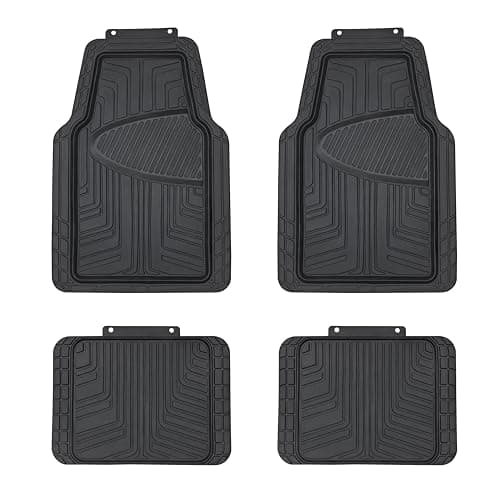
A set of molded liners is a two-figure purchase that keeps the brine in a tray you tip out in the driveway. That is the entire case, and it is why we rank liners above flat mats on a vehicle that lives somewhere with salted roads.
Liner or mat, for this vehicle specifically
A liner is molded to the footwell with raised walls, so meltwater is contained rather than running to the edges. A mat is a flat tray with a low lip. On a RAV4 the practical difference shows up in the driver’s footwell, which is where the majority of the water arrives and where the carpet meets the sill.
Our general advice is in the mats versus liners comparison, and the short version applies cleanly here: if you park outside in a salted region, buy liners; if you are in a mild climate and mostly want to keep the carpet clean, mats are enough and cost a good deal less.
The brand comparison is in WeatherTech versus Husky versus budget. For a RAV4 the ranking on this page is driven mostly by published fitment breadth rather than by material, because the material differences between the two established brands are smaller than the difference between a liner that fits your Hybrid and one that does not.
Skip this
Skip stacking a new mat on top of the factory carpet mat
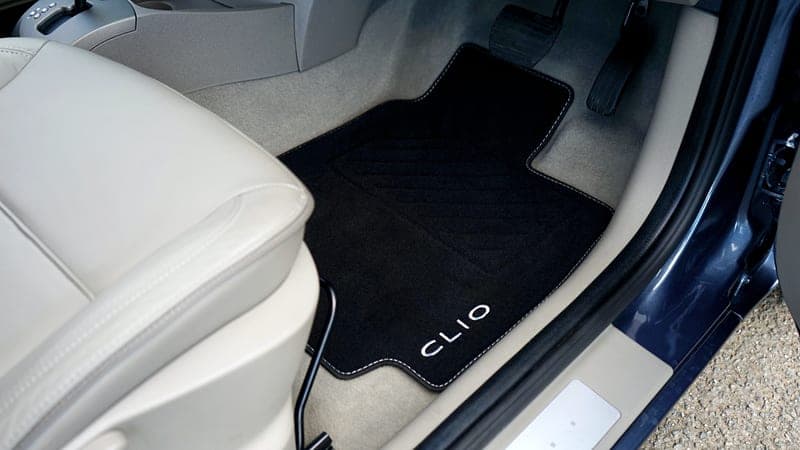
It is the cheapest thing you can do and it is the one configuration actively warned against. A mat placed on top of another mat cannot engage the retention posts, and the stack can slide forward as a unit into the pedals. Remove the original mat and secure the new one to the factory hooks.
The same applies to trim-to-fit universal mats cut roughly to shape. They are fine in the rear footwells, where nothing is at stake beyond carpet. In the driver’s footwell of a RAV4, buy the fitted item.
Do the cargo area too, if you carry anything wet
The RAV4’s cargo floor has the same carpet-and-padding construction as the footwells and takes the same abuse from wet boots, snow-covered bags and salted grocery runs. A cargo liner is published separately from the floor set and is the item most people skip.
Note the seat-configuration caveat again: Husky publishes its RAV4 cargo liner for vehicles with a second-row bench and excludes the plug-in hybrid. Cargo fitment is fussier than footwell fitment because the floor shape changes with battery packaging and seat folding hardware. The cargo liners themselves are ranked here, including the adjustable-floor trap on newer crossovers.
Living with them through a winter
Take them out and empty them. A liner that has been holding an inch of brine for a month is not protecting anything — it is a reservoir sitting on the carpet you were protecting, and the seal around its edge is not designed to be watertight from below.
Rinse rather than scrub, and keep them out of direct heat while they dry. The cleaning method that does not cloud the surface is here, and if yours are moving around, that is a fixable problem and a safety one.
One RAV4-specific habit worth forming: check under the driver’s liner in about March. If the carpet under it is damp, water is getting in around the edge rather than being caught by it, and that is worth knowing before another winter rather than after one.