Is a garage heater worth it?
It depends almost entirely on two things nobody asks first: whether your garage is sealed, and what your panel can actually deliver. Both can make the answer no.
Heads up: the buy links on this page are affiliate links. If you buy through one, we earn a commission at no extra cost to you. It does not change what we recommend or the order we rank things in - here is how we keep those separate.
The short answer
A garage heater is worth it if you use the garage as a room — working, wrenching, standing about in it for an hour or more at a time — and the space is sealed enough to hold the heat you pay for. It is not worth it if you want the car to be warm in the morning, because it will not be, and it is not worth it in a garage you can see daylight under.
That is the whole answer. Everything below is the arithmetic behind it, because this is a purchase people regret on running cost rather than on the heater itself.
What it costs to run, with the inputs shown
Cost per hour, computed
Electric resistance heating is essentially 100 percent efficient, so the cost is just the wattage and your rate. A 5,600 W 240-volt shop heater at the U.S. average residential rate of 18.34 cents per kWh (EIA, June 2026) costs 5.6 × 0.1834 = $1.03 an hour at full output.
A 1,500 W plug-in unit — the largest thing a standard 120-volt outlet will carry — costs 1.5 × 0.1834 = 28 cents an hour. That is the honest trade: the affordable-to-run one is also the one that will struggle to lift a two-car garage more than a few degrees.
Two hours a weekend for a 20-week winter is 40 hours: about $41 on the big electric heater, about $11 on the small one. Use it two hours a day instead, five days a week, and the big heater is roughly $206 a winter. Neither of those is ruinous. The number that ruins people is the one below.
The cost that is not on the box
Every genuinely capable electric shop heater runs on 240 volts. The Dr. Infrared DR-988A publishes 4,800 W at 208 V or 5,600 W at 240 V and ships with a NEMA 6-30P plug, which needs a dedicated 30-amp 240-volt outlet. Most domestic garages do not have one.
Running that circuit is an electrician’s visit, and it frequently costs more than the heater. That is the line item that turns a hundred-and-something-dollar purchase into a project, and it is the single most common reason people conclude a garage heater was not worth it. Check what is actually on the wall before you check prices.
Propane sidesteps the electrical question entirely and brings its own: combustion needs ventilation, and it puts water vapor into the space, which in a garage full of steel tools is not a neutral side effect. We compute electric against propane with both formulas shown rather than declaring a winner, because the answer depends on your local prices.
| Your situation | Worth it? | Why |
|---|---|---|
| You work in the garage for hours at a time | Yes | You are heating a room you occupy - that is what the appliance is for |
| You want a warm car in the morning | No | Heating a whole garage overnight to warm one car is the most expensive way to do it |
| You can see daylight under the door | Not yet | Seal first - the sizing formula's air-change term dominates everything else |
| No 240 V circuit and no appetite to run one | Partly | You are limited to 1,500 W or propane, and 1,500 W will not transform a two-car garage |
| You want to stop tools rusting | No | That is a moisture problem, not a temperature one |
Skip this
Seal the door before you buy any heater
This is the recommendation that costs us the bigger sale and it is the most important sentence on the page. Every published heater sizing method multiplies volume by temperature rise by an air-change factor that describes how leaky the space is — and that term dominates. The difference between a garage that closes properly and one you can see daylight under is roughly a factor of five in the heat output you need.
A bottom seal is a two-figure purchase and an hour with two people. Buying a heater first means buying a bigger heater than you need and then paying to run it against an open gap all winter. The seals that fit real doors are here, and insulating the panels is the sensible second step, worth a much smaller amount that we put a number on rather than overstating.
The three cases where the answer is genuinely no
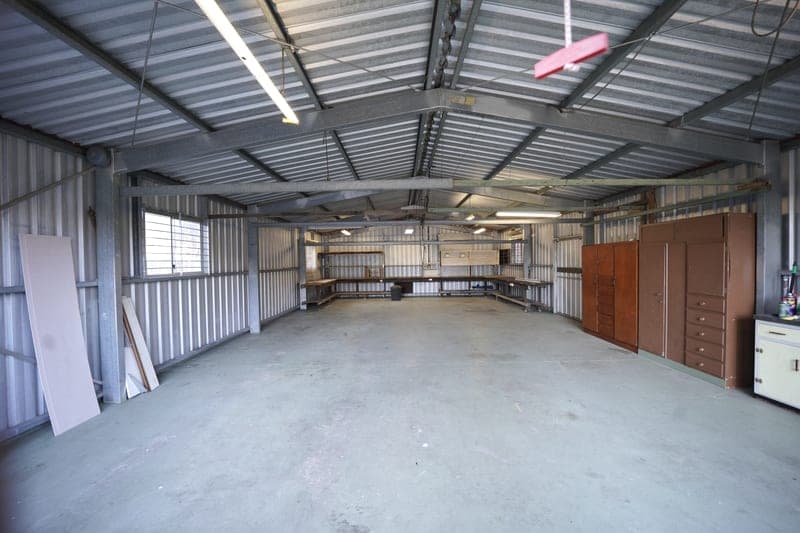
You want the car warm. Heating roughly 4,750 cubic feet of garage overnight so that one vehicle starts a few degrees warmer is the most expensive possible way to solve that, and a battery maintainer plus a windshield cover addresses the two things you actually notice on a cold morning for a fraction of the cost.
You want the rust to stop. Rust is moisture, not temperature, and a heater that runs intermittently can make condensation worse by cycling the space through the dew point. What actually works on a cold garage is a different product, and most of the standard advice in that category is wrong too.
You are in there for ten minutes at a time. A garage takes a long while to come up to temperature and loses it quickly. For short visits, heating the person beats heating the room — an infrared unit warms surfaces and people directly rather than the air, which is a real effect and a usage saving rather than an efficiency one.
If the answer is yes, buy in this order
Seal, then size, then buy. In that order, because sizing before sealing gives you the wrong answer and buying before sizing gives you the wrong heater. Put your own dimensions and temperatures into the calculator rather than taking a number off a box.
Check the plug before the price. If the sizing points at a 240-volt unit and you do not have the circuit, the real cost of this project includes an electrician. That is a legitimate thing to spend money on if you use the space. It is a bad surprise if you find out after delivery.
Then pick the type. Our budget heater roundup prices each option by the hour and states the electrical requirement up front, which is the information this category usually buries.
What to buy, given all that
Dr. Infrared Heater
Dr. Infrared Heater DR-988A Garage Shop Heater
Roughly $180-$280 for the heater alone
A 240-volt electric shop heater, and the reason it is here is the plug: it needs a dedicated 30-amp 240-volt circuit with a NEMA 6-30R outlet. That is an electrician's visit, and nobody selling this heater leads with it.
Skip it if: You do not have a 240 V circuit and are not prepared to pay to have one run. Then this is a heater you cannot plug in.
#ad We hold no verified live price for this product, so we show none. How this site is funded.
Mr. Heater
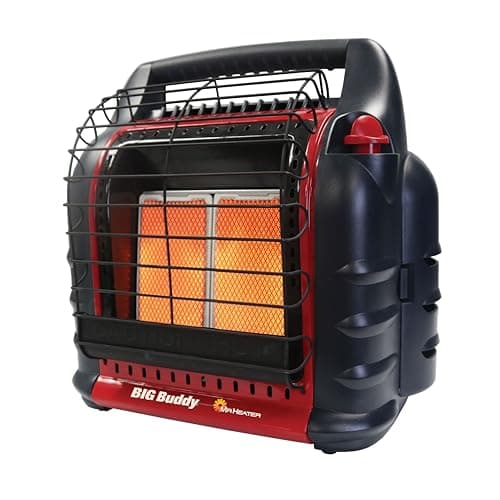
Mr. Heater Big Buddy Portable Propane Heater
Roughly $130-$180 plus fuel
Propane, so no electrical circuit and no installation - which is exactly why it is popular and exactly why the ventilation requirement in the manual is not optional reading. Burning propane indoors produces water vapor and combustion products, in a space you also park a car in.
Skip it if: You want unattended, thermostat-controlled background heat, or you cannot ventilate. Read the manufacturer's ventilation instructions before buying, not after.
#ad Price as of October 18, 2026, from Amazon. Prices change. How this site is funded.
M-D Building Products
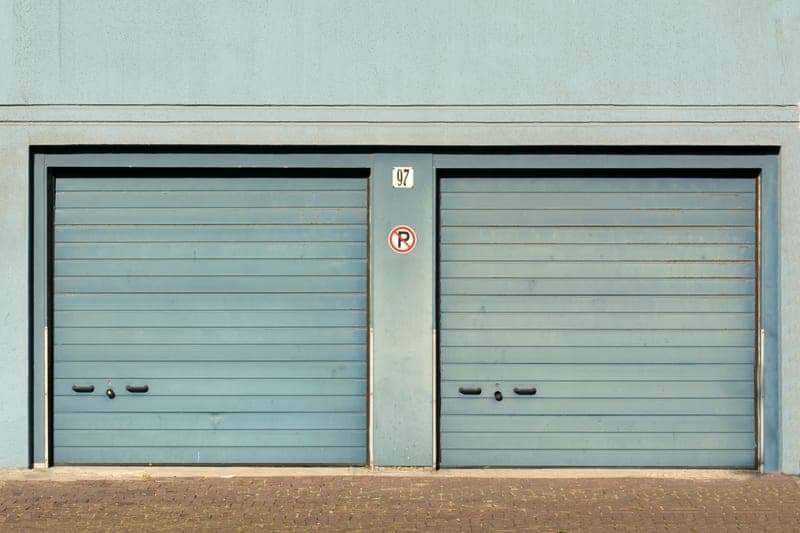
M-D Building Products Garage Door Bottom Seal
Roughly $20-$40 for a door width
The cheapest fix on this entire site, and the one with the biggest effect. A worn bottom seal leaves a gap the width of the door open to the outside all winter, and no amount of heating overcomes an open gap.
Skip it if: Your existing seal is intact and your door still closes flush. Replacing a good seal changes nothing.
#ad We hold no verified live price for this product, so we show none. How this site is funded.
How this was ranked
Every site in this category says it tested twenty of these. We have not tested any, and we say so. What we did instead: built the candidate set from what Amazon actually stocks, compiled the published specifications from each manufacturer’s own pages, did the arithmetic on running cost and on what the thing prevents, and read owner reviews for failure patterns rather than star averages. Every number on this page has a link to where it was published, so you can check the work.
- Units we claim to have tested
- 0
- Sponsored placements
- 0
- Free products accepted
- 0
Frequently asked
Is a garage heater worth the running cost?
If you occupy the garage for hours at a time, yes. A 5,600 W electric shop heater is about $1.03 an hour at the U.S. average rate of 18.34 cents per kWh, so two hours a weekend across a 20-week winter is roughly $41. If you only want a warm car in the morning, no — heating the whole space to warm one vehicle is the most expensive way to get there.
Do I need a 240V circuit for a garage heater?
For a genuinely capable electric one, yes. The Dr. Infrared DR-988A publishes 4,800 W at 208 V or 5,600 W at 240 V and ships with a NEMA 6-30P plug needing a dedicated 30-amp 240-volt outlet. A standard 120-volt outlet caps you at about 1,500 W, which will not transform a two-car garage.
Will a garage heater stop my tools rusting?
Not reliably, because rust is a moisture problem rather than a temperature one — and a heater that cycles can make condensation worse by taking the space through the dew point repeatedly. The moisture problem needs a different product, and most standard dehumidifiers do very little in a cold garage.
Should I insulate the garage before buying a heater?
Seal it first, which is cheaper and matters more: every published sizing formula includes an air-change term that dominates, and a gappy door versus a sealed one is roughly a factor of five in required output. Insulating the panels afterwards is worth doing but is a much smaller effect, and we put a figure on it rather than implying otherwise.
Is propane or electric better for a garage?
It depends on your local prices, which is why we published both formulas rather than a verdict. Propane avoids the 240-volt question entirely but needs ventilation and adds water vapor to a space full of steel. Electric is thermostat-controlled and adds no moisture, but the capable units need a circuit most garages do not have.
What size garage heater do I need?
It is volume times temperature rise times an air-change factor, and the air-change factor is the one that moves the answer most. Rather than quoting a BTU number that will not match your garage, put your own dimensions in the calculator — and seal the door first, or the answer it gives you will be larger than it needs to be.