The car winterization checklist, ordered by what it prevents
Most winterization lists are twenty items long and treat them all as equal. They are not. Four of them prevent something expensive or dangerous, and the rest are housekeeping.
Heads up: the buy links on this page are affiliate links. If you buy through one, we earn a commission at no extra cost to you. It does not change what we recommend or the order we rank things in - here is how we keep those separate.
The ordering principle
Every winterization list contains the same twenty items, presented as equally important. They are not equally important, and treating them that way is why people do the easy half and skip the half that matters.
So this list is sorted by consequence. What happens if you do not do it, and how much does that cost? Anything that prevents a safety failure comes first. Anything that prevents a several-hundred- dollar repair comes next. Convenience comes last, and is clearly labeled as convenience.
Tier 1: the things that fail dangerously
1. Winter washer fluid, before the first freeze
This is first on the list and it is almost never first on anyone else’s. Summer washer fluid freezes in the reservoir, the lines and the jets. When it does, you have no way to clear the film of salt spray that a truck throws onto your windshield at highway speed — and dry wipers on a salted screen smear it into an opaque gray sheet rather than clearing it.
The other glass job worth doing before the freeze is the stone chip you have been ignoring: a repair kit needs the glass at 50 to 75 F, which is a September problem rather than a January one.
That is a genuine, immediate loss of forward visibility at speed, and it is the cheapest item in this entire article to prevent. Run the reservoir low in the fall and refill with a fluid rated well below your local minimums. De-icer spray and winter washer fluid do different jobs and the fluid is the one that is not optional.
2. Tires: tread depth and pressure
Two separate checks. Tread, because it is what evacuates water and bites into snow, and because several states hang their winter traction exemptions on a published minimum — Colorado publishes 3/16 in and California publishes 6/32 in for mud and snow tires, both far above the 2/32 in legal wear limit.
Pressure, because it drops with temperature and people misread the warning light as a puncture. Air contracts as it cools: a tire set correctly on a 75 F afternoon in September reads several psi lower on a 25 F morning in January, with no leak involved. Check pressures cold, monthly, against the placard on the door jamb rather than the number on the sidewall. Putting the air back is a five-minute job with an inflator in the trunk, and the warning light will not prompt you until you are 25 percent down.
If your winter involves mountain routes, this is also the moment to decide about traction devices, because buying them at the bottom of a pass is expensive and buying them in a hurry means buying the wrong size. The rules on when chains are required are worth reading in October.
3. Wiper blades and the parked-wiper habit
Blades degrade over a summer of UV and heat, and the failure shows up the first time you need them against slush. Replace them if they chatter, streak or skip. Whether you need dedicated winter blades has a more nuanced answer than the packaging suggests.
The free habit matters as much as the purchase: do not leave wipers parked against the glass overnight in freezing weather if you can help it, and never run them to break ice free. Both tear the rubber edge, and a torn blade is a smearing blade.
Tier 2: the things that get expensive
4. The battery, and a maintainer if the car sits
Cold does two things at once, and the combination is what strands people. The battery’s available power falls — CTEK publishes roughly 35% lost at 32 F and 60% at 0 F — while the oil thickens and the engine becomes harder to turn. Less available power, more required power, on the same morning.
A maintainer against a battery
NOCO publishes a maximum consumption of 15 W for the GENIUS1. Worst case, running flat out for a 120-day winter, that is 43.2 kWh or $7.92 at the U.S. average residential rate of 18.34 cents per kWh (EIA, June 2026). Actual use is far below the maximum, because a maintainer holds far more than it charges.
A replacement battery is a mid-to-high two-figure or low three-figure purchase depending on the car, plus whatever it costs to be somewhere you did not plan to be at 7am. The maintainer is one of the few things on this list where the arithmetic is not even close.
The caveat that keeps this honest: a maintainer does not rescue a battery that is already at the end of its life. If yours is five years old and slow to crank in October, the maintainer is not the purchase — the battery is.
Which maintainer to buy comes down mostly to whether the maker publishes a cold operating range, and why batteries die in the cold explains what the device is actually preventing.
5. Floor mats, before the salt gets into the carpet
The least glamorous item here and one of the most expensive to skip. Salt solution comes into the footwell on your boots, soaks into the carpet padding, and sits against the floor pan for weeks. Padding is designed to absorb, which in this context means it holds brine against bare metal in a place nobody inspects.
A set of all-weather mats or liners keeps that in a tray you tip out. It has to be done before the salt arrives, because once the padding is soaked the mats are protecting a floor that is already wet. The mat roundup is here, and it is genuinely a rust-prevention purchase rather than a cleanliness one.
6. Underbody and paint protection, if you are going to do it at all
A sealant or wax applied in the fall gives the paint a sacrificial layer against salt spray for the months when washing is least appealing. Which product to use matters less than the timing: it has to go on while it is still warm enough to cure, which in most of the country means September or October.
The underbody is the expensive half and the one people skip. Rinsing the underside on mild days through the winter does more than any single autumn application, and it is free. If you do want to treat the underbody as well, pick the undercoating spray by the metal you are covering, and check the maker’s published application temperature before you plan the day.
Tier 3: worth doing, but be honest that it is convenience
A windshield cover saves a few minutes on every frosted morning and stops the wipers freezing to the glass. It is a genuine quality-of-life item and a small one financially; we did the arithmetic on it rather than asserting it.
A snow brush that actually reaches your roof. On a tall vehicle this crosses back into Tier 1, because roof snow leaving at speed is a hazard to the car behind and slides onto your own glass under braking. Reach is the whole specification.
An emergency kit in the trunk. Low probability, high consequence. The checklist version is here and the National Weather Service’s winter safety guidance is worth reading once, particularly the part about staying with the vehicle.
A car cover, sometimes. This one is genuinely conditional and we would rather say so: a cover helps a stored car and can harm a daily driver, because a cover put on over grit and taken off wet does more damage than the weather would have.
Skip this
The advice to ignore: warming the car up for ten minutes
It appears on nearly every winterization list and it is a holdover from carburetted engines. A modern fuel-injected engine does not need an extended idle to run correctly, and idling warms the engine slowly because there is almost no load on it. Driving gently warms it faster, and it warms the transmission, the differentials and the tires as well, none of which an idle touches.
Thirty seconds to get the oil moving, clear the glass properly, then drive gently for the first few miles. The only reason for a longer idle is cabin comfort, which is a fair thing to want — it is just not engine care, and never in an enclosed garage.
The one-hour version
If you have a single Saturday morning in October and want the maximum return: swap the washer fluid, check tread and pressures, fit the floor mats, and put the maintainer on the car that sits. That is under an hour, it is a small amount of money, and it covers the two safety failures and the two expensive ones. Everything else on this page can wait for the following weekend without anything going wrong.
What to buy, given all that
Rain-X
Rain-X De-Icer Windshield Washer Fluid
Roughly $5-$8 a gallon
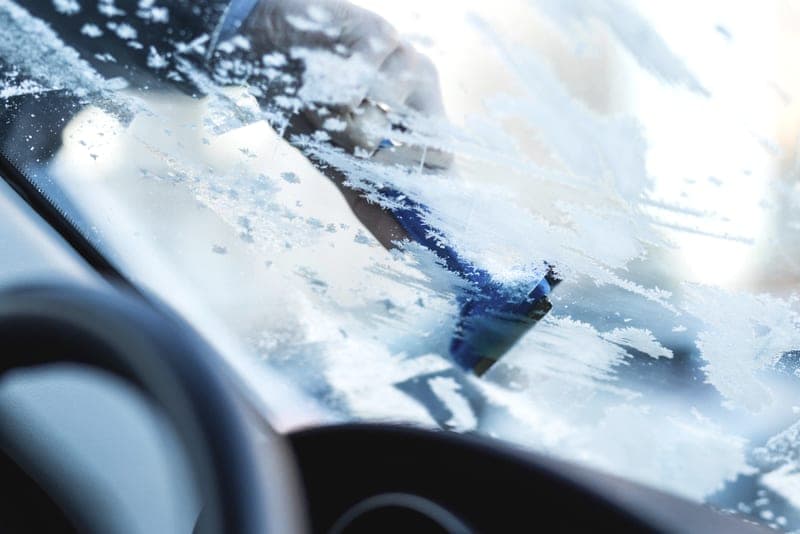
The one winter product almost nobody buys deliberately and everybody should. Washer fluid rated for freezing temperatures stops the reservoir and the jets freezing solid, which is the failure that leaves you driving into low winter sun through a smeared windshield.
Skip it if: Nothing. If you drive in a freezing climate, put winter fluid in.
#ad We hold no verified live price for this product, so we show none. How this site is funded.
NOCO
NOCO GENIUS1 1A Smart Charger and Maintainer
Roughly $25-$35
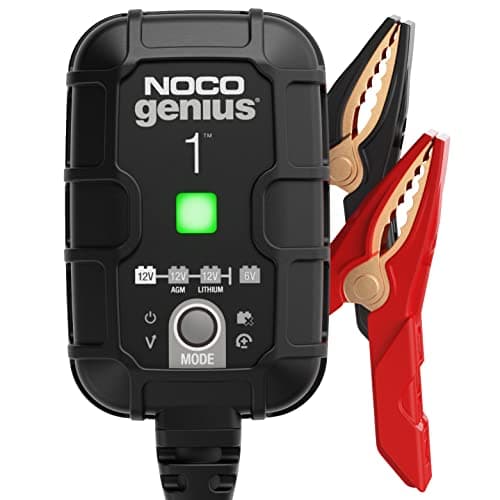
The published operating range is the reason this is the pick: NOCO rates it from -4 F to 104 F, which is the only spec on this page that speaks to whether the thing works in an unheated garage in January. Most rivals simply do not publish one.
Skip it if: You need to recover a flat battery quickly. At 1 amp this is a maintainer, and a genuinely dead battery takes it more than a day.
#ad Price as of October 18, 2026, from Amazon. Prices change. How this site is funded.
WeatherTech
WeatherTech All-Weather Floor Mats
Roughly $60-$100 a row
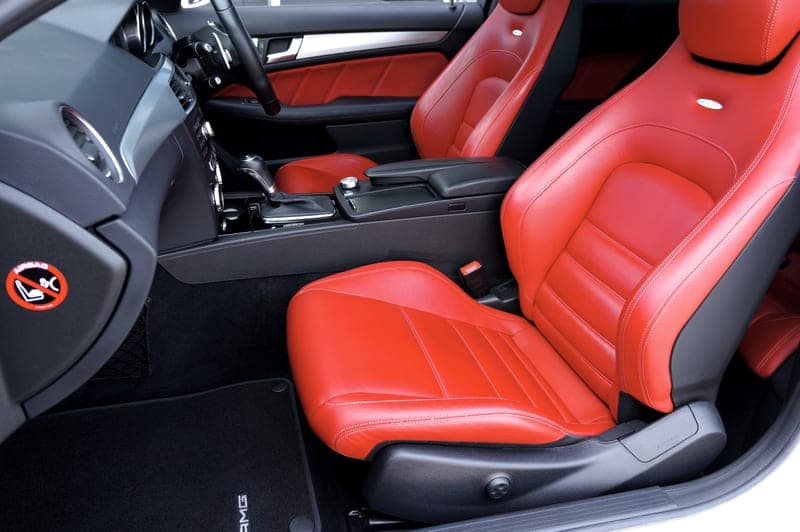
The same maker's flat mat rather than its walled liner, at roughly half the money. It has a deep channel pattern that holds a useful amount of water, and for most people in most winters that is genuinely enough.
Skip it if: You track slush in by the bucket. A flat mat overflows at the edges where a walled liner does not.
#ad We hold no verified live price for this product, so we show none. How this site is funded.
FrostGuard
FrostGuard Plus Windshield Cover, Standard Size
Roughly $25-$40
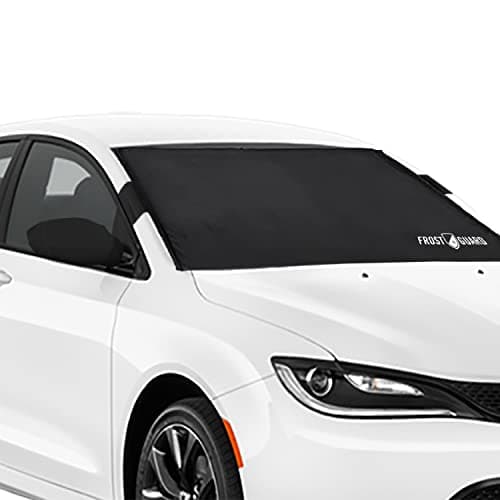
The version of this product that solves the actual problem: it wraps the wiper arms and hooks over the mirrors, so wind does not get under it and lift it off overnight. That single design decision is the whole reason a windshield cover is worth buying rather than a tarp.
Skip it if: You park in a garage. A cover on a car that never frosts is a thing to fold up wet and store somewhere.
#ad Price as of October 18, 2026, from Amazon. Prices change. How this site is funded.
How this was ranked
Every site in this category says it tested twenty of these. We have not tested any, and we say so. What we did instead: built the candidate set from what Amazon actually stocks, compiled the published specifications from each manufacturer’s own pages, did the arithmetic on running cost and on what the thing prevents, and read owner reviews for failure patterns rather than star averages. Every number on this page has a link to where it was published, so you can check the work.
- Units we claim to have tested
- 0
- Sponsored placements
- 0
- Free products accepted
- 0
Frequently asked
What is the most important thing to do to winterize a car?
Change to winter washer fluid before the first freeze. It is the cheapest item on any winterization list and the only one whose failure costs you forward visibility at highway speed — frozen fluid plus a windshield covered in salt spray is an immediate safety problem rather than an inconvenience.
When should I winterize my car?
Before the first hard freeze, which for most of the country means October. Several items on this list have a temperature window of their own — sealants and waxes need to cure warm, and anything involving adhesive or coating on a garage floor needs warmth too. A job done in November is often a job that cannot be done at all.
Do I need to let my car warm up in winter?
Not for the engine’s sake. A modern fuel-injected engine needs about thirty seconds before driving, and it then warms faster under gentle load than it does at idle — while also warming the transmission and tires, which idling does not. A longer warm-up is a comfort choice, and it should never happen in a closed garage.
Why does my tire pressure light come on when it gets cold?
Because air contracts as it cools, so the same quantity of air reads a lower pressure. A tire set correctly on a warm autumn afternoon can be several psi down on a freezing morning with no leak at all. Set pressures cold, against the placard in the door jamb, and re-check monthly through the winter.
Is a battery maintainer worth it if I drive every day?
Less so. A daily driver that gets a decent run each day is being charged by its own alternator. Maintainers earn their money on cars that sit — a second vehicle, a weekend car, anything doing short trips only. If yours is driven daily, spend the attention on the battery’s age instead: a five-year-old battery that cranks slowly in October is telling you something.
How much does winterizing a car cost?
The four Tier 1 and Tier 2 items are washer fluid, a tire check that is free, floor mats and a maintainer — realistically a two- figure sum plus the mats. We deliberately do not print a total, because prices move and the mats are the only item with real range in them. What we can say is that every item on this page is cheaper than the thing it prevents, which is the whole premise of the site.
Sources
- The best undercarriage washers for getting salt off
- The best windshield repair kits, and the temperature they need
- The best car cover for winter storage
- How to protect your car from road salt
- The best undercoating spray for a DIY rust job
- The best winter wax, sealant and underbody protection
- The best portable tire inflators for cold mornings
- The best battery maintainers for winter
- The best all-weather floor mats for winter
- The winter car emergency kit checklist
- Car covers, paint and rust
- How we pick, and what we refuse to claim