Skip to content
Frost & Fender
Roundup

The best winter car emergency kit is one you build

Pre-packed kits optimize for item count, because that is what sells. The list that matters is much shorter and mostly not in the box.

By Scooter M.Published September 1, 2026

Heads up: the buy links on this page are affiliate links. If you buy through one, we earn a commission at no extra cost to you. It does not change what we recommend or the order we rank things in - here is how we keep those separate.

The shortlist

Ranked, with the prices

Ranked on published manufacturer specifications and, where the numbers exist, the arithmetic on what each option costs and what it saves. Tap any row for the full write-up, including who should skip it.

#ProductBest forScorePrice
01Jump leads clamped to a car battery terminal - a stand-in for the NOCO Boost Plus GB40 Jump Starter, not a photograph of this modelNOCO Boost Plus GB40 Jump StarterThe car that has already left you stranded onceBest in the trunk8.9Check price on Amazon
02A car stopped on a snow-covered road at dusk - a stand-in for the MAXSA Escaper Buddy Traction Mats, not a photograph of this modelMAXSA Escaper Buddy Traction MatsGetting unstuck from a plowed-in driveway or parking spaceBest for getting unstuck8.0Check price on Amazon

Scores are ours and editorial. They are never published as review or rating markup, because we have not tested these products - see how we pick.

Why we are not ranking boxed kits

Pre-packed roadside kits are sold on item count, because that is the number on the front of the box. A “108-piece” kit is usually a nylon bag containing a small first-aid pouch that accounts for eighty of the pieces, thin gloves, a poncho, and jumper cables of a gauge you would not want to rely on.

None of that is useless. It is just not what determines whether being stopped in the cold is an inconvenience or a problem, and paying $40 for it displaces the two purchases that do.

The four things that actually matter

1. A way to start the car

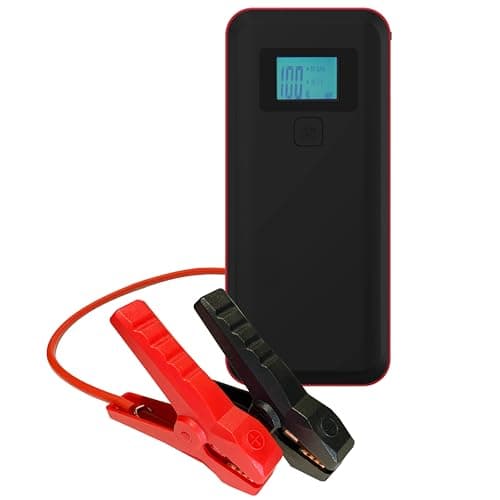
This is the most likely failure by a wide margin, and it is the one you can fix yourself. A lithium jump pack starts a dead car with nobody else present. Jumper cables require another vehicle and a willing driver, positioned close enough — which in an empty lot at 6am is the whole problem.

The caveat worth repeating: lithium capacity falls in the cold. Charge it before the season and check it mid-winter, or it will be flat at the moment you were counting on it. Charger versus jump starter is here.

2. A way to stay warm if you cannot

The National Weather Service’s winter guidance is consistent on this: if you are stranded, staying with the vehicle is usually the right decision, because the car is shelter and it is far easier to find than a person walking.

Which means you need to be able to sit in it, possibly for hours, without the engine running. A proper blanket — wool or a heavy fleece, not a foil emergency sheet — plus a hat and real gloves. You almost certainly own all three; the job is putting them in the car in November.

3. A way to be seen

A car stopped on a shoulder in falling snow at dusk is very hard to see. Reflective triangles or LED flares, and a flashlight with fresh batteries or a charged rechargeable one.

If your jump pack has a built-in light, that covers the flashlight — one of the few genuinely useful pieces of feature overlap in this category.

4. A way to dig

A folding shovel, and it is the item most likely to actually get used. Plowed in at the end of your own driveway is the commonest version of “stuck”, and a shovel plus some traction under a wheel resolves most of them.

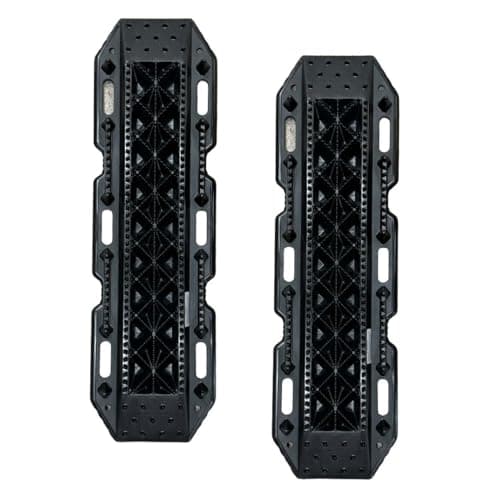
Recovery boards are the other half of this and they solve a genuinely different problem from chains: chains help you drive on snow, boards help when one wheel is already spinning in a rut.

Build versus buy

Pre-packed 108-piece kit: about $40. Delivers item three partially, item two poorly, and items one and four not at all.

Built: jump pack $90, folding shovel $25, blanket and hat and gloves from your own house $0, flashlight $15, reflective triangles $20. About $150, and it covers all four.

You can also do the $25 version: shovel, blanket from the linen closet, and the flashlight from the kitchen drawer. That covers more of what matters than the $40 boxed kit does.

Skip this

Skip these, which appear in almost every boxed kit

Thin cotton work gloves. Useless wet, which they will be within a minute of touching snow.

A foil emergency blanket, as your only warmth. They reflect radiant heat and are better than nothing, and they are not a substitute for an actual blanket for a multi-hour wait.

The tiny first-aid pouch. Adhesive bandages and two gauze pads. Carry a real first-aid kit if you want one, and do not count the pouch as having addressed it.

A plastic ice scraper as your only snow tool. No reach, no brush. A proper brush is here.

The things you already own

The half of this that costs nothing, and the half people forget:

  • A blanket, a hat and real winter gloves
  • A phone charging cable that works in the car
  • A bottle of water and something to eat that survives freezing
  • Any regular medication, in a small labeled bag
  • A pair of boots, if you commute in shoes

Put them in the trunk in November. Take them out in April. That is the entire system, and it matters more than anything you can order.

The habit that beats the kit

Keep the tank above half through the winter. A running engine is heat, and heat is the resource you actually need if you are stopped for hours — running it for ten minutes an hour is the standard advice, with the tailpipe kept clear of snow so exhaust cannot enter the cabin.

Half a tank costs nothing extra. It just requires filling up more often than you would like. The full checklist is here.
The write-ups

Every pick, in full

01 / Best in the trunkJump leads clamped to a car battery terminal - a stand-in for the NOCO Boost Plus GB40 Jump Starter, not a photograph of this model

NOCO

8.9 / 10

Roughly $80-$110

NOCO Boost Plus GB40 Jump Starter

A lithium jump pack that starts a dead car without a second vehicle. It solves the emergency; it does not solve the cause, which is why it belongs beside a maintainer rather than instead of one.

Check price on Amazon

#ad We hold no verified live price for this product, so we show none. How this site is funded.

Published specifications for the NOCO Boost Plus GB40 Jump Starter, with the source of each
SpecificationPublished valueWhere it is published
Peak current1000 ANOCO Boost Plus GB40 product page
Voltage12 VNOCO Boost Plus GB40 product page
SafetySpark-proof with reverse-polarity protectionNOCO Boost Plus GB40 product page
Secondary functionUSB power bank and integrated LED lightNOCO Boost Plus GB40 product page

What it does well

  • Starts a dead car with nobody else present, at 3am, in a car park
  • Spark-proof clamps remove the classic jump-leads mistake
  • Doubles as a phone power bank and a work light

What it does not

  • Lithium capacity falls in the cold, so it needs charging before the season and storing indoors
  • It treats the symptom - the maintainer treats the cause
  • Several times the price of a maintainer

Skip this one if

The battery is simply old. A jump pack is a way to keep restarting a battery you should be replacing.

How it scores, by criterion

Gets you moving9.5
Safety9.5
Cold performance7.0
Versatility9.0
Price5.5
02 / Best for getting unstuckA car stopped on a snow-covered road at dusk - a stand-in for the MAXSA Escaper Buddy Traction Mats, not a photograph of this model

MAXSA Innovations

8.0 / 10

Roughly $50-$90 a pair

MAXSA Escaper Buddy Traction Mats

Rigid recovery boards that go under a spinning wheel. They solve a different problem from chains: chains are for driving on snow, boards are for the moment you are already stuck in a driveway or a parking space.

Check price on Amazon

#ad We hold no verified live price for this product, so we show none. How this site is funded.

Published specifications for the MAXSA Escaper Buddy Traction Mats, with the source of each
SpecificationPublished valueWhere it is published
TypeRigid vehicle recovery traction boardsMAXSA Innovations published product information
UsePlaced under a driven wheel to regain tractionMAXSA Innovations published product information
Load ratingNot published by the manufacturerMAXSA Innovations published product information

What it does well

  • Works when the problem is one stuck wheel, which chains do not fix
  • No fitting procedure to remember in a snowbank
  • Also useful in mud and on wet grass the rest of the year

What it does not

  • Bulky to carry in a small car
  • Can be thrown by a spinning wheel if you use too much throttle
  • No published load rating to compare against rivals

Skip this one if

You need traction while moving. Boards are a recovery tool, not a traction device.

How it scores, by criterion

Gets you unstuck9.0
Ease of use9.0
Storage5.0
Year-round use8.5
Price6.5

How this was ranked

Every site in this category says it tested twenty of these. We have not tested any, and we say so. What we did instead: built the candidate set from what Amazon actually stocks, compiled the published specifications from each manufacturer’s own pages, did the arithmetic on running cost and on what the thing prevents, and read owner reviews for failure patterns rather than star averages. Every number on this page has a link to where it was published, so you can check the work.

Units we claim to have tested
0
Sponsored placements
0
Free products accepted
0

The full method, including what we refuse to claim

Questions people actually ask

Frequently asked

What should be in a winter car emergency kit?

Four things, in order: a way to start the car (a charged jump pack), a way to stay warm without the engine running (a real blanket, hat and gloves), a way to be seen (flashlight and reflective triangles), and a way to dig (a folding shovel). Everything else is optional.

Are pre-made car emergency kits worth it?

They are sold on item count rather than on what matters, and the count is usually inflated by a small first-aid pouch. Building your own costs a little more and covers the four things that decide whether being stopped is an inconvenience or a problem. Half the list is already in your house.

Should you stay in your car if stranded in a snowstorm?

Usually yes. The National Weather Service’s winter guidance is that the vehicle is shelter and is far easier for rescuers to find than a person on foot. Run the engine periodically for heat with the tailpipe kept clear of snow, and make the car visible.

How much should a winter car kit cost?

About $150 built properly, with a jump pack as the largest single item. A useful $25 version is a folding shovel plus a blanket and flashlight you already own — and that covers more of what matters than a $40 boxed kit does.

Sources

Read next