Protecting a car in winter without a garage
Most winter advice assumes a garage. This is the version for a car that lives on a street or a driveway, ordered by what actually pays back.
Heads up: the buy links on this page are affiliate links. If you buy through one, we earn a commission at no extra cost to you. It does not change what we recommend or the order we rank things in - here is how we keep those separate.
What a garage actually provides
Worth naming, because it tells you what to substitute.
- Snow and ice never land on the car. The daily time cost, and the abrasion risk from clearing.
- A few degrees of warmth. Which helps the battery more than anything else.
- Somewhere dry. The car dries out between journeys instead of staying wet.
- Power. Which is what makes a battery maintainer possible.
Each of those has a cheap substitute except the last one, and the last one is the important one.
1. A windshield cover, first
The highest-value purchase for a car that lives outside, and it is $16 to $40.
It saves roughly four minutes on every frosted morning, it keeps the wiper blades from freezing to the glass, and it removes the daily scraper contact. The covers are here, and the retention specification matters more than anything else about them.
2. Solve the battery problem
This is where no garage genuinely costs you, because the standard answer — a maintainer — needs power.
If you park on your own driveway, an exterior-rated outlet and an outdoor-rated extension lead solve it, and the maintainer runs for about three dollars a winter. That is usually worth arranging.
If you park on a street, you cannot. The substitute is a charged lithium jump pack kept in the car, plus getting the battery tested in October rather than discovering its condition in January. Keep the pack indoors when you can, because lithium capacity falls in the cold.
3. Underbody protection matters more, not less
A car parked outside gets rained on, snowed on, and then dries slowly in the open. It also does not benefit from a garage’s slightly warmer, drier air, so salt residue stays active on it for longer.
The autumn job, priced
Paint sealant: $15 to $28, twenty minutes.
Creeping underbody coating: about $60 of product and an afternoon on ramps, or $150 to $600 at a shop.
Mid-winter underbody washes: $2 to $4 each, every couple of weeks, so $20 to $40 a season.
Under $150 all-in for the DIY version, against structural rust repair measured in days of body-shop labor. The full routine is here.
4. Parking habits, which cost nothing
- Face east where you can. Morning sun on the windshield does some of the de-icing for you.
- Avoid parking under trees. Snow load slides off branches in one heavy mass, and sap and debris are grit.
- Do not park in the plow line. The end of a driveway and the edge of a street are where plowed snow gets compacted around your wheels.
- Nose in on a slope where you can. Reversing out of a snowy driveway is harder than driving out.
- Leave the wipers down, and use a cover. Wipers propped up hold their springs under tension in the cold; a cover that wraps them solves it properly.
Skip this
Skip the portable car shelter, mostly
Pop-up fabric garages are a tempting answer and they have two problems people underestimate.
They need to survive wind and snow load, and the cheap ones do not — a collapsed shelter on a car is worse than no shelter. And many places restrict them: check local ordinances and, if you rent or are in an HOA, the rules that apply to you.
A well-anchored, properly rated shelter on your own land is a real option. A $150 pop-up on a driveway in a windy area is a repair bill waiting for a storm.
5. The interior, since it will get wet
Without a garage, more snow walks into the car, because there is more snow on the ground between you and the door.
All-weather mats matter more here for exactly that reason, and the case for the walled liner version is stronger than it would be for a garaged car.
Run the air conditioning with the heater in defrost mode to dry the cabin out — it dehumidifies, which is what actually clears interior fogging and stops the damp smell that outdoor-parked cars develop by February.
The whole list, priced
| Item | Cost | What it addresses |
|---|---|---|
| Windshield cover | $16 to $40 | Four minutes every frosted morning, plus frozen wipers |
| Winter washer fluid | $5 to $8 | Frozen jets and salt film - the safety item |
| Battery maintainer, or a jump pack | $30, or $90 | The most likely winter failure |
| All-weather mats | $25 to $100 | Salt water in the carpet padding |
| Paint sealant | $15 to $28 | Salt on the finish, and easier washing |
| Underbody coating | $60 DIY | The expensive, invisible half of salt damage |
| Underbody washes | $20 to $40 a season | The single highest-value action available |
That list is specific to having nowhere to park. For the general version — the jobs worth doing in October whether or not you have a garage, ordered by what each one prevents rather than by what it sells — our winterization checklist is here.
What to buy, given all that
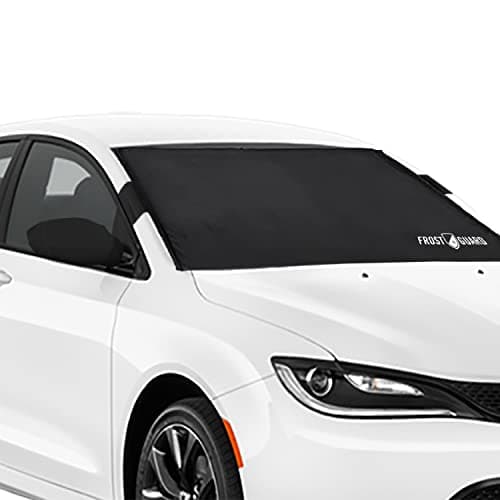
FrostGuard
FrostGuard Plus Windshield Cover, Standard Size
Roughly $25-$40
The version of this product that solves the actual problem: it wraps the wiper arms and hooks over the mirrors, so wind does not get under it and lift it off overnight. That single design decision is the whole reason a windshield cover is worth buying rather than a tarp.
Skip it if: You park in a garage. A cover on a car that never frosts is a thing to fold up wet and store somewhere.
#ad Price as of October 18, 2026, from Amazon. Prices change. How this site is funded.
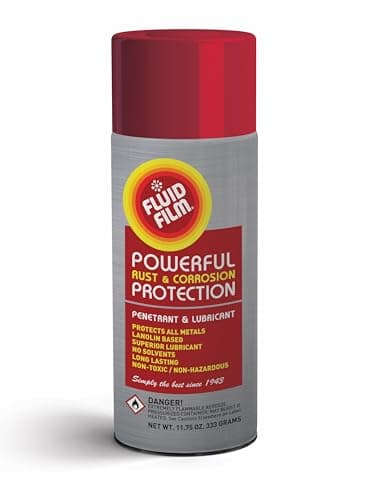
Fluid Film
Fluid Film Rust and Corrosion Protection
One of the cheapest items on this site - a single aerosol can
A lanolin-based, non-drying coating. Non-drying is the whole argument: it stays soft, so it creeps into seams and does not crack and trap moisture underneath the way a hard rubberized coating can once it chips.
Skip it if: You want a permanent, one-time coating. This is deliberately impermanent and must be redone each year.
#ad Price as of October 18, 2026, from Amazon. Prices change. How this site is funded.
How this was ranked
Every site in this category says it tested twenty of these. We have not tested any, and we say so. What we did instead: built the candidate set from what Amazon actually stocks, compiled the published specifications from each manufacturer’s own pages, did the arithmetic on running cost and on what the thing prevents, and read owner reviews for failure patterns rather than star averages. Every number on this page has a link to where it was published, so you can check the work.
- Units we claim to have tested
- 0
- Sponsored placements
- 0
- Free products accepted
- 0
Frequently asked
How do you protect a car in winter without a garage?
A windshield cover for the daily time cost, winter washer fluid for safety, a battery maintainer if you have power or a jump pack if you do not, all-weather mats for the interior, and autumn underbody protection supported by regular winter underbody washes.
Is it bad to leave a car outside all winter?
It is worse than a garage and it is entirely manageable. Cars are designed to live outdoors. What accelerates wear is salt left on the underbody and a battery running at a chronic charge deficit, and both have cheap answers.
Are portable car shelters worth it?
A well-anchored, properly rated one on your own land can be. Cheap pop-up versions frequently fail under snow load or wind, and a collapsed shelter on a car is worse than none. Check local ordinances and any HOA or tenancy rules before buying one.
Should I start my car every day in winter if it is parked outside?
Brief idling is close to the worst case for a battery: starting takes a large amount out and a few minutes of idling does not put it back, so the deficit grows. Either drive it properly for twenty minutes or leave it alone and use a maintainer.
Does parking facing east really help with frost?
Marginally, and it costs nothing. Early sun on the windshield speeds up clearing on a sunny morning. It does nothing on an overcast one, which is most winter mornings, so treat it as a free bonus rather than a strategy.
Sources
- What size car cover do you need?
- The best snow shovel for a car, by which job you are buying it for
- The car winterization checklist, ordered by what it prevents
- How to protect your car from road salt
- The best windshield covers for snow and ice
- The best battery maintainers for winter
- The best garage door seals for cold weather
- Car covers, paint and rust